Hanoi’s Continuing Assault on Workers’ Right to Organize
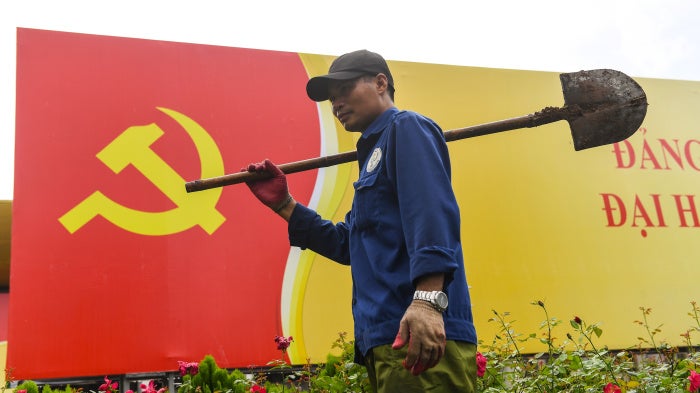
The 49-page report, “There Are No Independent Trade Unions in Vietnam: Hanoi’s Continuing Assault on Workers’ Right to Organize,” documents the Vietnamese governments’ continuing useof vague, overbroad criminal laws to suppress the activities of human rights and labor rights defenders, while maintaining an atmosphere of repression to thwart independent labor organizing. The government has issued decrees and articles in state-run media that reaffirm that all labor organizations in Vietnam are under the government’s authority, and portray independent trade unions as dangerous, anti-state entities.
Government Barriers to Condom Use by Men Who Have Sex With Men
This report documents the failure of national and local governments in the Philippines to address the growing HIV prevalence among men who have sex with men.
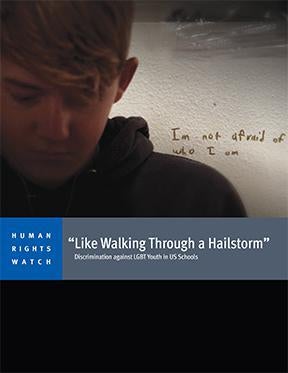
This report documents a range of problems facing LGBT students. The concerns include bullying and harassment, exclusion of LGBT topics from school curricula and resources, restrictions on LGBT student groups, and discrimination and bigotry from both classmates and school personnel on the basis of sexual orientation and gender identity.
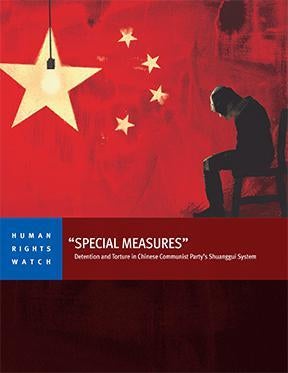
Detention and Torture in the Chinese Communist Party’s Shuanggui System
This report details abuses against shuanggui detainees, including prolonged sleep deprivation, being forced into stress positions for extended periods of time, deprivation of water and food, and severe beatings. Detainees are also subject to solitary and incommunicado detention in unofficial detention facilities. After “confessing” to corruption, they are typically brought into the criminal justice system, convicted, and sentenced to often lengthy prison terms.
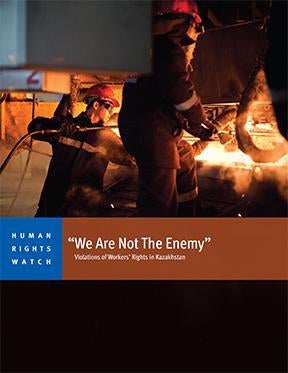
This report details the significant legal and practical obstacles workers in Kazakhstan must overcome to organize and defend their interests in the workplace. Human Rights Watch interviewed more than 50 trade union leaders, labor activists, and workers in key industries across Kazakhstan, and documented harassment, surveillance, and, in some cases, spurious legal prosecution or dismissals in apparent retaliation for labor activism. The Kazakh government should take immediate steps to lift restrictions on workers’ rights and the ability to organize.
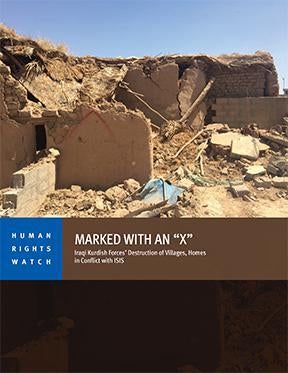
Iraqi Kurdish Forces' Destruction of Villages, Homes in Conflict with ISIS
This report looked at destruction of homes between September 2014 and May 2016 in disputed areas of Kirkuk and Nineveh governorates, areas nominally under Iraqi government jurisdiction but under Kurdistan Regional Government (KRG) control. The destruction, which took place after KRG Peshmerga forces routed Islamic State (also known as ISIS) fighters, targeted Arab homes while leaving Kurdish homes intact. KRG leaders have maintained that these are historically Kurdish areas that they intend to incorporate into the Kurdistan region.
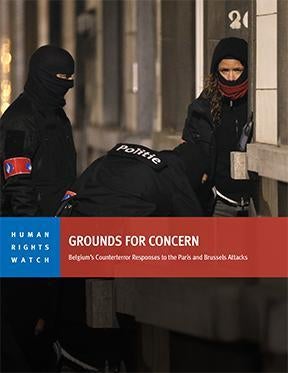
Belgium’s Counterterror Responses to the Paris and Brussels Attacks
This report details measures that place prisoners detained for terrorism in prolonged isolation, and allow the government to suspend passports and review terrorism suspects’ phone and email logs without judicial approval. Other laws can revoke Belgian citizenship and criminalize comments that stop short of direct incitement to terrorism. It also details abusive police responses during counterterrorism raids and detentions.
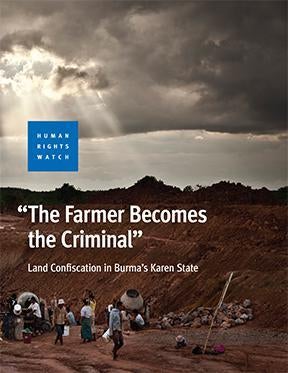
This report documents human rights violations by militias, police, and government officials in Karen State for the confiscation of land from ethnic Karen farmers, many of whose families had farmed the land for generations.
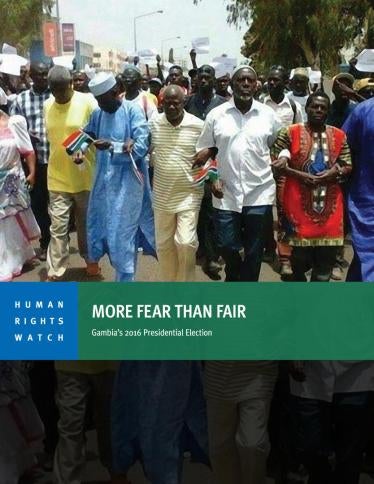
This report describes how the government of President Yahya Jammeh, who came to power in a 1994 coup, has used a crackdown on the opposition, domination of state media, and state resources for campaigning to ensure a political advantage in the election. Authorities have threatened, arbitrarily arrested, jailed, and tortured members of opposition political parties. Since April, more than 90 opposition activists have been arrested for participating in peaceful protests, with 30 sentenced to three-year prison terms. Two opposition activists have died in custody.
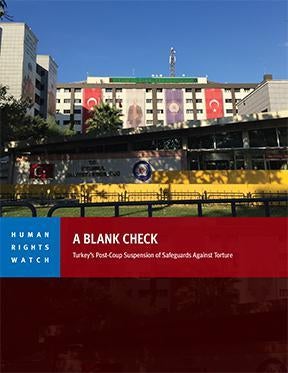
Turkey’s Post-Coup Suspension of Safeguards Against Torture
This report documents how the weakening of safeguards through decrees adopted under the state of emergency has negatively affected police detention conditions and the rights of detainees. It details 13 cases of alleged abuse, including stress positions, sleep deprivation, severe beatings, sexual abuse, and rape threats, since the coup attempt.
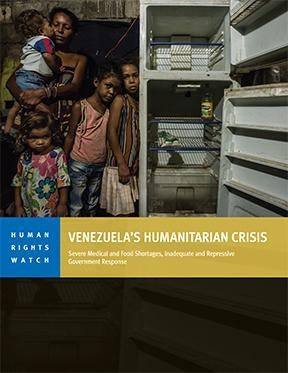
Severe Medical and Food Shortages, Inadequate and Repressive Government Response
This report documents how the shortages have made it extremely difficult for many Venezuelans to obtain essential medical care or meet their families’ basic needs. The Venezuelan government has downplayed the severity of the crisis. Although its own efforts to alleviate the shortages have not succeeded, it has made only limited efforts to obtain international humanitarian assistance that might be readily available. Meanwhile, it has intimidated and punished critics, including health professionals, human rights defenders, and ordinary Venezuelans who have spoken out about the shortages.
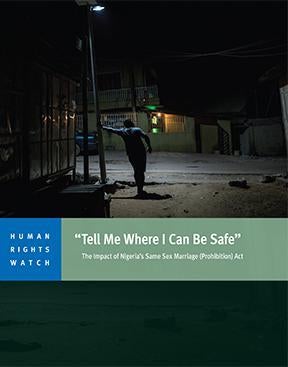
The Impact of Nigeria’s Same Sex Marriage (Prohibition) Act
This report shows how the law, which took effect in January 2014, is used by some police officers and members of the public to legitimize abuses against LGBT people, including widespread extortion, mob violence, arbitrary arrest, torture in detention, and physical and sexual violence. The law has created opportunities for people to engage in homophobic violence without fear of legal consequences, contributing significantly to a climate of impunity for crimes against LGBT people.
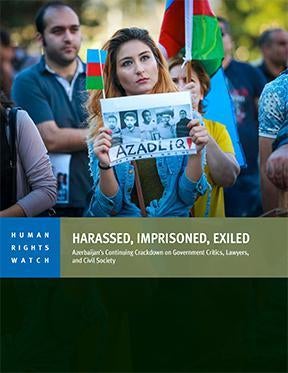
Azerbaijan’s Continuing Crackdown on Government Critics, Lawyers, and Civil Society
This report documents the government’s concerted efforts to undermine civil society. Human Rights Watch found that in 2016, the authorities used false, politically motivated criminal and administrative charges to prosecute political activists, journalists, and others. The government has built a restrictive legal and policy framework to paralyze the work of independent groups. Lawyers willing to defend critics have faced retaliation and disbarment. Although the authorities released several human rights defenders and others in early 2016, many others remain in prison or fled into exile.
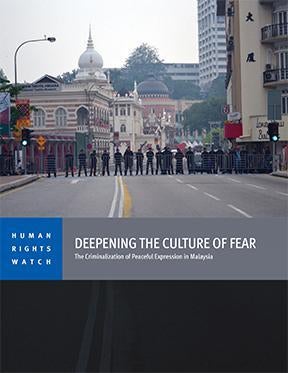
The Criminalization of Peaceful Expression in Malaysia
This report documents the government’s recent use of overbroad and vaguely worded laws to criminalize peaceful speech and assembly. Since Human Rights Watch’s October 2015 report, “Creating a Culture of Fear,” the Malaysian government has done little to bring these laws and practices in line with international legal standards. Instead, the government has suggested it will strengthen statutes limiting speech on social media and other rights-offending laws.
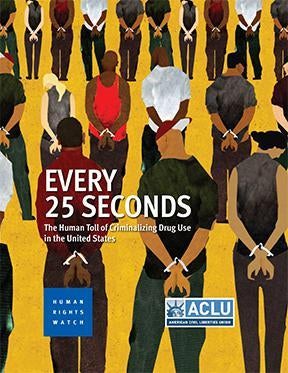
The Human Toll of Criminalizing Drug Use in the United States
This report finds that enforcement of drug possession laws causes extensive and unjustifiable harm to individuals and communities across the country. The long-term consequences can separate families; exclude people from job opportunities, welfare assistance, public housing, and voting; and expose them to discrimination and stigma for a lifetime. While more people are arrested for simple drug possession in the US than for any other crime, mainstream discussions of criminal justice reform rarely question whether drug use should be criminalized at all.
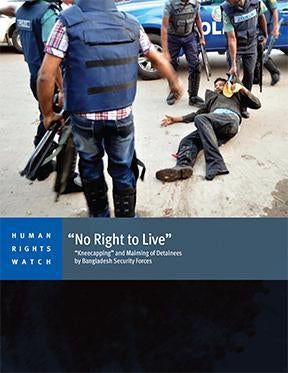
“Kneecapping” and Maiming of Detainees by Bangladesh Security Forces
This report calls upon Bangladesh authorities to order prompt, impartial, and independent investigations into all alleged “kneecappings” and other deliberate infliction of serious injuries by members of the security forces. The government should also invite the Office of the United Nations High Commissioner for Human Rights and UN special rapporteurs on torture and extrajudicial executions to investigate “kneecappings” and other alleged acts of torture and make appropriate recommendations to ensure justice, accountability, and security force reform.