Impact

By investigating and exposing human rights abuses, we work to create a world where everyone is treated fairly and equitably, no matter their race, religion, or beliefs. We call for action so that people who disagree with their government can speak their opinions freely, so that children are protected, and refugees cared for. All of us, regardless of who we are, who we love, or the color of our skin, should be able to enjoy fully our human rights.

BROWSE ALL IMPACT ›

Change is sometimes immediate, sometimes incremental. We work on issues for years and know from experience how to transform deep-rooted problems. Here are examples of some of the recent impact we have made, together with our partners, in advancing human rights around the world.

How do we bring about change?

Investigate
Our researchers investigate human rights abuses, first by speaking with victims or witnesses. We corroborate their stories using a variety of sources, including government records, weapons’ fragments, satellite imagery, and the statements of accused perpetrators – be they members of governments, armed groups, or companies. We often do this work together with partner activists.

Expose
We share this information widely, in multiple languages, to help shape public debate. Our reports, videos, and social media posts show up hundreds of times daily in news media around the world, bringing both global and local attention to our rigorously fact-checked findings.

Change
Often in coalition with local groups, we bring our findings to officials who have the power to change things. For every issue we work on, we make specific, concrete policy recommendations that will bring people justice, prevent future abuses, and protect human rights.

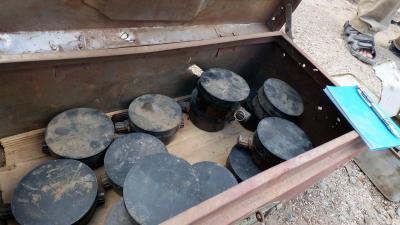
Our work has been instrumental in some foundational victories for human rights, including our work on banning landmines worldwide, for which we and our partners received the 1997 Nobel Peace Prize. Below are some examples of our historic impact.
All impact

  • August 24, 2017
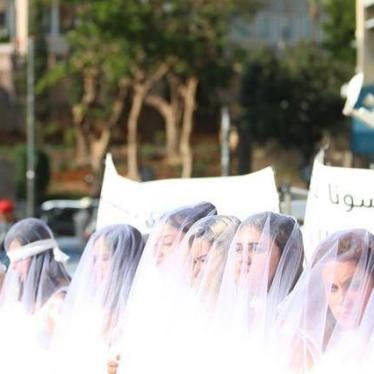
    In recent weeks, the Tunisian, Jordanian, and Lebanese parliaments have repealed provisions in their penal codes that allowed rapists to escape punishment by marrying their victims. Provisions like these, largely colonial-era relics, remain on the books in many other countries in the region and beyond. Some permit exoneration for a range of offenses, including kidnapping, rape, and consensual sex with a child (statutory rape) if the perpetrator marries the victim.In recent weeks, the Tunisian, Jordanian, and Lebanese parliaments have repealed provisions in their penal codes that allowed rapists to escape punishment by marrying their victims. Provisions like these, largely colonial-era relics, remain on the books in many other countries in the region and beyond. Some permit exoneration for a range of offenses, including kidnapping, rape, and consensual sex with a child (statutory rape) if the perpetrator marries the victim.
    Demonstration outside Parliament on December 6, 2016, with women in white dresses and wrapped in bandages, calling for the repeal of article 522 of the penal code.
  • August 23, 2017
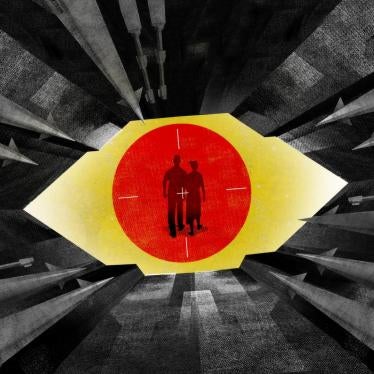
    An open letter issued Monday from Tesla head Elon Musk and 115 other founders of artificial intelligence and robotic companies called for diplomatic action to prevent the development and use of fully autonomous weapons, otherwise known as killer robots.
    © 2016 Brian Stauffer for Human Rights Watch
  • August 16, 2017
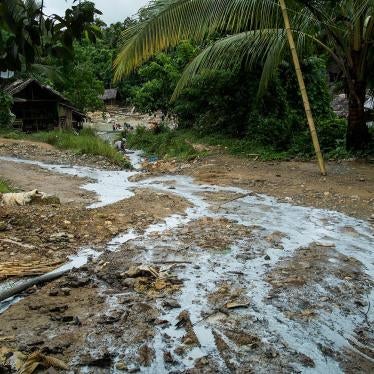
    The United Nations Minamata Convention on Mercury, which went into effect on August 16, 2017, could benefit millions of people affected by toxic mercury, Human Rights Watch said today. Under the treaty, governments are obligated to protect their citizens from the harmful effects of mercury and to put in place controls in polluting industries, such as artisanal and small-scale gold mining and coal-fired power plants.
    Mercury-contaminated water
  • August 4, 2017
    (New York, August 4, 2017) – South Korea’s Supreme Court has ordered the government to allow a lesbian, gay, bisexual, and transgender (LGBT) rights foundation to legally register as a charity, ending three years of the foundation’s leaders facing discriminatory rejection from multiple government agencies. The judgment affirms South Korea’s obligations to respect freedom of assembly for all its citizens, Human Rights Watch said.
    Participants march on a street during Korea Queer Festival 2015 in central Seoul, South Korea. In 2017, South korea's Supreme Court ordered the government to allow the Beyond the Rainbow Foundation, a LGBT rights foundation, to legally register as a chari
  • July 21, 2017
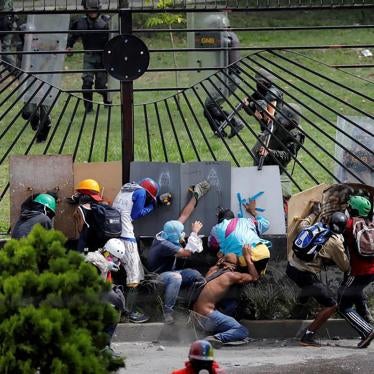
    Since early April 2017, tens of thousands of Venezuelans have taken to the streets to protest the government’s growing authoritarianism. The government has responded with a brutal crackdown. Security forces have shot demonstrators at point-blank range with riot-control munitions, run over demonstrators with an armored vehicle, brutally beaten people who offered no resistance, and broken into homes of suspected opponents.
    Demonstrators clash with riot security forces at the fence of an air base while rallying against Venezuela's President Nicolas Maduro in Caracas, Venezuela.
  • July 15, 2017
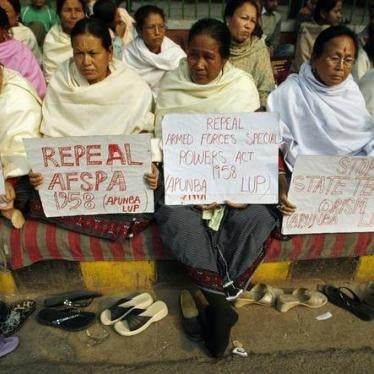
    India’s Supreme Court on July 14, 2017, ordered an investigation into alleged unlawful killings by government security forces in Manipur state from 1979 to 2012. The creation of a transparent, time-bound investigation team that has the full cooperation of local authorities would be an important advance for accountability in the Manipur killings.
    Women from Manipur state protest against the Armed Forces Special Powers Act (AFSPA) in New Delhi, January 25, 2008.
  • July 13, 2017
    Saudi Arabia’s reversal of its longstanding ban on sports for women and girls in public schools is a vital step forward, Human Rights Watch said today. But serious hurdles, including the country’s male guardianship system, remain in place, preventing women from fully accessing the education and health benefits of sports exercise.
    The female basketball team of Jeddah United warm up in Jordan on April 21, 2009. Jeddah United is the only private sports company with women’s teams.
  • July 7, 2017
    The Mental Health Authority of Ghana has taken steps to release 16 people, including two girls, held in shackles at Nyakumasi Prayer Camp, a spiritual healing center in the Central Region. Those freed, some of whom have mental health conditions, were taken to nearby Ankaful Psychiatric Hospital on June 30, 2017.
    This girl was among 16 people with real or perceived mental health conditions released from shackles in Nyakumasi Prayer Camp, in Central Region, Ghana, on June 30, 2017
  • July 3, 2017
    Today, the UN Secretary-General appointed Catherine Marchi-Uhel to head a new UN team tasked with investigating serious crimes committed in Syria since 2011. For victims who have known nothing but suffering, despair and abandonment, the creation of this team represents a small step in the difficult struggle for justice, redress and an end to impunity that has marked the bloody conflict.
    Ban Ki Moon at the UN General Assembly
  • June 20, 2017
    New York State has taken an important step toward ending child marriage, as Governor Andrew Cuomo on June 20, 2017 signed legislation to dramatically reduce the circumstances under which children can marry, Human Rights Watch said today. Between 2001 to 2010, 3,850 children under 18 married in New York State.
    Governer Cuomo