Impact

By investigating and exposing human rights abuses, we work to create a world where everyone is treated fairly and equitably, no matter their race, religion, or beliefs. We call for action so that people who disagree with their government can speak their opinions freely, so that children are protected, and refugees cared for. All of us, regardless of who we are, who we love, or the color of our skin, should be able to enjoy fully our human rights.

BROWSE ALL IMPACT ›

Change is sometimes immediate, sometimes incremental. We work on issues for years and know from experience how to transform deep-rooted problems. Here are examples of some of the recent impact we have made, together with our partners, in advancing human rights around the world.

How do we bring about change?

Investigate
Our researchers investigate human rights abuses, first by speaking with victims or witnesses. We corroborate their stories using a variety of sources, including government records, weapons’ fragments, satellite imagery, and the statements of accused perpetrators – be they members of governments, armed groups, or companies. We often do this work together with partner activists.

Expose
We share this information widely, in multiple languages, to help shape public debate. Our reports, videos, and social media posts show up hundreds of times daily in news media around the world, bringing both global and local attention to our rigorously fact-checked findings.

Change
Often in coalition with local groups, we bring our findings to officials who have the power to change things. For every issue we work on, we make specific, concrete policy recommendations that will bring people justice, prevent future abuses, and protect human rights.

Our work has been instrumental in some foundational victories for human rights, including our work on banning landmines worldwide, for which we and our partners received the 1997 Nobel Peace Prize. Below are some examples of our historic impact.

All impact

  • August 4, 2016
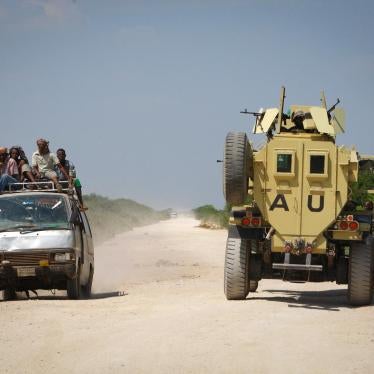
    In 2014, I spoke to several military lawyers and judges from Uganda, Burundi and Kenya to understand how Somalis abused by soldiers from the African Union forces in Somalia (AMISOM) could seek justice. I was told the best chance was to hold prosecutions in Somalia itself, not hundreds of miles away in Uganda, Kenya, or Burundi, which would make it more difficult for witnesses to appear. “Without witnesses, the cases will be easy to throw out,” one Ugandan judge advocate said.
    A commuter taxi drives past an African Union Mission in Somalia (AMISOM) armoured vehicle, December 2010
  • August 1, 2016
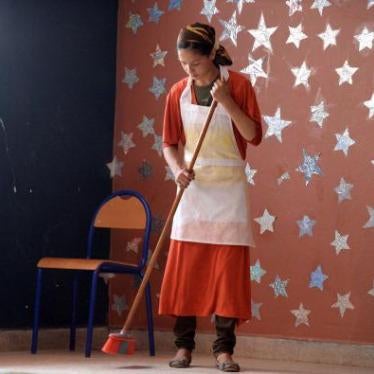
    Morocco’s new law regulating work for domestic workers could help protect thousands of women and girls from exploitation and abuse. The new law was adopted by the House of Representatives on July 26, 2016, and will go into effect one year after publication in the official gazette.
    MENA Morocco Domestic worker
  • July 28, 2016
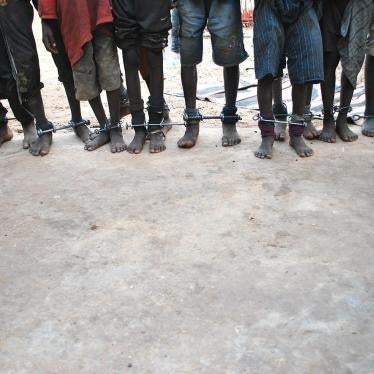
    The Senegalese government’s recent initiative to remove children including those forced to beg by their Quranic teachers from the streets is an important step in reforming a deeply entrenched system of exploitation. Authorities should sustain the momentum with investigations and prosecutions of teachers and others who commit serious violations against children.
    More than a dozen talibé boys between the ages of 6 and 14 were found shackled with iron bars in their Quranic school in Diourbel,Senegal
  • June 28, 2016
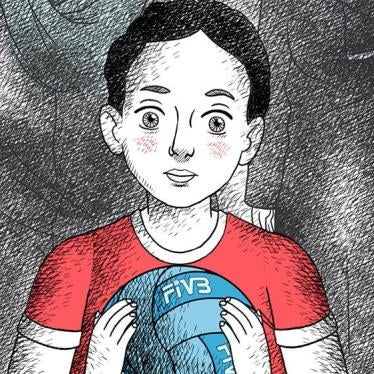
    Since 2012, Iranian women have been subjected to an unjust ban preventing them from attending volleyball matches. Despite this discriminatory measure which violates its own constitution, the International Volleyball Federation (FIVB) has awarded Iran the right to host tournaments such as the Kish Island Open in February 2016 and World League matches in July 2016. It is time for the FIVB to finally come through on past broken promises and insist that Iran allow women to attend volleyball matches. Join our call and support women’s rights in Iran!
    Women in Iran are prevented from attending men's sports in stadiums
  • June 8, 2016
    On March 11, the UN Security Council adopted its resolution on sexual abuse and exploitation, designed to prevent sexual violence by UN peacekeepers. In addition to language on holding alleged perpetrators accountable, resolution 2272 also calls for medical and psychological assistance for survivors of sexual violence. In the days leading up to the negotiations, Human Rights Watch pushed to ensure the resolution called for comprehensive support for sexual violence survivors and urged the UN to prioritize their security and well-being.
    Women walk by a United Nations peacekeeping armored vehicle guarding the outer perimeter of a school used as an electoral center at the end of the presidential and legislative elections, in the mostly muslim PK5 neighborhood of Bangui.
  • June 2, 2016
    The United States should make its suspension of cluster munition transfers to Saudi Arabia permanent and extend it to all other countries, Human Rights Watch said today.
    A submunition from a BLU-108 canister from a CBU-105 Senor Fuzed Weapon found by the main road between Sanaa and Saada, about 250 meters south of the al-Amar village on May 16, 2015.
  • May 30, 2016
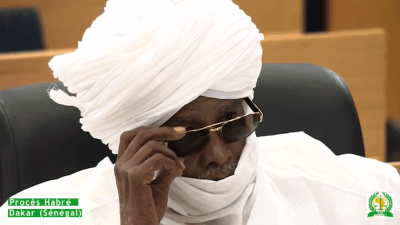
    Habré was convicted of torture, war crimes and crimes against humanity, including having raped a woman himself, by the Extraordinary African Chambers in the Senegalese court system and sentenced to life in prison on May 30, 2016.
    Victims turned victors