



Impact

By investigating and exposing human rights abuses, we work to create a world where everyone is treated fairly and equitably, no matter their race, religion, or beliefs. We call for action so that people who disagree with their government can speak their opinions freely, so that children are protected, and refugees cared for. All of us, regardless of who we are, who we love, or the color of our skin, should be able to enjoy fully our human rights.

BROWSE ALL IMPACT ›

Change is sometimes immediate, sometimes incremental. We work on issues for years and know from experience how to transform deep-rooted problems. Here are examples of some of the recent impact we have made, together with our partners, in advancing human rights around the world.

How do we bring about change?

Investigate
Our researchers investigate human rights abuses, first by speaking with victims or witnesses. We corroborate their stories using a variety of sources, including government records, weapons’ fragments, satellite imagery, and the statements of accused perpetrators – be they members of governments, armed groups, or companies. We often do this work together with partner activists.

Expose
We share this information widely, in multiple languages, to help shape public debate. Our reports, videos, and social media posts show up hundreds of times daily in news media around the world, bringing both global and local attention to our rigorously fact-checked findings.

Change
Often in coalition with local groups, we bring our findings to officials who have the power to change things. For every issue we work on, we make specific, concrete policy recommendations that will bring people justice, prevent future abuses, and protect human rights.

Our work has been instrumental in some foundational victories for human rights, including our work on banning landmines worldwide, for which we and our partners received the 1997 Nobel Peace Prize. Below are some examples of our historic impact.
All impact

  • April 16, 2016
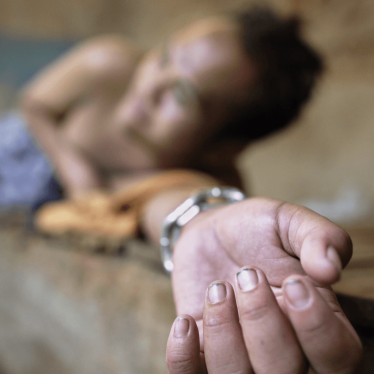
    Currently in Indonesia, over 18,000 people with psychosocial disabilities (mental health conditions) are kept in chains – in part because of a dearth of mental health services. But that may begin to change.
    A man with psychological disability appears to be chained to a wooden bed.
  • April 4, 2016
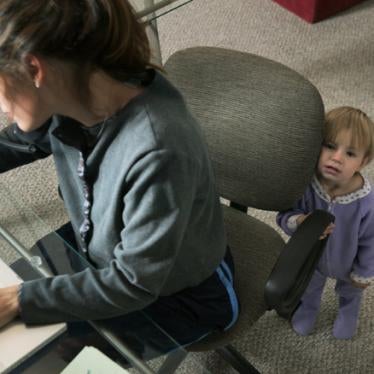
    Today, New York took a vital step toward supporting working families. The governor signed into law a state budget bill establishing a paid family leave program. It will ensure that families will no longer have to choose between a paycheck and urgent family care needs.
  • March 31, 2016
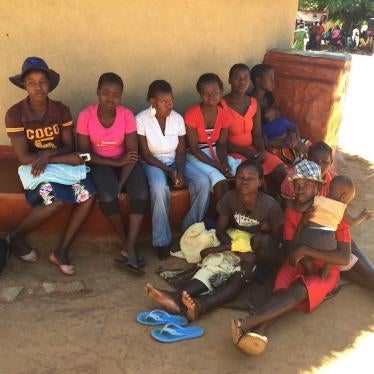
    Last week, Zimbabwe’s Vice President Emmerson Mnangagwa announced that the government is developing laws to make it a criminal offense to pay lobola (bride wealth) for girls under age 18. It was the latest hopeful sign that the country is moving in the right direction on ending child marriage.
    A group of child brides at Annandale farm, Shamva, Mashonaland Central Province after participating in a community meeting on ending child marriage.
  • January 26, 2016
    In a report released last night, the United States Justice Department (DOJ) has called for a number of substantial reforms to the use of solitary confinement in the US, including banning solitary confinement for children. The report directs changes to the US Bureau of Prisons and also promotes “guiding principles” that should apply to other federal agencies – like the Department of Homeland Security – as well as state and local governments.
  • January 25, 2016
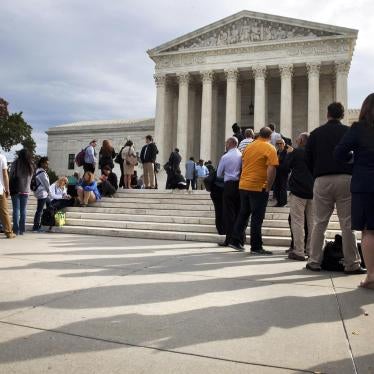
    Henry Montgomery, sentenced to life without parole for a crime he committed at 17, has spent “each day of the past 46 years knowing he was condemned to die in prison.” Today, the United States Supreme Court gave him new hope.
    People line up outside of the Supreme Court in Washington, Tuesday, Oct. 13, 2015, as Justices began to discuss Montgomery v. Louisiana.
  • December 22, 2015
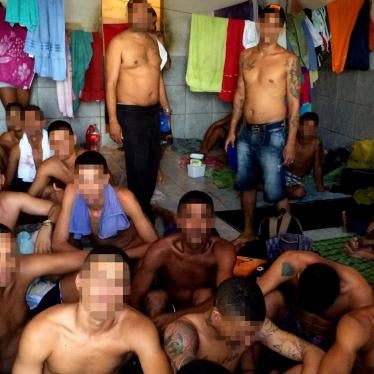
    Brazilian officials proposed a new initiative that could improve prison conditions and reduce the sometimes years-long delays people face before seeing a judge. This change followed the release of a Human Rights Watch report on extreme overcrowding and abysmal treatment in some of Brazil’s prisons.
    2015AME_Brazil_Prisons_PHOTO
  • December 21, 2015
    (Nairobi) — The Malawian government has reaffirmed its moratorium on prosecuting consensual same-sex conduct, the Centre for the Development of the People (CEDEP) and Human Rights Watch said today. Authorities also dropped sodomy charges against two men arrested on December 7, 2015.