Impact

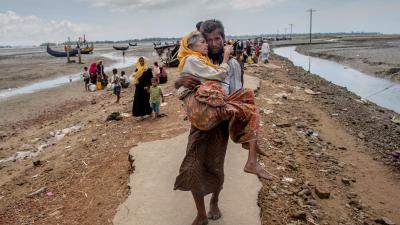
By investigating and exposing human rights abuses, we work to create a world where everyone is treated fairly and equitably, no matter their race, religion, or beliefs. We call for action so that people who disagree with their government can speak their opinions freely, so that children are protected, and refugees cared for. All of us, regardless of who we are, who we love, or the color of our skin, should be able to enjoy fully our human rights.

BROWSE ALL IMPACT ›

Change is sometimes immediate, sometimes incremental. We work on issues for years and know from experience how to transform deep-rooted problems. Here are examples of some of the recent impact we have made, together with our partners, in advancing human rights around the world.

How do we bring about change?

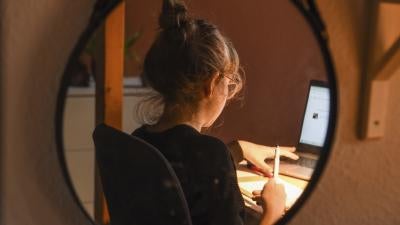
Investigate
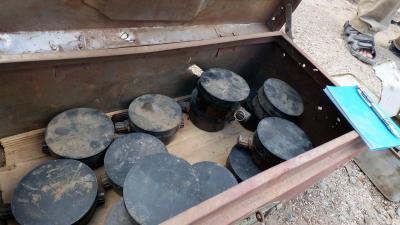
Our researchers investigate human rights abuses, first by speaking with victims or witnesses. We corroborate their stories using a variety of sources, including government records, weapons’ fragments, satellite imagery, and the statements of accused perpetrators – be they members of governments, armed groups, or companies. We often do this work together with partner activists.

Expose
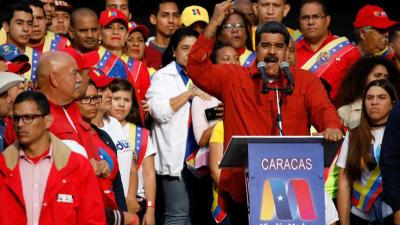
We share this information widely, in multiple languages, to help shape public debate. Our reports, videos, and social media posts show up hundreds of times daily in news media around the world, bringing both global and local attention to our rigorously fact-checked findings.

Change
Often in coalition with local groups, we bring our findings to officials who have the power to change things. For every issue we work on, we make specific, concrete policy recommendations that will bring people justice, prevent future abuses, and protect human rights.

Our work has been instrumental in some foundational victories for human rights, including our work on banning landmines worldwide, for which we and our partners received the 1997 Nobel Peace Prize. Below are some examples of our historic impact.

All impact

  • November 21, 2016
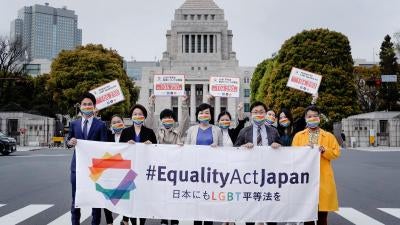
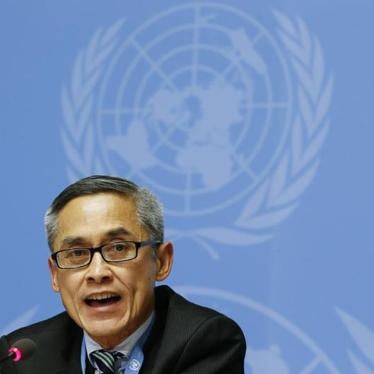
    A close vote on November 21, 2016, by a United Nations General Assembly committee affirming that the newly appointed UN expert to address violence and discrimination based on sexual orientation and gender identity should continue his work is a victory for human rights, Human Rights Watch said today.
    Vitit Muntarbhorn, recently appointed Independent Expert on Sexual Orientation and Gender Identity, addresses the media during a news conference at the United Nations headqua
  • November 1, 2016
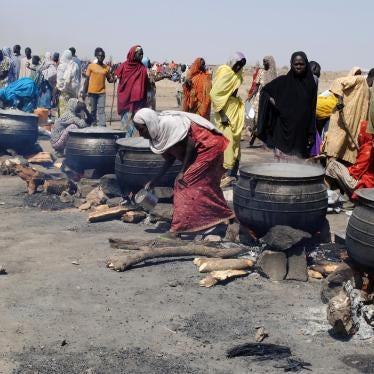
    Following yesterday’s release of a Human Rights Watch report detailing how Nigerian authorities raped and sexually exploited women and girls displaced by Boko Haram, Nigeria’s President Muhammadu Buhari released a statement through his spokesman that he has ordered an immediate investigation into the findings.
    Women cook in pots heated up with firewood at an Internally Displaced Persons (IDP) camp at Dikwa in Borno State, north-eastern Nigeria, on February 2, 2016.
  • October 20, 2016
    Human Rights Watch released a question-and-answer document and video on October 20, 2016 that highlight the groundbreaking investigations and prosecutions in European countries of people accused of kidnappings, ill-treatment, and torture in Syria and Iraq. These criminal cases were possible because of the arrival in Europe of both victims and suspects during the refugee crisis.
    Display design
  • September 28, 2016
    A decade ago I was confronted with a massive display of homophobia. At the time I was a member of the Dutch Parliament visiting the island of Aruba, a constituent country of the Kingdom of the Netherlands. I was with members of Parliament from the Netherlands, from Aruba, and from other islands of the Dutch Antilles in the Caribbean. I proposed a delicate topic for the agenda: the legal recognition in Aruba of same-sex marriages conducted in the Netherlands.
  • September 22, 2016
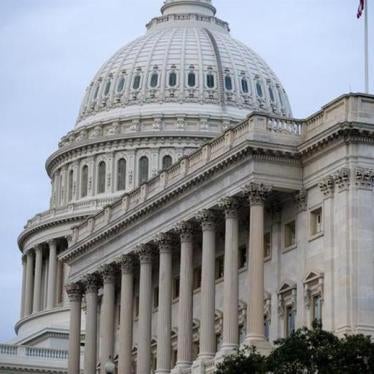
    The US Senate debated and voted yesterday on an important resolution on whether to stop a $1.15 billion arms sale to Saudi Arabia. While the resolution ultimately did not pass, an unprecedented number of senators voiced concerns about providing new weapons to Saudi Arabia – a stunning rebuke to a long-standing strategic ally.
    A view of the Capitol Building in Washington October 15, 2013.
  • September 22, 2016
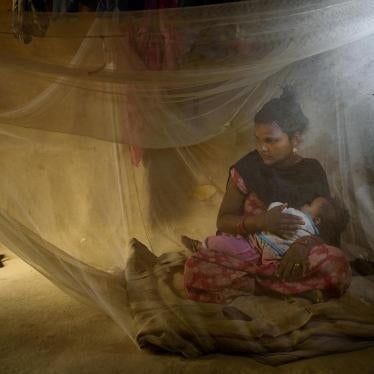
    When Lalita was 12-years-old her parents arranged for her to marry a 37-year-old man. By the time Human Rights Watch met her last April in Nepal, she was 17 and had given birth to three children – two of whom died as newborns. “[The doctors] told me it was because I was too young,’” Lalita told us. Later her husband left her and married another woman. “I don’t want what happened to me to happen to [my daughter],” she said. “My life is destroyed. I hope it will turn out differently for her.”
    Lalita B., 17, had an arranged marriage at the age of 12 with a 37-year-old man. She became pregnant soon after marriage, and two of her newborns died. Lalita’s third child survived. Lalita’s husband abandoned her in 2015 and married another woman.
  • September 14, 2016
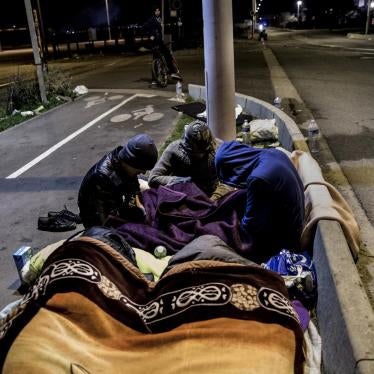
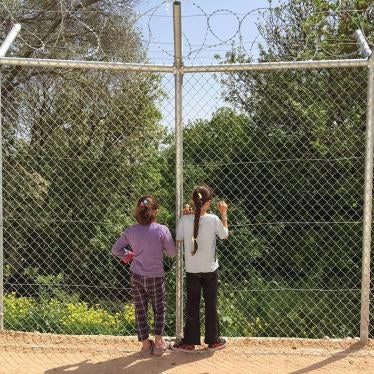
    In his State of the Union address this morning, European Commission President Jean-Claude Juncker asked the EU and Greece to take strong and immediate action to help unaccompanied children: “without protection of these children, Europe is betraying its historic values.” On September 10, the European Commission announced €115 million in new emergency funding to improve conditions for refugees in Greece, including for facilities for unaccompanied children.
    © 2016 Human Rights Watch
  • September 8, 2016
    Gap Inc. is the latest clothing brand to disclose the list of factories that produce its clothes around the world, Human Rights Watch said today. Previously, Gap had said that it was withholding information about its supplier factories for “competition reasons.”
    The sign for a Gap store is seen on 5th avenue in midtown Manhattan in New York June 16, 2015.