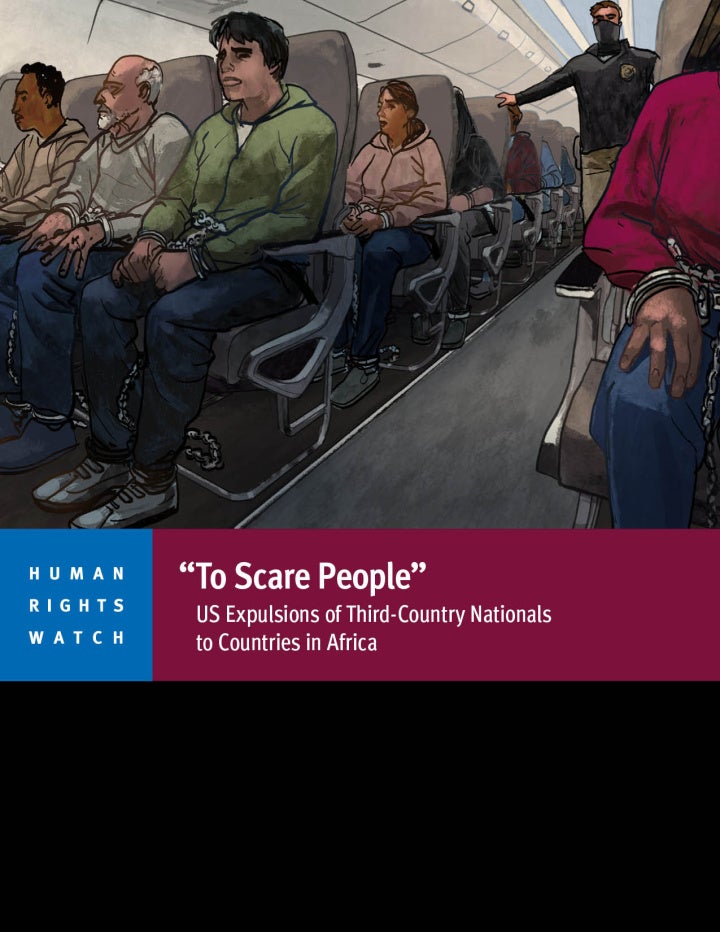
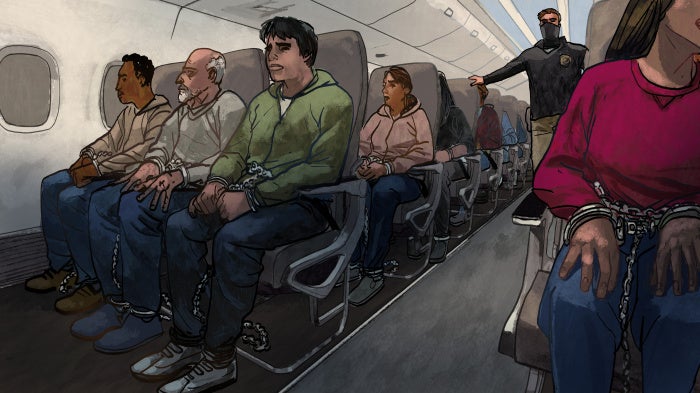
US Expulsions of Third-Country Nationals to Countries in Africa
The 125-page report, “‘To Scare People’: US Expulsions of Third-Country Nationals to Countries in Africa,” documents that US authorities denied the more than 500 people transferred to third countries a meaningful chance to contest their removals or to articulate their fears of being removed to these countries. Some countries arbitrarily detained people they had accepted, and some have sent people onward to the risk of persecution or torture in their home countries, violating the international law principle of nonrefoulement.
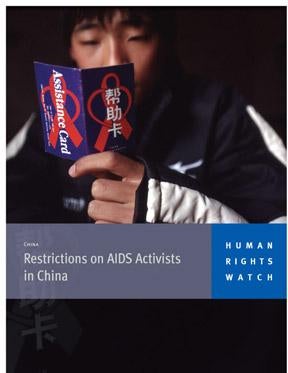
This 57-page report based on on-the-ground interviews with Chinese AIDS activists, gay rights activists, activists working with drug users, and website managers shows that while senior officials have said they want to encourage China's emerging civil society, many AIDS activists face state harassment and bureaucratic restrictions.
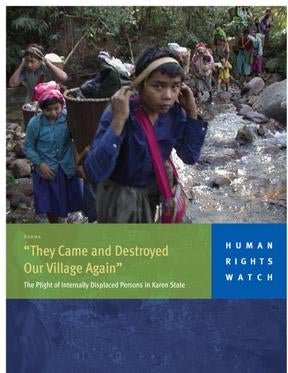
The Plight of Internally Displaced Persons in Karen State
While the nonviolent struggle of Daw Aung San Suu Kyi against the Burmese military government’s continuing repression has captured the world’s attention, the profound human rights and humanitarian crisis endured by Burma’s ethnic minority communities has largely been ignored.
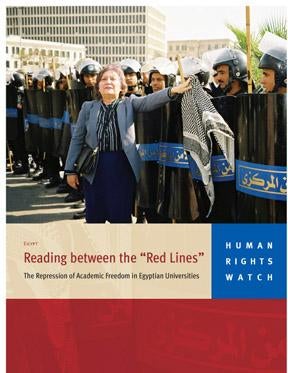
The Repression of Academic Freedom in Egyptian Universities
This report details ongoing government restrictions on classroom discussions, research projects, student activities, campus demonstrations and university governance. The report addresses conditions in public institutions including Cairo, Alexandria, `Ain Shams, and Hilwan Universities, and private institutions like the American University in Cairo.
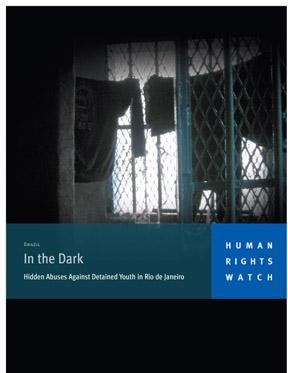
Hidden Abuses Against Detained Youths in Rio de Janeiro
When Human Rights Watch last visited Rio de Janeiro’s five juvenile detention centers, in July and August 2003, we found a system that was decaying, filthy, and dangerously overcrowded. The facilities we saw did not meet basic standards of health or hygiene.
Human Rights Watch Report to the Commission of Inquiry on Maher Arar
On June 7, Julia Hall, Senior Researcher for Human Rights Watch, testfied before a Canadian Commission of Inquiry that is investigating the transfer of Maher Arar to Syria, where he alleges he was brutally tortured. Arar, a Canadian citizen, was transferred by U.S. authorities to Jordan with the understanding he would be turned over to Syria.
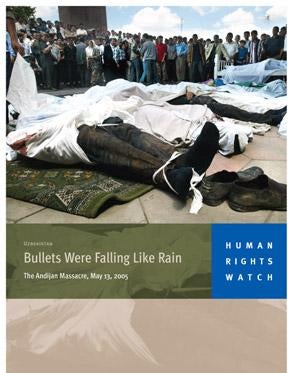
This report is based on 50 interviews with victims of and witnesses to the May 13 killings. It details the Uzbek government’s indiscriminate use of lethal force against unarmed people, describes government efforts to silence witnesses, and places the events against the background of Uzbekistan’s worsening human rights record.
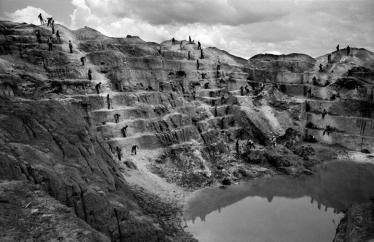
This 159-page report documents how local armed groups fighting for the control of gold mines and trading routes have committed war crimes and crimes against humanity using the profits from gold to fund their activities and buy weapons.
This 75-page report provides the first detailed analysis of clashes between Muslims and Christians in northern and central Nigeria in February and May 2004 and the factors that continue to threaten the stability of central and northern Nigeria.
Human Rights Abuses Inside the Mojahedin Khalq Camps
The Mojahedin Khalq Organization (MKO) is an armed Iranian opposition group that was formed in 1965. An urban guerrilla group fighting against the government of Mohammad Reza Pahlavi, it was an active participant in the anti-monarchy struggle that resulted in the 1979 Iranian revolution. At present, the MKO is listed as a terrorist organization by the U.S.
Human Rights Watch and Foundation for Human Rights Initiative submission to the U.N. Committee against Torture
Uganda ratified the Convention against Torture and Other Cruel, Inhuman or Degrading Treatment and Punishment in 1986. As the U.N. Committee against Torture scrutinizes Uganda’s compliance with the Convention, Human Rights Watch and the Foundation for Human Rights Initiative (FHRI) raised their concerns.
Recent religious reforms announced by the Vietnamese government are not improving religious freedom for many Christian Montagnards, indigenous hill people from Vietnam’s Central Highlands.
Sometime at the end of February 2004, six Egyptians, alleged militants who had spent several years in exile in Yemen, the last several in official custody, were surreptitiously ferried from Sanaa to Cairo, very much against their will.
Human Rights Abuses and Political Repression in Ethiopia's Oromia Region
On May 15, 2005, Ethiopia will hold national elections. The international community, including international donors, who have poured substantial amounts of aid into Ethiopia since the current government came to power fourteen years ago, will be watching these elections closely for signs that Ethiopia is moving towards real democracy.