US Expulsions of Third-Country Nationals to Countries in Africa
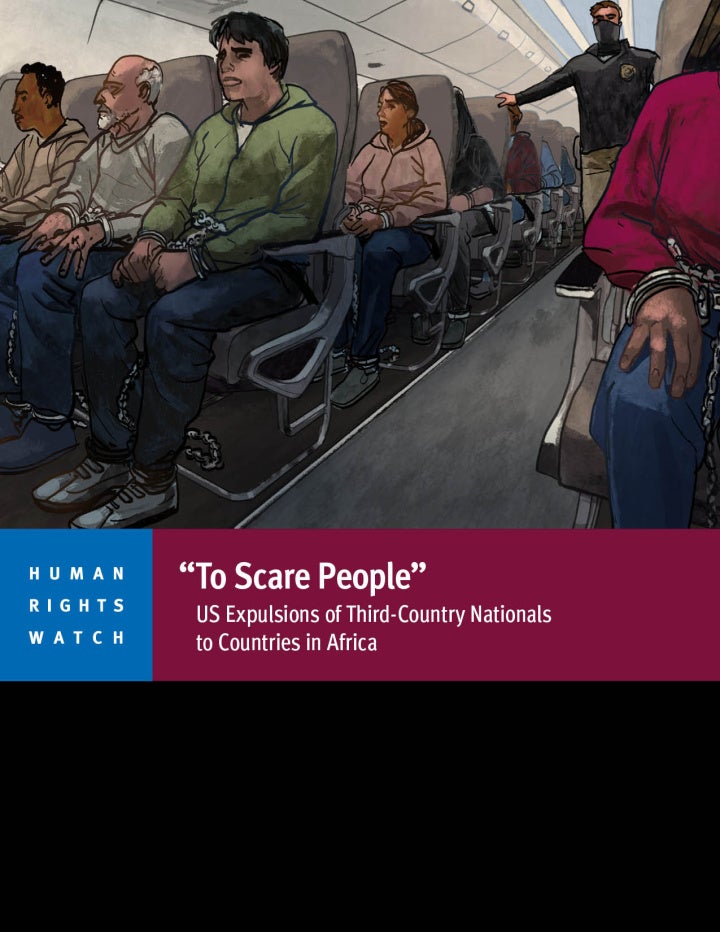
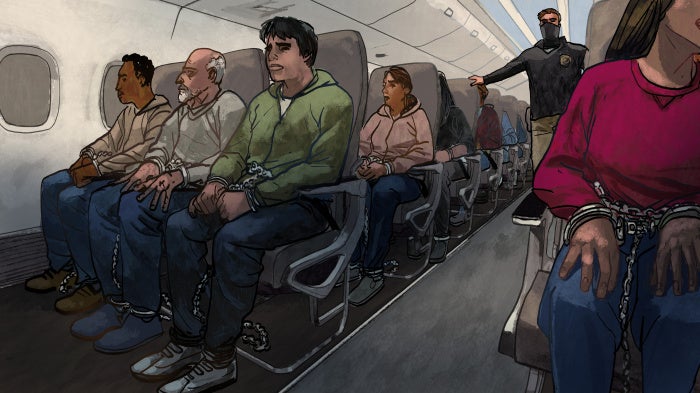
The 125-page report, “‘To Scare People’: US Expulsions of Third-Country Nationals to Countries in Africa,” documents that US authorities denied the more than 500 people transferred to third countries a meaningful chance to contest their removals or to articulate their fears of being removed to these countries. Some countries arbitrarily detained people they had accepted, and some have sent people onward to the risk of persecution or torture in their home countries, violating the international law principle of nonrefoulement.
Consolidation of Ethnic Cleansing in Darfur, Sudan
This report documents the continuing climate of violence and insecurity in Darfur, and the urgent need for an expanded international protection force, especially near the camps that hold many of Darfur’s 1.6 million displaced persons. Just this week, as the U.N. Security Council prepared to meet in Nairobi, Sudanese security forces brazenly overran camps for the displaced persons.
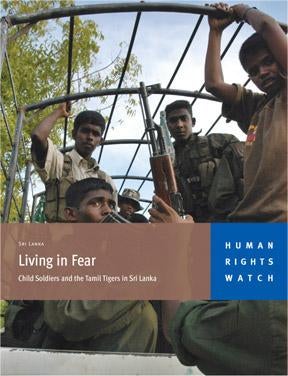
This 80 page report includes firsthand testimonies from dozens of children from northeastern Sri Lanka who have been recruited by the Tamil Tigers since the ceasefire came into effect. Children described rigorous and sometimes brutal military training, including training with heavy weapons, bombs and landmines.
This 41-page report details what happened to some of the key archival and forensic evidence that the U.S.-led coalition and, more recently, the Iraqi interim government failed to secure.
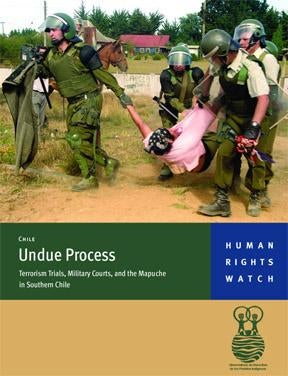
Terrorism Trials, Military Courts and the Mapuche in Southern Chile
This 60-page report shows how Mapuche defendants charged with terrorist acts face unequal trials for crimes that do not pose a direct threat to life, liberty or physical integrity.
The following is a compilation by Human Rights Watch of accounts by thirty-three former detainees at Guantanamo of their experiences there. Human Rights Watch interviewed sixteen of the detainees, reviewed press reports containing statements by former detainees interviewed by journalists, and used as well statements published by the detainees themselves.
The 70-page report, “Human Rights at a Crossroads,” features interviews with the lawyers and family members of Moroccan prisoners who said that their interrogators had subjected them to physical and mental abuse, in some cases amounting to torture, in order to extract confessions or to induce them to sign a statement they had not made.
A Belgian judge has issued an international arrest warrant charging Chad’s exiled former president, Hissène Habré, with human rights crimes committed during his 1982-90 rule. Habré lives in exile in Senegal, where he was indicted four years ago before courts ruled that he could not be tried there.
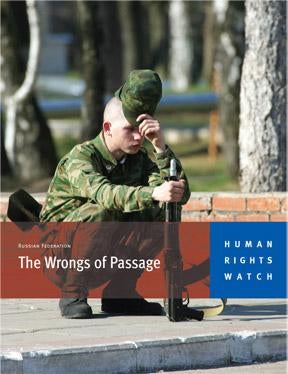
Inhuman and Degrading Treatment of New Recruits in the Russian Armed Forces
This 86-page report documents the serious human rights abuses involved in dedovshchina, or “rule of the grandfathers,” which results in the deaths of dozens of conscripts every year, and serious—and often permanent—damage to the physical and mental health of thousands others. Hundreds of conscripts commit or attempt suicide each year, and thousands run away from their units.
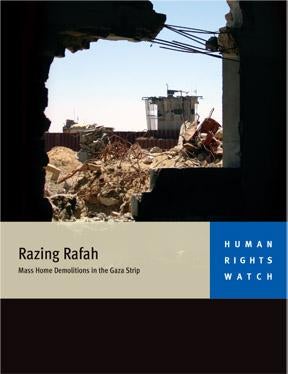
This 135-page report focuses on the southern Gaza town of Rafah, where more than 10 percent of the population has lost their homes. As well as research and interviews conducted in Gaza, Israel and Egypt, the report uses satellite imagery, maps, graphs and photographs to document a pattern of illegal demolitions by the IDF.
The events associated with a demonstration in the Ivorian commercial capital of Abidjan by opposition groups planned for March 25, 2004, were accompanied by a deadly crackdown by government backed forces, including the security forces, pro-government militias, and FPI party militants
War Crimes Trials in Croatia, Bosnia and Herzegovina, and Serbia and Montenegro
This 31-page report examines domestic war crimes trials that have taken place since 2000 for crimes committed during the armed conflicts of the 1990s in the former Yugoslavia. Human Rights Watch has also monitored various of these trials.
In the aftermath of the September 11, 2001 attacks on the United States, the Bush administration has violated the most basic legal norms in its treatment of security detainees. Many have been held in offshore prisons, the most well known of which is at Guantánamo Bay, Cuba.
In Côte d’Ivoire, both government and rebel forces have been responsible for massacres, sexual violence and recruiting child soldiers, and those most responsible must be held accountable for their crimes.
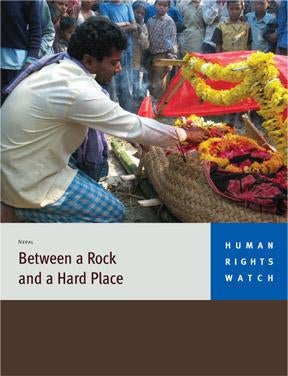
Civilians Struggle to Survive in Nepal’s Civil War
This 102-page report details how civilians in contested areas are often faced with untenable choices. Refusal to provide shelter to the rebels puts villagers at risk from Maoists who are ruthless in their punishments, while providing such support leaves them vulnerable to reprisal attacks from state security forces.
Intimidation and Attacks against Women in Public Life in Afghanistan
When a U.S.-led coalition invaded Afghanistan in October 2001, one of the justifications for the war was that it would liberate women from the misogynistic rule of the Taliban. Three years later, on the eve of the country’s first-ever national presidential elections on October 9, 2004, there have been notable improvements for women and girls.