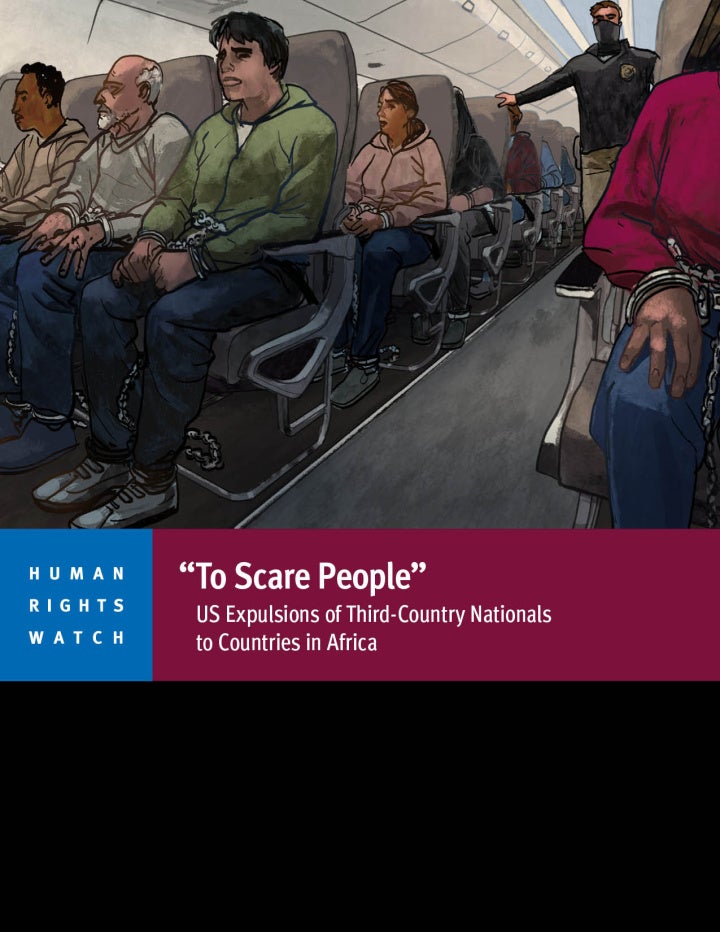
US Expulsions of Third-Country Nationals to Countries in Africa
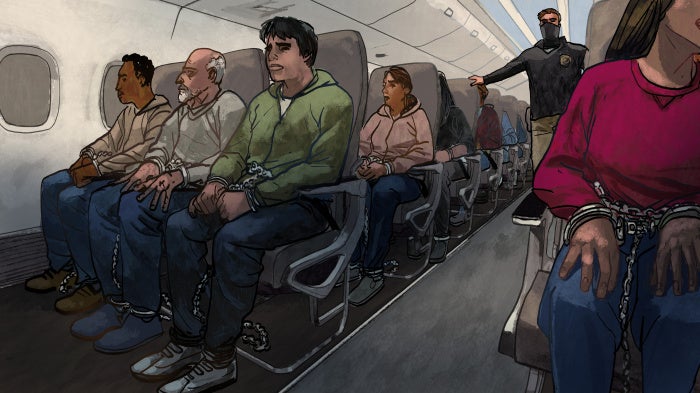
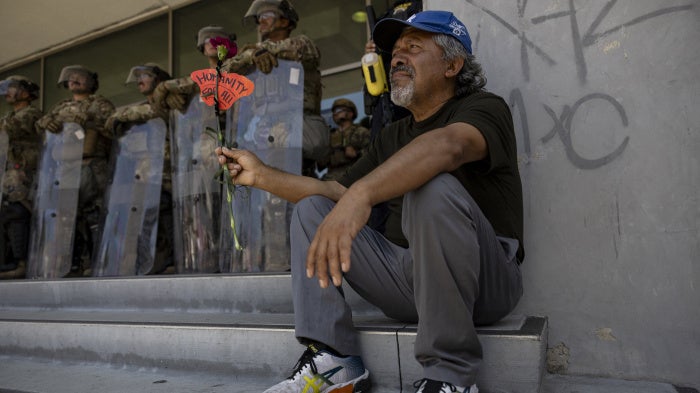
The 125-page report, “‘To Scare People’: US Expulsions of Third-Country Nationals to Countries in Africa,” documents that US authorities denied the more than 500 people transferred to third countries a meaningful chance to contest their removals or to articulate their fears of being removed to these countries. Some countries arbitrarily detained people they had accepted, and some have sent people onward to the risk of persecution or torture in their home countries, violating the international law principle of nonrefoulement.
Hazardous Child Labor in El Salvador’s Sugarcane Cultivation
Businesses purchasing sugar from El Salvador, including The Coca-Cola Company, are using the product of child labor that is both hazardous and widespread. Harvesting cane requires children to use machetes and other sharp knives to cut sugarcane and strip the leaves off the stalks, work they perform for up to nine hours each day in the hot sun.
This 38-page report examines how the Bush administration adopted a deliberate policy of permitting illegal interrogation techniques – and then spent two years covering up or ignoring reports of torture and other abuse by U.S. troops.
Torture, Detention, and the Crushing of Dissent in Iran
This 73-page report provides the first comprehensive account of the treatment of political detainees in Tehran’s Evin Prison and in secret prisons around the capital since the government launched its current crackdown in 2000.
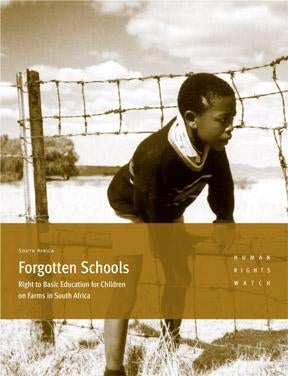
Right to Basic Education for Children on Farms in South Africa
This 59-page report found that the government’s failure to negotiate contracts with farm owners impedes children’s right to basic education. In the worst cases, farm owners have deliberately obstructed children's access to the schools.
Both Nigeria’s federal and state elections in 2003 and local government elections in 2004 were marred by serious incidents of violence. The scale of the violence and intimidation, much of which went unreported, called into question the credibility of these elections. This report documents cases of electoral violence in 2003.
Detainees held by the United States in Iraq, Afghanistan, and elsewhere have been subjected to sleep and sensory deprivation, held in painful stress positions, forced to stand for long periods of time, interrogated while nude, and otherwise mistreated.
Vietnamese officials and civilians acting on their behalf beat and killed dozens of Montagnards during Easter week demonstrations in the Central Highlands, when thousands of people gathered to protest confiscation of ancestral lands and religious repression, according to new eyewitness testimony obtained by Human Rights Watch.
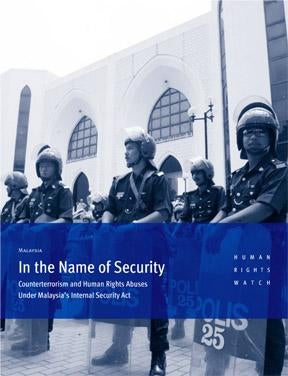
Counterterrorism and Human Rights Abuses Under Malaysia’s Internal Security Act
This 60-page report documents a pattern of serious abuses against detainees, including beatings, burning with lit cigarettes, and psychological abuse. In addition to suffering from various forms of physical and psychological abuse, detainees held under the Internal Security Act (ISA) have been denied basic due process rights.
The current dire humanitarian crisis in Darfur has been caused by massive, systematic violations of international human rights and humanitarian law constituting crimes against humanity committed by the Sudanese Government and its ethnic militia, the Janjaweed.
Human Rights Watch has repeatedly tried to gain access to U.S. detention facilities in Iraq but U.S. military officials in Baghdad have denied requests for visitation rights. Human Rights Watch is able to have regular access to prisons and detention centers under Kurdish control in northern Iraq.
Ethnic Cleansing by Government and Militia Forces in Western Sudan
This 77-page report documents how Sudanese government forces have overseen and directly participated in massacres, summary executions of civilians, burnings of towns and villages, and the forcible depopulation of wide swathes of land long-inhabited by the Fur, Masalit and Zaghawa ethnic groups.
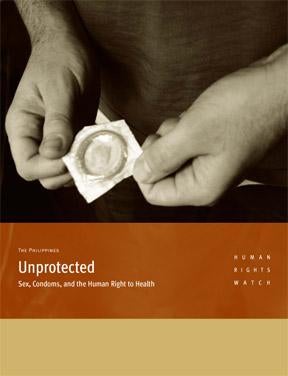
In this 70-page report, Human Rights Watch says that the Philippine government bans the use of national funds for condom supplies. Some local authorities, such as the mayor of Manila City, prohibit the distribution of condoms in government health facilities. School-based HIV/AIDS educators told Human Rights Watch that schools often prohibited them from discussing condoms with students.
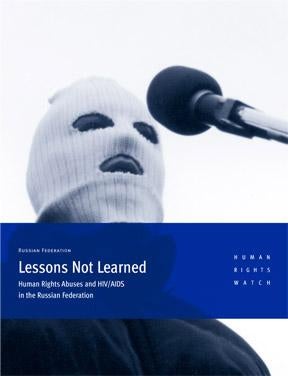
Human Rights Abuses and HIV/AIDS in the Russian Federation
This 62-page report documents how harsh drug policies and routine police harassment of injection drug users—the population hit hardest by AIDS in Russia—impedes their access or makes them afraid to seek basic HIV-prevention services such as syringe exchange, which is available in other countries around the world.
This 37-page report documents the killings and attempted murders of women by male family members who claim they are defending family "honor." The report also details the cases of women, threatened with "honor" crimes, who languish in prison for years while held in protective custody.