US Expulsions of Third-Country Nationals to Countries in Africa
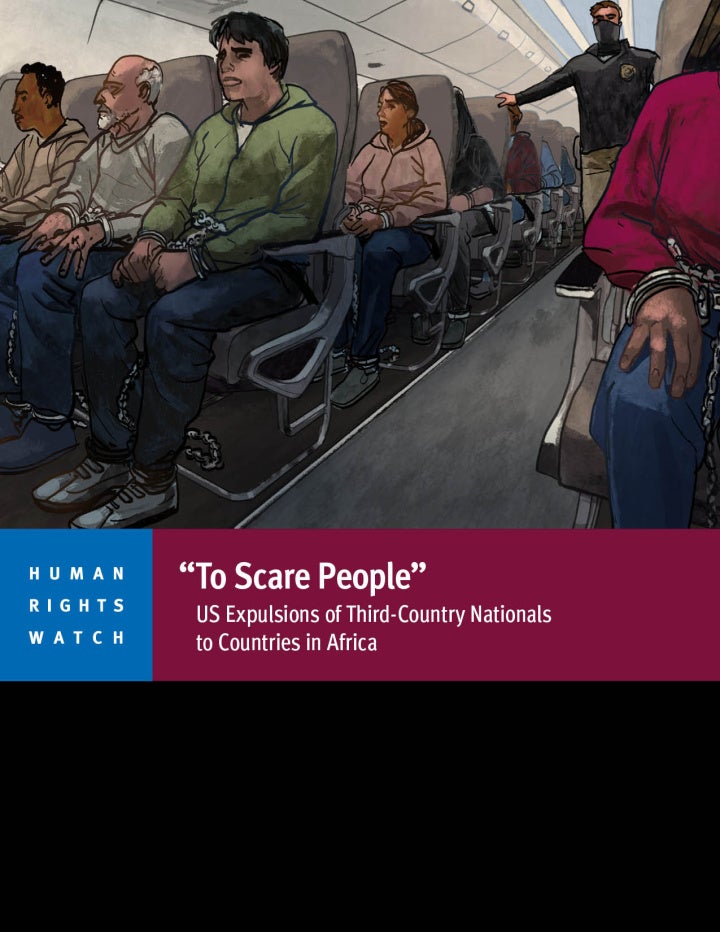
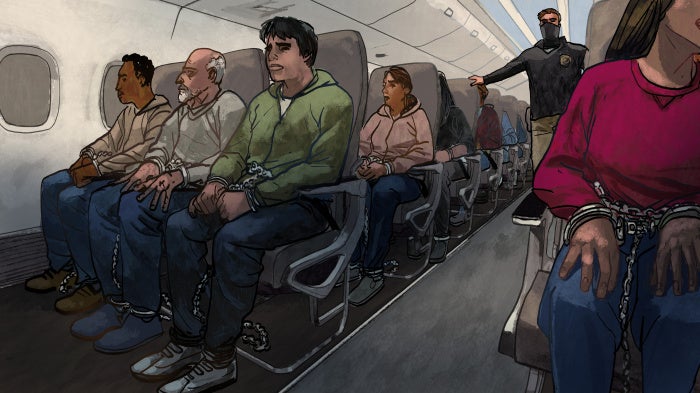
The 125-page report, “‘To Scare People’: US Expulsions of Third-Country Nationals to Countries in Africa,” documents that US authorities denied the more than 500 people transferred to third countries a meaningful chance to contest their removals or to articulate their fears of being removed to these countries. Some countries arbitrarily detained people they had accepted, and some have sent people onward to the risk of persecution or torture in their home countries, violating the international law principle of nonrefoulement.
Zimbabweans go to the polls on March 31, 2005. President Robert Mugabe and senior government officials of the government of Zimbabwe have emphasized the need for peaceful elections, and put in place electoral reforms that, they argue, meet the Southern African Development Community (SADC) Principles and Guidelines Governing Democratic Elections.
“Disappearances” in Chechnya—a Crime Against Humanity
Enforced disappearances in Chechnya are so widespread and systematic that they constitute crimes against humanity. Human Rights Watch urges the United Nations Commission on Human Rights to take urgent measures commensurate with the extreme gravity of the phenomenon.
Human Rights Watch welcomes this opportunity to present views regarding whether Ecuador meets the eligibility criteria of the Andean Trade Promotion and Drug Eradication Act (ATPDEA). These criteria include those in the original Andean Trade Preferences Act (ATPA), as well as those added in the ATPDEA, which extended and expanded the ATPA in 2002.
This 39-page report documents how most families have returned to locations that still lack minimal social services, such as health care and education, let alone employment. Elderly and disabled persons, widows and female-headed households experience the worst shortfalls in government assistance, particularly in rural areas.
Uzbekistan’s Implementation of the Recommendations of the Special Rapporteur on Torture
Three years ago, the government of Uzbekistan took the important step of issuing an invitation to the United Nations (U.N.) Special Rapporteur on torture and other cruel, inhuman degrading treatment or punishment, the first government of the five Central Asian states to do so.
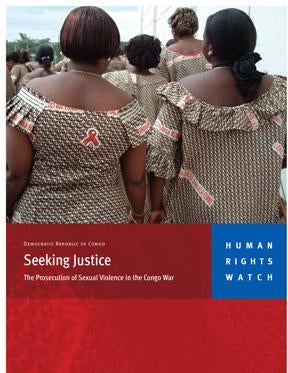
The Prosecution of Sexual Violence in the Congo War
This 52-page report documents how the government of the Democratic Republic of Congo has taken insufficient steps to prosecute those responsible for wartime rape. Human Rights Watch calls on the Congolese government and international donors, including the European Union, to take urgent steps to reform Congo’s justice system.
Prospects in 2005 for Internally Displaced Kurds in Turkey
This 37-page report details how the Turkish government has failed to implement measures for IDPs the United Nations recommended nearly three years ago. Since the European Union confirmed Turkey’s membership candidacy in December, the Turkish government appears to have shelved plans to enact those measures.
The control orders envisioned in the Prevention of Terrorism Bill 2005 (hereafter “the Bill”) offer a seriously flawed alternative to the disastrous policy of indefinite detention under the Anti-Terrorism Crime and Security Act 2001, a policy ruled contrary to human rights law by the House of Lords Judicial Committee.
This report documents more than 200 enforced disappearances perpetrated by the Nepali army and police and analyzes the factors responsible for the crisis.
This 48-page report documents how, in the weeks and months after the bombing that killed 30 people in the resort town of Taba, the State Security Investigation agency conducted mass arrests in northern Sinai without a warrant or judicial order as required by Egyptian law.
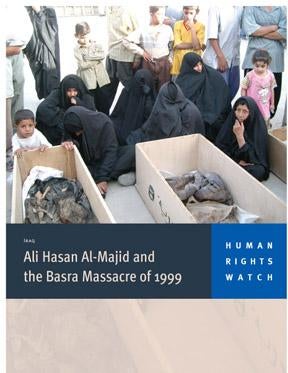
Al-Majid earned the sobriquet “Chemical Ali” because of his role in the genocidal Anfal campaign between February and August 1988, and his use of chemical weapons against Kurdish villagers in northern Iraq beginning in April 1987.
On September 27, 2004, the leader of a powerful armed group threatened to launch an “all-out war” in the Niger Delta - sending shock waves through the oil industry – unless the federal government ceded greater control of the region’s vast oil resources to the Ijaw people, the majority tribe in the Niger Delta.
US: Life Without Parole Sentences for Children in Colorado
Across Colorado, residents are beginning to question whether children who commit a crime before the age of eighteen should ever be sentenced to life without parole. Historically, this harshest of prison sentences was restricted to adults.
This 65-page report analyzes aspects of Spain’s criminal law and procedures that fall short of its commitments under international human rights law. Problematic practices include the use of incommunicado detention and secret legal proceedings, limitations on the right to a lawyer during the initial period of detention, and lengthy periods of pre-trial detention.