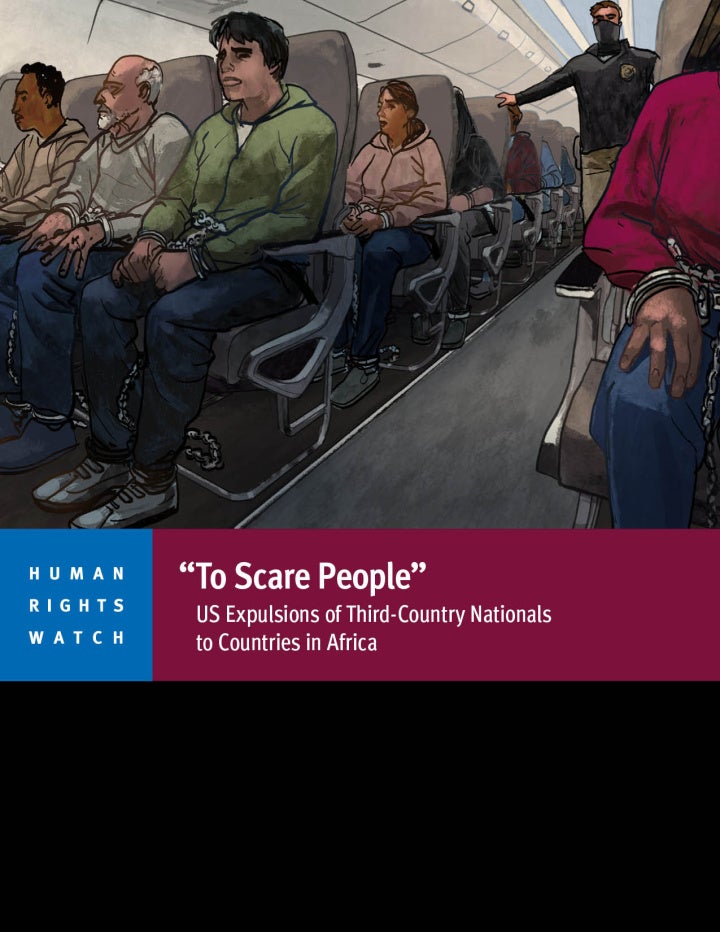
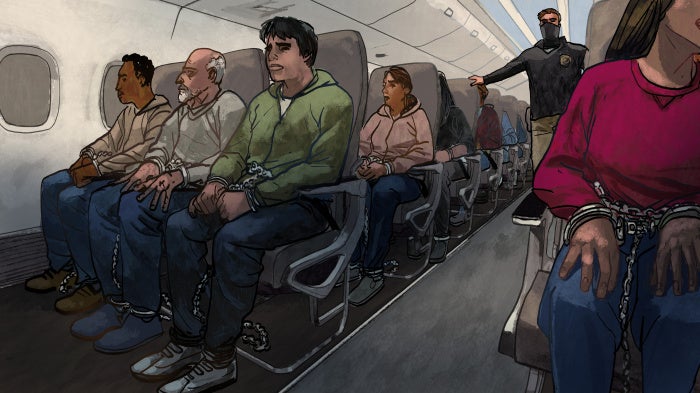
US Expulsions of Third-Country Nationals to Countries in Africa
The 125-page report, “‘To Scare People’: US Expulsions of Third-Country Nationals to Countries in Africa,” documents that US authorities denied the more than 500 people transferred to third countries a meaningful chance to contest their removals or to articulate their fears of being removed to these countries. Some countries arbitrarily detained people they had accepted, and some have sent people onward to the risk of persecution or torture in their home countries, violating the international law principle of nonrefoulement.
No weapons used by U.S.-led coalition forces in Iraq in 2003 caused more civilian casualties than cluster munitions, large weapons that contain dozens or hundreds of smaller submunitions. This briefing paper critically examines the status and quality of current U.S.
In the 15 previous years of the Hellman/Hammett grant program, more than 500 writers received grants totaling more than $2.5 million. The Hellman/Hammett program also makes small emergency grants throughout the year to writers who have an urgent need to leave their country or who need immediate medical treatment after serving prison terms or enduring torture.
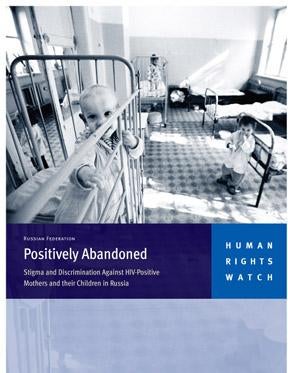
Stigma and Discrimination against HIV-Positive Mothers and their Children in Russia
As Russia’s HIV/AIDS epidemic spreads, thousands of HIV-positive mothers and their children face pervasive discrimination and abuse. This 41-page report focuses on the discrimination that these women face, as do their children, many of whom are abandoned to the care of the state.
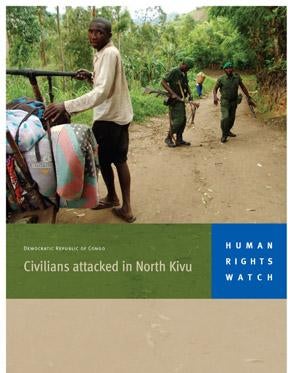
This 34-page report documents war crimes and other serious human rights abuses committed during fighting in December. The failure to integrate the former belligerent groups into one unified national army was a major cause of the conflict; another was heightened ethnic tensions in North Kivu. Some of the newly armed civilians participated in the human rights abuses.
Nearly fifteen years after the fall of Chad’s brutal Cold War dictator, Hissène Habré, dozens of his henchmen still hold key positions of power, including top state security jobs. Meanwhile, the thousands of victims of torture and killings under Habré’s rule have never received compensation or recognition from Chad’s current government.
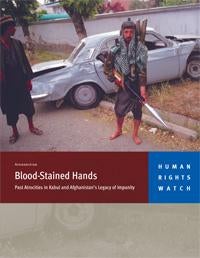
Past Atrocities in Kabul and Afghanistan’s Legacy of Impunity
This 133-page report is based on extensive research by Human Rights Watch over the last two years, including more than 150 interviews with witnesses, survivors, government officials, and combatants.
State Limits on Nongovernmental Organization Activism
This 45-page report discusses the impact of the law governing associations, Law 84/2002, which came into effect in June 2003. The report concludes that the most serious barrier to meaningful freedom of association in Egypt is the extra-legal role of the security services.
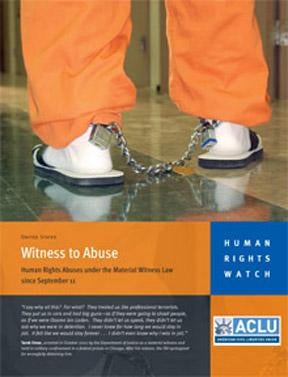
Human Rights Abuses under the Material Witness Law since September 11
The 101-page report, documents how the Justice Department denied the witnesses fundamental due process safeguards. Many were not informed of the reason for their arrest, allowed immediate access to a lawyer, nor permitted to see the evidence used against them. The Justice Department evaded fundamental protections for the suspects and the legal requirements for arrested witnesses.
The Israeli Military’s Failure to Investigate Wrongdoing
This 126-page report documents how Israel has failed in its legal
obligation to investigate civilian deaths and injuries that result from
the use of lethal force in policing and law enforcement contexts, such
as controlling demonstrations or enforcing curfews, and in combat
situations when there is prima facie evidence or credible allegations
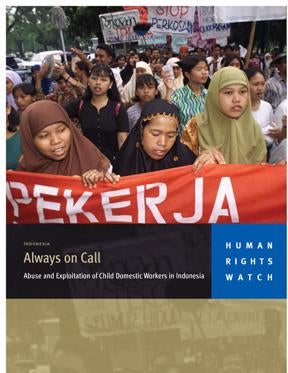
Abuse and Exploitation of Child Domestic Workers in Indonesia
This 74-page report documents how Indonesian children as young as 12 work 14 to 18 hours a day, seven days a week, without a day off. They are also forbidden from leaving their place of employment or contacting their families.
President Bush and Prime Minister Phan Van Khai will hold a joint White House press conference on Tuesday, June 21. In a new briefing paper on Vietnam’s human rights problems, Human Rights Watch outlined key issues that the two leaders should raise.
Persecution of the Ahmadiyya Community in Bangladesh
This 45-page report documents the campaign of violence, harassment and intimidation unleashed by the Khatme Nabuwat (KN)--an umbrella group of Sunni Muslim extremists--against the Ahmadiyya community. The KN and other extremist groups have attacked Ahmadiyya mosques, beaten and killed some Ahmadis, and prevented access to schools and sources of livelihood for others.
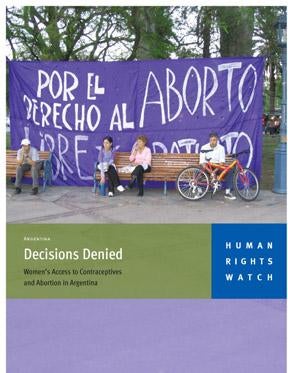
Women’s Access to Contraceptives and Abortion in Argentina
Decisions about contraception and abortion are difficult, deeply personal, and sometimes wrenching. In Argentina, women are routinely prevented from making such decisions.