On August 11, 2026, a court in Damascus delivered the first verdict in Syria addressing crimes committed by eight senior officials of the former government of President Bashar al-Assad. This case is among several ongoing proceedings. While Syrian authorities’ efforts to pursue justice for Assad-era abuses are crucial, these proceedings raised important questions about the adequacy of Syria’s legal system to deliver independent, impartial, and inclusive justice.
This question-and-answer document sets out information about these proceedings, the opportunities they present, and the challenges they face.
- What cases have been brought in Syria for Assad-era crimes?
- What crimes were at issue in the case against Atef Najib and his co-defendants?
- Which court held the trial?
- What evidence was presented against the defendants?
- Have fair trial concerns been raised about the proceedings?
- What sentences were handed down?
- Was the process transparent and accessible for observers and the public?
- How can these trials deliver credible accountability?
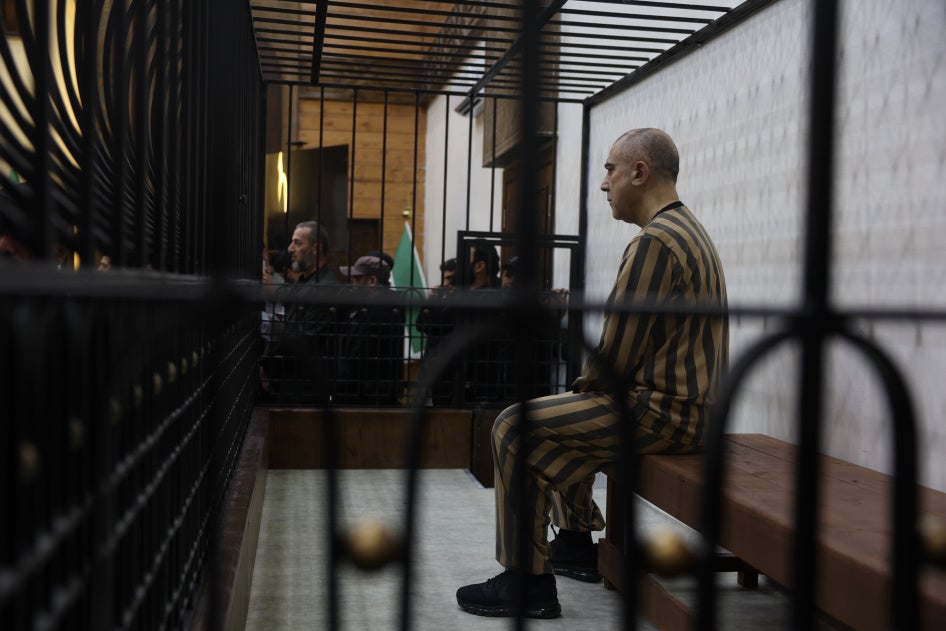
The Fourth Criminal Court in Damascus has begun prosecuting a number of senior figures from the Assad government. In August 2026, it issued its first verdict for Assad-era crimes in Case No. 1 of 2026, convicting Atef Najib and eight co-defendants tried in absentia, including former President Bashar al-Assad and his brother Maher, of crimes against humanity and war crimes.
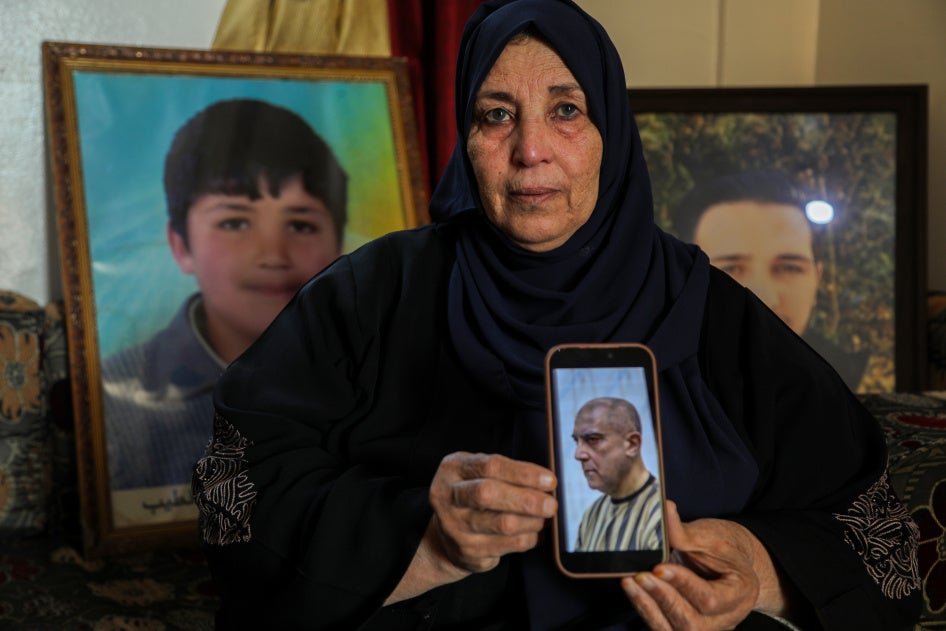
The only defendant to appear in person was Najib, a first cousin of former President al-Assad. Syrian authorities arrested Najib in Latakia in January 2025, following the fall of the Assad government in December 2024. Najib headed the Political Security Branch in the city of Daraa in 2011 during the protests sparked by the detention and torture of 15 boys accused of anti-government graffiti. Security forces later opened fire on a peaceful protest calling for the boys’ release, an incident widely seen as a catalyst for the uprising.
Human Rights Watch documented systematic killings and torture of protesters by Syrian security forces in Daraa, amounting to crimes against humanity. The United States and the European Union sanctioned Najib in 2011. He later became head of the Political Security Branch in Idlib, where Human Rights Watch documented serious abuses, including torture and arbitrary detention, from 2011 onward.
On August 18, Wassim al-Assad, another cousin of the former president who led pro-government paramilitary groups, was also found guilty sentenced to death. A trial against Ahmad Hassoun, Syria’s former grand mufti, is ongoing.
According to the oral verdict delivered by the court on August 11, 2026, the eight defendants were convicted of ordinary crimes as well as crimes against humanity and war crimes. The court stated that the full decision will be published on the Justice Ministry’s official website.
The judges found Najib guilty of what they characterized as the crimes against humanity of premeditated murder, murder of more than one person including children under 15, murder accompanied by torture, torture resulting in death, deprivation of liberty, and kidnapping.
In addition, they convicted Najib on charges of incitement to civil war and sectarian conflict, as well as theft of public funds and money laundering. Syria’s penal code does not provide for crimes against humanity. The crimes were prosecuted under specific Syrian penal code articles (including 534, 535, 216, 556, and 298), Syria’s 2022 anti-torture law, and a 2013 decree on enforced disappearance. The judges cited the definition of crimes against humanity of the Rome Statute, the founding document for the International Criminal Court (ICC).
During the trial’s first and second hearings, the court found that seven other defendants—Bashar al-Assad, Maher al-Assad, Fahd al-Freij, Louay al-Ali, Qusay Mahyoub, Wafiq Nasser, and Talal al-Aysami—had been summoned to trial but failed to appear. The court declared them fugitives, ordered that they be tried in absentia, stripped them of their civil rights, and placed their property under government administration. The court dropped the case against a ninth defendant, Mohammad Ayman Ayoush, who died in November 2015, after the court confirmed his death.
International human rights law disfavors but does not prohibit trials in absentia, provided there are safeguards. Chief among these is the right of defendants to be meaningfully notified and the right to a full and fair retrial if they are later taken into custody. Syrian law provides for those rights, but it is unclear whether those tried in absentia were afforded effective legal representation, another necessary safeguard.
The court convicted Bashar al-Assad of what it termed the crimes against humanity and war crimes of intentional murder, torture, torture resulting in death, repeated deprivation of liberty, and incitement to murder. The court underlined his responsibility both for acts directly attributed to him and, given his position as president, as an indirect perpetrator responsible for acts carried out by others under his authority. However, Syrian law does not formally codify indirect perpetration as a distinct mode of liability.
Bashar al-Assad is reportedly in Russia, and it is unlikely that he will be extradited. All other in-absentia defendants were convicted of similar crimes, including for “command responsibility,” which is also not codified in Syrian law. Command responsibility is a mode of liability that holds superiors individually criminally responsible for crimes committed by their subordinates.
Wassim al-Assad was convicted of what the court characterized as the crimes against humanity and war crimes of multiple murders and “murder accompanied by torture and brutality.”
The case was heard by the Fourth Criminal Court of Damacus, a chamber of three judges designated by the Justice Ministry to hear “transitional justice cases,” that is, cases relating to crimes committed during the Assad era. In practice, this track has been limited to crimes allegedly committed by the Assad government; there are no ongoing domestic processes addressing abuses committed by other parties to the conflict, including armed opposition groups and the Islamic State (ISIS).
The chamber includes Presiding Judge Fakhruddin al-Aryan, who was appointed to the court by presidential decree. The chamber appears to have been created through a ministerial announcement, not legislation. Officials have described the chamber’s creation as a way to speed up proceedings and meet the public demand for accountability.
The referral decision—that is, the indictment—lists more than 40 items, mainly addressing Najib's conduct: formal statements from dozens of witnesses and plaintiffs taken before investigating judges; Najib’s own interrogation statements in which he denied the charges; photographs, including of a victim’s body in a hospital; a certified list of 33 people killed in the Omari Mosque; killings of protesters; and medical and documentary records tied to specific plaintiffs. Human Rights Watch was provided the referral decision unofficially; it has not been made public.
The prosecution's case presented in the hearings rested almost entirely on witness testimony. The referral decision also cites external documentation, including a 1987 Amnesty International report on torture methods used under former President Hafez al-Assad, the father of Bashar al-Assad, and Human Rights Watch's 2012 "Torture Archipelago" report, which had identified Najib as head of a detention facility where torture occurred.
It does not appear that the evidentiary record focused on the individual conduct of the co-defendants tried in absentia.
The limited public information available about the proceedings makes it difficult to assess their fairness and whether the rights of the accused were protected. This lack of transparency itself raises fair trial concerns.
Trial observers and Syrian civil society organizations have emphasized fair trial safeguards as an essential component of credible justice, including the rights to the presumption of innocence, legal representation, and to present a defense. The Syria Justice and Accountability Center (SJAC) has raised concerns that the case was rushed, noting that the verdict was delivered after only nine hearings, and questioned whether the evidence adequately established Najib’s individual responsibility for the crimes charged.
There were also concerns about the defendants’ legal representation. The Syrian Bar Association said Najib’s lawyer faced public pressure for his work. SJAC, which attended all trial sessions, found that Najib’s lawyer failed to adequately defend his interests. The defendants tried in absentia did not appear to have legal representation, and, other than a statement by the judge during the first two trial sessions, it is unclear whether the authorities notified them of the proceedings against them.
Other concerns relate to the lack of legal clarity around the charges and the indictment in the absence of a domestic legal framework defining the specific elements of crimes against humanity and war crimes. The Syrian penal code does not define war crimes or crimes against humanity. To address this, the court relied on article 12(2) of Syria’s Constitutional Declaration, which incorporates into domestic law the rights and freedoms in international human rights treaties that Syria has ratified. The referral decision explicitly frames aspects of the charged conduct as crimes against humanity using the Rome Statute definition, although Syria is not a member of the ICC.
Courts are obligated to respect the international legal principle of legality, which includes non-retroactivity. This means that the accused should have been able to know their conduct was criminal at the time it was committed. That does not bar prosecution for serious international crimes prohibited under international law, even where those crimes were not codified in domestic law at the time of their commission. A second, independent requirement is a clear, precise definition of the offense itself and its specific elements.
While the verdict affirmed Najib’s right to appeal, procedural steps for the appeal remain uncertain. The justice minister stated that Najib had 30 days to appeal the verdict.
What sentences were handed down?
The court sentenced all eight defendants to death.
Although international law does not ban the death penalty, since 2007, the United Nations General Assembly has adopted 1o nonbinding resolutions calling for a moratorium on executions with a view to abolishing the death penalty. In the most recent resolution on December 17, 2024, 130 UN member countries with cross-regional support—more than two-thirds of the UN membership—voted to support a death penalty moratorium.
Human Rights Watch opposes capital punishment in all circumstances, as a practice unique in its cruelty and finality. Imposing the death penalty can undermine the credibility of accountability efforts and complicate international cooperation. Human Rights Watch has called on Syrian authorities to abolish the death penalty and, in the meantime, implement a moratorium on all executions.
Was the process transparent and accessible for observers and the public?
Selected organizations, including Human Rights Watch, were invited to observe the hearings. Human Rights Watch directly observed several sessions over the course of the trial, which began on April 26, 2026.
Concerns about the accessibility of the trial to observers and the general public persist, including the lack of clear criteria and process for selecting organizations permitted to attend. The first hearing and final verdict session were livestreamed. The court cited witness protection, a legitimate basis for closed proceedings under international standards, to close several sessions to the media and the public, and applied specific measures including halting live broadcasts during sensitive testimonies. But no legal framework or regulation governing witness protection exists in Syrian law.
Documents relevant to the case were not easily accessible to monitors and observers. The charges were read out in court, but the court has not made public any official written document setting them out. A lawyer for Najib reportedly raised concerns about the court's legitimacy, citing article 44 of Syria’s Constitutional Declaration, which specifies that courts must be established and their responsibilities defined by law. It is not publicly known how, or whether, the court addressed this issue. It also remains unclear what procedural safeguards for witness protection governed the proceedings.
Not all survivors and families of victims who wished to attend the proceedings were able to do so. Human Rights Watch is unaware of steps the government may have taken, such as livestreaming or broadcasting the proceedings, to ensure that the general public—including in places such as Daraa—could observe the hearings.
Have there been other arrests for alleged international crimes committed during the Assad government’s rule?
Syrian authorities have recently carried out a number of high-profile arrests. These include Amjad Yousef for his alleged responsibility in the 2013 Tadamon massacre; Adnan Abboud Hilweh for his alleged responsibility in the 2013 Ghouta sarin attack; and Jayez al-Moussa, Assad's former air force chief of staff, in connection with alleged serious abuses, including chemical weapons attacks. These cases have already raised due process concerns, including the posting of videos of humiliating arrests and interrogations as well as damaging rhetoric from officials that risks undermining the credibility of the justice process.
Syrian officials told the media that they aim to hold 500 trials relating to crimes committed during the Assad era over the next 5 years. Such efforts will require the authorities to develop a prosecutorial strategy to deal with the broad range of international crimes committed and the large number of alleged perpetrators.
Beyond these trials, there will also be a need to prosecute individuals from non-state armed groups, including ISIS and Hay’et Tahrir al-Sham (HTS), which also committed numerous serious abuses and against whose members there are no current legal proceedings. To the extent possible, affected communities should be consulted as part of this process.
How can these trials deliver credible accountability?
In its verdict in the Najib case, the court acknowledged that Syria bears primary responsibility for prosecuting international crimes committed on its territory, but serious concerns remain about whether domestic proceedings can meet international fair trial standards.
Syrian authorities should urgently secure and preserve evidence of past serious crimes. Syria's security services were notoriously meticulous record-keepers, and large volumes of internal files, interrogation records, and execution orders, as well as several mass graves, survived the government’s fall. Considering the risk of evidence loss and deterioration, it is critical for the government to systematically locate, digitize, and process intelligence archives, detention facility records, civil registry files, and mass grave sites, to ensure that they can be used in future criminal proceedings as well as to help establish what happened to those who disappeared.
Rebuilding confidence in Syria's judicial institutions requires sustained political will to reform the legal and institutional architecture underpinning all cases, not just prosecuting a handful of high-profile suspects. Accountability efforts should also cover all parties to the conflict, not only the former government. Under international law, the duty to investigate and appropriately prosecute grave international crimes is non-negotiable: it can’t be waived through amnesties, statutes of limitations, or other domestic legal barriers, including political settlements or informal arrangements that shield perpetrators from justice.
That standard also applies to serious crimes committed since December 2024, for which accountability efforts have so far been limited. These include the March 2025 killings targeting Alawite Syrians and the July 2025 Sweida violence, both of which Human Rights Watch documented as involving abuses by government forces and armed groups that were apparent war crimes. Military courts in Aleppo and Damascus have opened some proceedings against individuals allegedly involved in those incidents, but their scope, independence, and transparency, and whether they will extend accountability to commanders and senior officials, remain unclear.
Criminal accountability is only one pillar of transitional justice: truth, reparations, memorialization, guarantees of non-recurrence, and security-sector reform all are key elements. International actors that have worked to advance justice for years remain essential: Syrian authorities should give full access to bodies that have spent years analyzing evidence of abuses, notably the International, Impartial and Independent Mechanism (IIIM) and the UN Independent International Commission of Inquiry on Syria. And Syrian authorities should cooperate with third countries conducting universal jurisdiction efforts for crimes committed in Syria.
Syria should ratify the Rome Statute of the ICC and submit a declaration providing it with retroactive jurisdiction back to 2002.