Impact

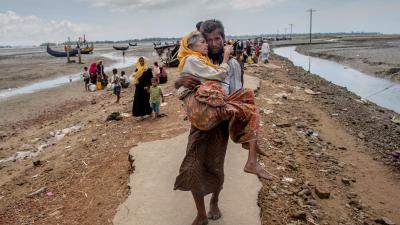
By investigating and exposing human rights abuses, we work to create a world where everyone is treated fairly and equitably, no matter their race, religion, or beliefs. We call for action so that people who disagree with their government can speak their opinions freely, so that children are protected, and refugees cared for. All of us, regardless of who we are, who we love, or the color of our skin, should be able to enjoy fully our human rights.

BROWSE ALL IMPACT ›

Change is sometimes immediate, sometimes incremental. We work on issues for years and know from experience how to transform deep-rooted problems. Here are examples of some of the recent impact we have made, together with our partners, in advancing human rights around the world.

How do we bring about change?

Investigate
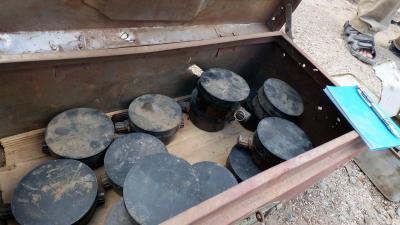
Our researchers investigate human rights abuses, first by speaking with victims or witnesses. We corroborate their stories using a variety of sources, including government records, weapons’ fragments, satellite imagery, and the statements of accused perpetrators – be they members of governments, armed groups, or companies. We often do this work together with partner activists.

Expose
We share this information widely, in multiple languages, to help shape public debate. Our reports, videos, and social media posts show up hundreds of times daily in news media around the world, bringing both global and local attention to our rigorously fact-checked findings.

Change
Often in coalition with local groups, we bring our findings to officials who have the power to change things. For every issue we work on, we make specific, concrete policy recommendations that will bring people justice, prevent future abuses, and protect human rights.
Our work has been instrumental in some foundational victories for human rights, including our work on banning landmines worldwide, for which we and our partners received the 1997 Nobel Peace Prize. Below are some examples of our historic impact.

All impact

  • August 12, 2021
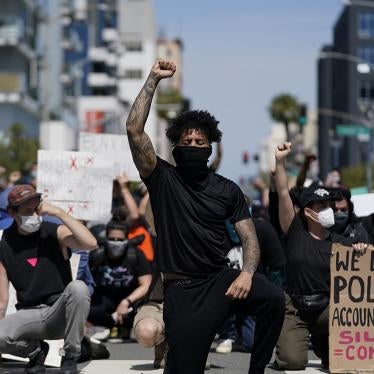
    The United Nations Human Rights Council recently adopted a milestone UN resolution to create an independent mechanism, made up of three experts, to investigate the root causes of systemic racism and police violence.
    Demonstrators kneel outside the Long Beach Police Department in Long Beach, California during a protest on May 31, 2020. 
  • July 16, 2021
    New York City Health & Hospitals, the largest public healthcare system in the United States, has instituted a policy to defer all medically unnecessary surgeries on intersex children. The move is a major boost for Intersex rights following City Council legislation earlier this year that mandates public education on the issue.
    People rally to end intersex surgeries in New York City, October 27, 2018. 
  • July 8, 2021
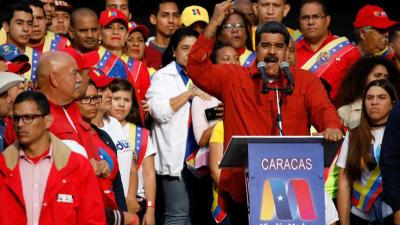
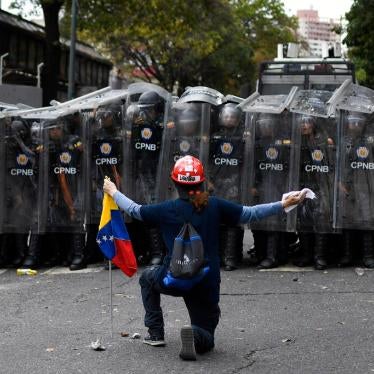
    For years, Human Rights Watch has been documenting and exposing the brutal crackdown on dissent by the Nicolás Maduro government, the humanitarian emergency in Venezuela, and the resulting exodus of more than 5.6 million people since 2014. Our research and advocacy, in partnership with Venezuelan human rights groups and medical and public health experts from Johns Hopkins University, has contributed to giving greater international visibility to Venezuela’s spiraling crisis and to press for accountability for egregious crimes, greater access for humanitarian aid into the country, and improved conditions for Venezuelans forced to flee their country.
    A man kneels in front of police blocking a march called by opposition political leader Juan Guaido in Caracas, Venezuela, Tuesday, March 10, 2020.
  • May 7, 2021
    In a win for online freedom in Iraq, the Iraqi parliament has said it will stop pushing forward a cybercrimes draft law until after it is amended so that it protects rather than infringes upon free speech.
    Woman holding up a sign in Arabic
  • May 5, 2021
    People around the world facing the devastation of the Covid-19 pandemic have reason to feel more hopeful today. The Biden administration has announced support for India and South Africa’s proposal to waive intellectual property rules on Covid-19 vaccines “until widespread vaccination is in place globally.
    Supporters attend the Rally for Vaccine Access for Everyone, Everywhere on Wednesday, May 5, 2021 in Washington, D.C.
  • April 29, 2021
    Today, House Resolution 40 (H.R. 40) is a bill in the United States House of Representatives to establish a federal commission to study the legacy of slavery in the US and its ongoing harm, and develop proposals to repair the damage done. For the first time, on April 14, 2021, H.R. 40 was voted out of the House Judiciary Committee and can now be considered before the full House of Representatives.
    A sculpture of African slaves by Ghanaian artist, Kwame Akoto-Bamfo, at the beginning of the National Memorial for Peace and Justice in Montgomery, Alabama.