Impact

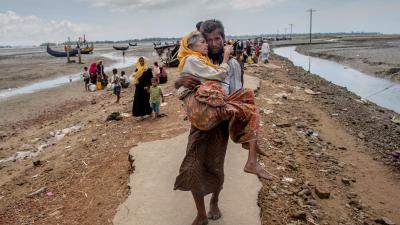
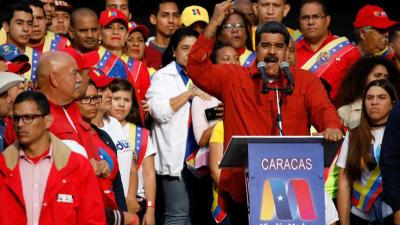
By investigating and exposing human rights abuses, we work to create a world where everyone is treated fairly and equitably, no matter their race, religion, or beliefs. We call for action so that people who disagree with their government can speak their opinions freely, so that children are protected, and refugees cared for. All of us, regardless of who we are, who we love, or the color of our skin, should be able to enjoy fully our human rights.

BROWSE ALL IMPACT ›

Change is sometimes immediate, sometimes incremental. We work on issues for years and know from experience how to transform deep-rooted problems. Here are examples of some of the recent impact we have made, together with our partners, in advancing human rights around the world.

How do we bring about change?

Investigate
Our researchers investigate human rights abuses, first by speaking with victims or witnesses. We corroborate their stories using a variety of sources, including government records, weapons’ fragments, satellite imagery, and the statements of accused perpetrators – be they members of governments, armed groups, or companies. We often do this work together with partner activists.

Expose
We share this information widely, in multiple languages, to help shape public debate. Our reports, videos, and social media posts show up hundreds of times daily in news media around the world, bringing both global and local attention to our rigorously fact-checked findings.

Change
Often in coalition with local groups, we bring our findings to officials who have the power to change things. For every issue we work on, we make specific, concrete policy recommendations that will bring people justice, prevent future abuses, and protect human rights.
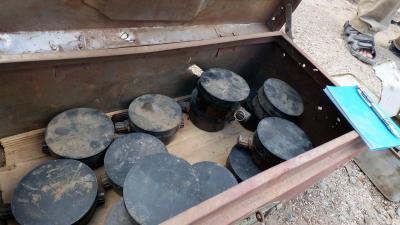
Our work has been instrumental in some foundational victories for human rights, including our work on banning landmines worldwide, for which we and our partners received the 1997 Nobel Peace Prize. Below are some examples of our historic impact.

All impact

  • October 13, 2022
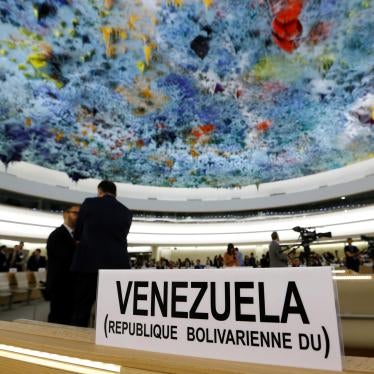
    On October 11, 193 UN member states cast their secret ballots at the UN General Assembly to select members for the UN’s top rights body, the Human Rights Council. Venezuela was kicked out from the council.
    The name plate at Venezuela’s desk at the Human Rights Council in Geneva, Switzerland. Venezuela was denied another term on the council on October 11, 2022.
  • September 23, 2022
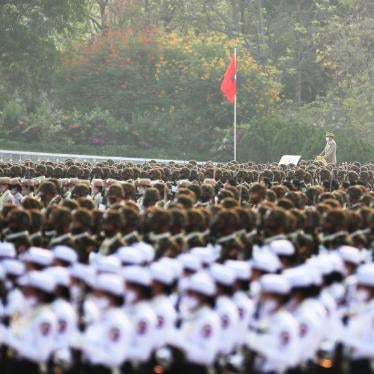
    Japan’s Defense Ministry announced this week that as of 2023 it would no longer accept new military personnel from the Myanmar military for training in Japan, citing the junta’s execution of four pro-democracy activists in July as a major factor in its decision.
    Officers march during a parade
  • August 31, 2022
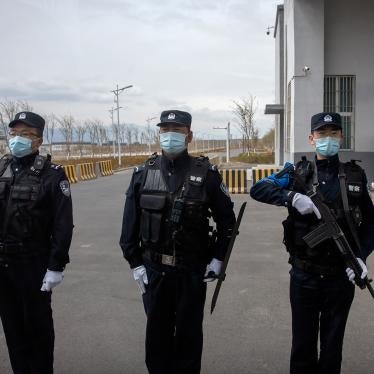
    A groundbreaking United Nations report published on August 31, 2022, says the Chinese government has committed abuses that may amount to crimes against humanity targeting Uyghurs and other Turkic communities in the Xinjiang region.
    Police officers stand at the outer entrance of the Urumqi No. 3 Detention Center in Dabancheng in western China's Xinjiang region on April 23, 2021.
  • August 18, 2022
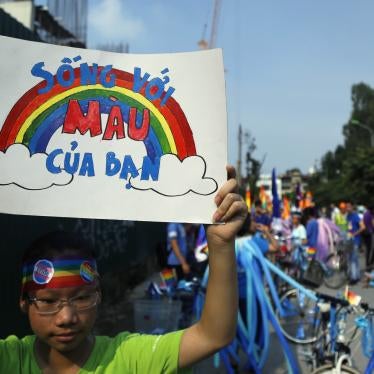
    (Bangkok) – Vietnam’s Health Ministry officially confirmed on August 3, 2022, that same-sex attraction and being transgender are not mental health conditions, Human Rights Watch said today. The decision brings Vietnam’s health policy in line with global health and human rights standards.
    A cyclist holds up a poster reading in Vietnamese, "Shine your true colors," ahead of a bike rally in Hanoi, Vietnam, September 24, 2017. 
  • July 21, 2022
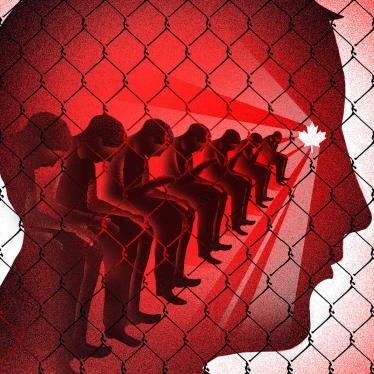
    In a historic move, British Columbia’s Deputy Premier and Minister of Public Safety, Mike Farnworth, announced today that the province will terminate its immigration detention contract with the Canada Border Services Agency (CBSA). British Columbia’s landmark announcement came after the province concluded a review of its immigration detention contract.
    Red and black illustration of people in detention
  • July 7, 2022
    The European Parliament has adopted the Digital Services Act (DSA), landmark regulation that sets rules for internet platforms across the European Union. The DSA is a promising step forward in respecting rights online, introducing important measures to increase transparency by requiring platforms to explain to users how they moderate content, how automated tools are used, and how many content moderators they use for each official EU language.
    The European Union logo is seen on a portable mobile device
  • July 6, 2022
    The United States Supreme Court ruled on June 30 that President Joe Biden can end the Migrant Protection Protocols, known as the “Remain in Mexico” program. While this constitutes an important victory for the right to seek asylum in the US, most asylum seekers at the US-Mexico border are still being expelled under a broad, spurious public health policy called Title 42, without their claims for protection being considered.
    A protest against the "Remain in Mexico" policy in front of the US Supreme Court
  • June 30, 2022
    In recent years, outrageous United States immigration policies, including separating children from parents at the US-Mexico border, have dominated headlines. But amid these rampant abuses, there have been some steps towards reform, thanks in part to campaigning by human rights and humanitarian groups.
    A man stands with his hands on the back of a van marked "Border Patrol"
  • June 27, 2022
    Although a violation of international law, Polish border guards almost daily summarily push back asylum seekers attempting to cross the Polish-Belarus border. However, a Warsaw court has renewed hope that this practice might end by ruling a November expulsion order to be unlawful.
    Two women and a child huddle in sleeping bags on the forest floor after crossing the Polish-Belarusian border near Michalowo on October 6, 2021.