
Impact

By investigating and exposing human rights abuses, we work to create a world where everyone is treated fairly and equitably, no matter their race, religion, or beliefs. We call for action so that people who disagree with their government can speak their opinions freely, so that children are protected, and refugees cared for. All of us, regardless of who we are, who we love, or the color of our skin, should be able to enjoy fully our human rights.

BROWSE ALL IMPACT ›

Change is sometimes immediate, sometimes incremental. We work on issues for years and know from experience how to transform deep-rooted problems. Here are examples of some of the recent impact we have made, together with our partners, in advancing human rights around the world.

How do we bring about change?

Investigate
Our researchers investigate human rights abuses, first by speaking with victims or witnesses. We corroborate their stories using a variety of sources, including government records, weapons’ fragments, satellite imagery, and the statements of accused perpetrators – be they members of governments, armed groups, or companies. We often do this work together with partner activists.

Expose
We share this information widely, in multiple languages, to help shape public debate. Our reports, videos, and social media posts show up hundreds of times daily in news media around the world, bringing both global and local attention to our rigorously fact-checked findings.

Change
Often in coalition with local groups, we bring our findings to officials who have the power to change things. For every issue we work on, we make specific, concrete policy recommendations that will bring people justice, prevent future abuses, and protect human rights.

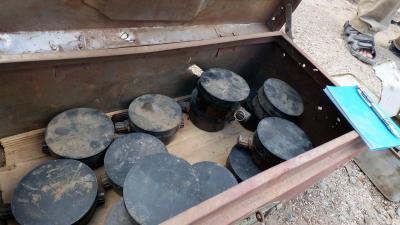
Our work has been instrumental in some foundational victories for human rights, including our work on banning landmines worldwide, for which we and our partners received the 1997 Nobel Peace Prize. Below are some examples of our historic impact.
All impact

  • September 18, 2020
    The new standard unified contract for migrant domestic workers that Lebanon’s Labor Ministry adopted on September 4, 2020 is a step in the right direction toward protecting domestic worker’s rights and abolishing the abusive kafala (sponsorship) system.
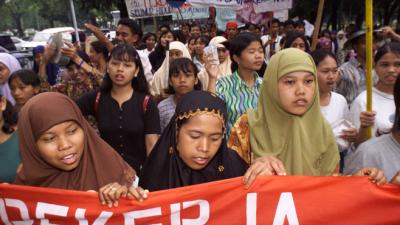
    Protestors holding banners calling for the abolishment of Lebanon's controversial kafala sponsorship system.
  • September 16, 2020
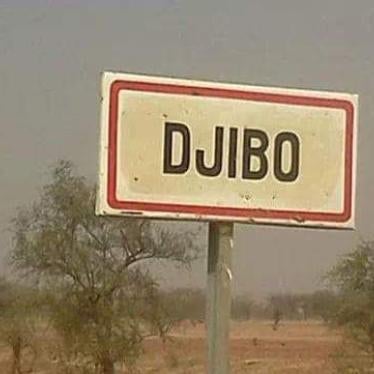
    Pressure is mounting on the Burkina Faso government to investigate mass executions allegedly committed by state security forces. Human Rights Watch in July 2020 reported on common graves containing at least 180 bodies in the northern town of Djibo.
    Djibo, Burkina Faso
  • August 17, 2020
    A historic resolution was introduced in both chambers of the US Congress “recognizing the forthcoming centennial of the 1921 Tulsa Race Massacre” honoring the many victims of the attacks and condemning “past and present efforts to cover up the truth.”
    Reverend Robert Turner of the historic Mount Vernon African Methodist Episcopal (AME) church, damaged in the 1921 Tulsa Race Massacre.
  • August 11, 2020
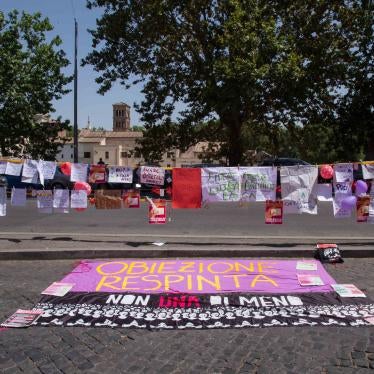
    Italy will soon make a long-awaited and important move towards women and girls’ ability to exercise their reproductive rights. Minister of Health Roberto Speranza announced last weekend on social media revisions to outdated national guidance, which will ease restrictions on medical abortion.
    Striscioni e poster di un sit-in di attiviste Pro-Choice, organizzato dalla Rete Italiana Contraccezione Aborto, presso il Ministero della Saluta a Roma il 2 luglio 2020. Le attiviste e le organizzazioni hanno chiesto una contraccezione gratuita e accessibile e la garanzia dell’accesso all’aborto.
  • August 4, 2020
    Hundreds of unaccompanied children who have ended up in Greece’s “protective custody” regime. But far from protecting them, the system puts children at risk of severe abuse.
    A child places his hands on a fence as Greek police officers stand guard at a makeshift camp for migrants and refugees in Greece.
  • July 31, 2020
    In early June, Kenya’s Ministry of Health released guidelines on how people with mild or asymptomatic cases of Covid-19 could self-isolate at home. Previously, Kenya’s authorities forcibly quarantined tens of thousands of people in facilities that lacked proper sanitation.
    Kenyans make their way home before the daily dusk-to-dawn curfew in Nairobi, Kenya, April 6, 2020.