Reports

Torture and Other Abuses Against Venezuelans in El Salvador’s Mega Prison

The 81-page report, “‘You Have Arrived in Hell’: Torture and Other Abuses Against Venezuelans in El Salvador’s Mega Prison,” provides a comprehensive account of the treatment of these people in El Salvador. In March and April 2025, the US government sent 252 Venezuelans, including dozens of asylum seekers, to the Center for Terrorism Confinement (Centro de Confinamiento del Terrorismo, CECOT) mega prison in El Salvador, despite credible reports of serious human rights abuses in El Salvador’s prisons. The Venezuelans were subject to refoulement—being sent to where they would face torture or persecution—arbitrary detention, enforced disappearance, torture, inhumane detention conditions and, in some cases, sexual violence.

A person sits inside a cell while a guard with a riot shield stands outside
A woman looks out of the window of a damaged building

Search

  • November 24, 2021

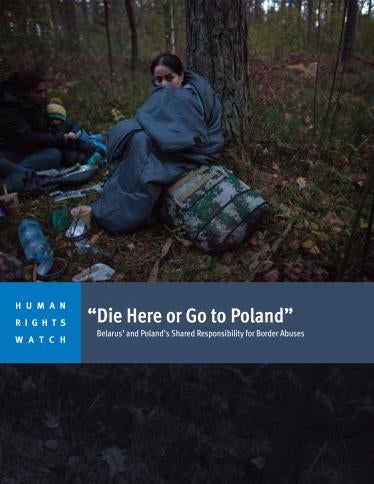
    Belarus’ and Poland’s Shared Responsibility for Border Abuses

    The 26-page report, “‘Die Here or Go to Poland’: Belarus’ and Poland’s Shared Responsibility for Border Abuses,” documents serious abuses on both sides of the border. People trapped on the Belarus border with Poland said that they had been pushed back, sometimes violently, by Polish border guards to Belarus despite pleading for asylum. On the Belarusian side, accounts of violence, inhuman and degrading treatment and coercion by Belarusian border guards were commonplace.

    202111eca_belarus_poland_border_cover
  • November 3, 2021

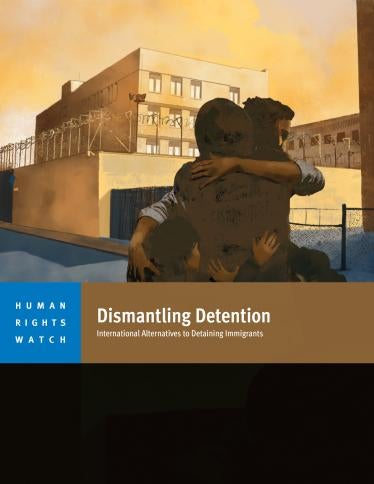
    International Alternatives to Detaining Immigrants

    The 94-page report “Dismantling Detention: International Alternatives to Detaining Immigrants,” examines alternatives to detention in six countries: Bulgaria, Cyprus, Spain, the United Kingdom, Canada, and the United States. Human Rights Watch found that alternatives to detention such as case management services, can effectively address government interests in immigration enforcement while protecting migrants’ rights and often offering a range of other benefits.

    video content
    202111global_altdetention_cover
  • October 21, 2021

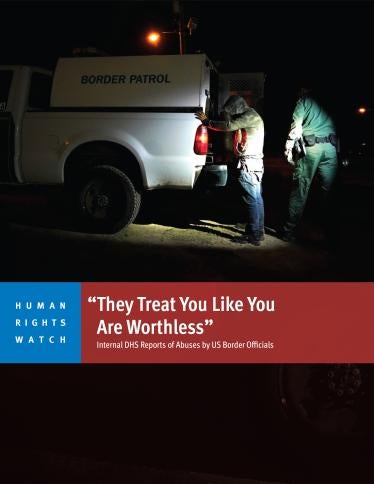
    Internal DHS Reports of Abuses by US Border Officials

    The 26-page report, “‘They Treat You Like You Are Worthless’: Internal DHS Reports of Abuses by US Border Officials,” details internal reports made by asylum officers within US Citizenship and Immigration Services (USCIS) about the conduct of personnel in the immigration enforcement arms of their same parent agency, the Department of Homeland Security (DHS). Though heavily redacted, the reports, which Human Rights Watch obtained after litigation under the Freedom of Information Act (FOIA), include allegations of physical, sexual, and verbal abuse, due process violations, harsh detention conditions, denial of medical care, and discriminatory treatment at or near the border.

    202110usp_borderabuse_cover
  • October 20, 2021

    Syrian Refugee Returns from Lebanon and Jordan

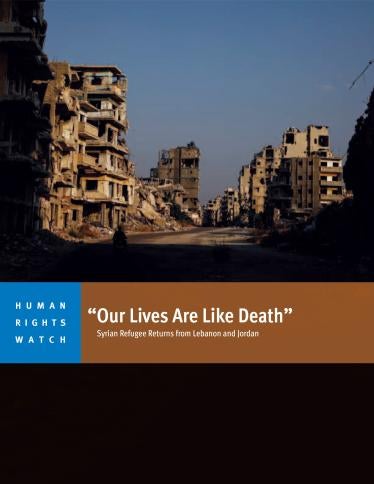
    The 72-page report “‘Our Lives are Like Death’: Syrian Refugee Returns from Lebanon and Jordan ,” found that Syria is not safe for return. Among 65 returnees or family members interviewed, Human Rights Watch documented 21 cases of arrest and arbitrary detention, 13 cases of torture, 3 kidnappings, 5 extrajudicial killings, 17 enforced disappearances and 1 case of alleged sexual violence.

    video content
    202110mena_syria_refugee_cover
  • October 7, 2021

    The Degrading Treatment of Migrant Children and Adults in Northern France

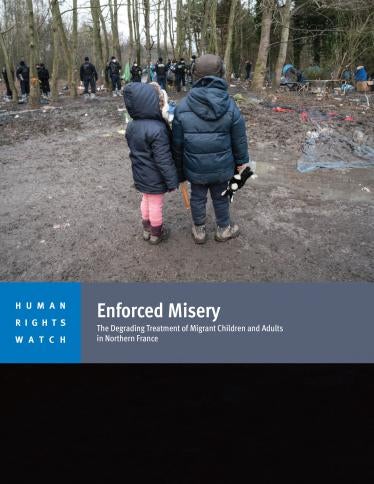
    The 81-page report, “Enforced Misery: The Degrading Treatment of Migrant Children and Adults in Northern France,” documents repeated mass eviction operations, near-daily police harassment, and restrictions on provision of and access to humanitarian assistance. The authorities carry out these abusive practices with the primary purposes of forcing people to move elsewhere, without resolving their migration status or lack of housing, or of deterring new arrivals.

    photo gallery
    map content
    202110eca_france_calais_migrant_cover
  • June 17, 2021

    Immigration Detention in Canada and its Impact on Mental Health

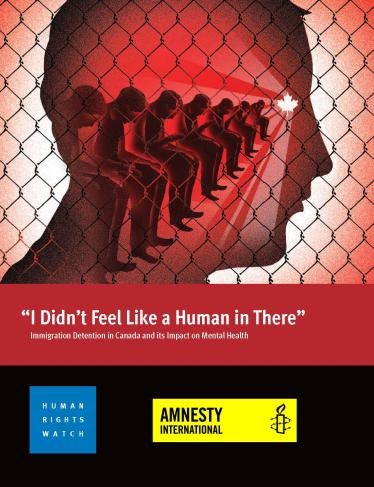
    The 100-page report, “‘I Didn’t Feel Like a Human in There’: Immigration Detention in Canada and Its Impact on Mental Health,” documents how people in immigration detention, including those fleeing persecution and seeking protection in Canada, are regularly handcuffed, shackled, and held with little to no contact with the outside world. With no set release date, they can be held for months or years. Many are held in provincial jails with the regular jail population and are often subjected to solitary confinement. Those with psychosocial disabilities – or mental health conditions – experience discrimination throughout the process.

    map content
    202106drd_canada_detention_cover
  • January 6, 2021

    Children and Families Sent to Harm by the US ‘Remain in Mexico’ Program

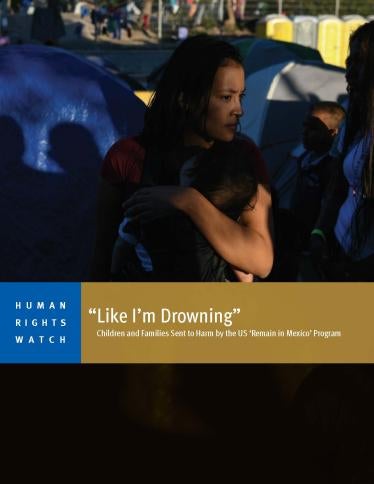
    The 103-page report, “‘Like I’m Drowning’: Children and Families Sent to Harm by the US ‘Remain in Mexico’ Program,” is a joint investigation by Human Rights Watch, Stanford University’s Human Rights in Trauma Mental Health Program, and Willamette University’s Child and Family Advocacy Clinic. Children and adults interviewed described being sexually assaulted, abducted for ransom, extorted, robbed at gunpoint, and subjected to other crimes under the US Migrant Protection Protocols (MPP), known as the “Remain in Mexico” program. In many cases, they said these attacks occurred immediately after US authorities sent them to Mexico to await US immigration court hearings on their asylum applications, or as they returned from hearings. Witnesses said that Mexican immigration officers or police committed some of these crimes.

    map content
    202101americas_mexico_us_border_cover
  • August 24, 2020

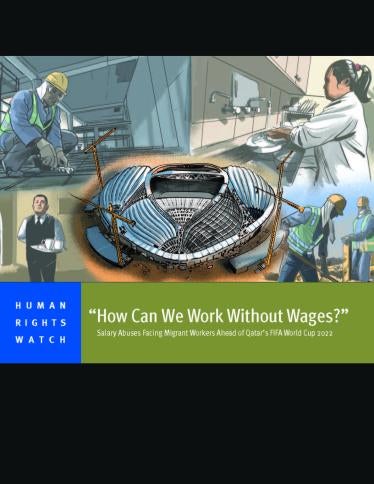
    Salary Abuses Facing Migrant Workers Ahead of Qatar’s FIFA World Cup 2022

    The 78-page report, “‘How Can We Work Without Wages?’: Salary Abuses Facing Migrant Workers Ahead of Qatar’s FIFA World Cup 2022” shows that employers across Qatar frequently violate workers’ right to wages and that Qatar has failed to meet its 2017 commitment to the International Labour Organization (ILO) to protect migrant workers from wage abuses and to abolish the kafala system, which ties migrant workers’ visas to their employers. Human Rights Watch found case after case of wage abuse across various occupations including security guards, servers, baristas, bouncers, cleaners, management staff, and construction workers.

    video content
    Qatar report cover
  • February 5, 2020

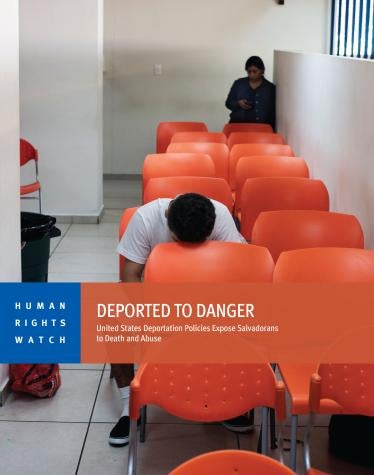
    United States Deportation Policies Expose Salvadorans to Death and Abuse

    The US government has deported people to face abuse and even death in El Salvador. The US is not solely responsible—Salvadoran gangs who prey on deportees and Salvadoran authorities who harm deportees or who do little or nothing to protect them bear direct responsibility—but in many cases the US is putting Salvadorans in harm’s way in circumstances where it knows or should know that harm is likely.

    202002US_Elsalvador_cover
  • September 5, 2019

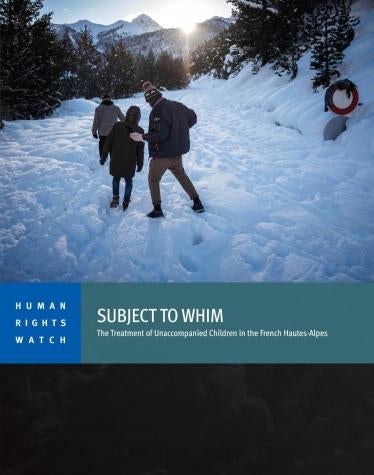
    The Treatment of Unaccompanied Migrant Children in the French Hautes-Alpes

    The 80-page report found that examiners whose job is to certify a child’s status as a minor – that is, under age 18 – do not comply with international standards. Human Rights Watch found that examiners use various justifications to deny children protection. These include children’s minor mistakes with dates, their reluctance to discuss particularly traumatic experiences in detail or work they did in home countries or while in transit, and what examiners deem as unrealistic life goals.

    video content
    201909CRD_France_reportcover
  • September 3, 2018

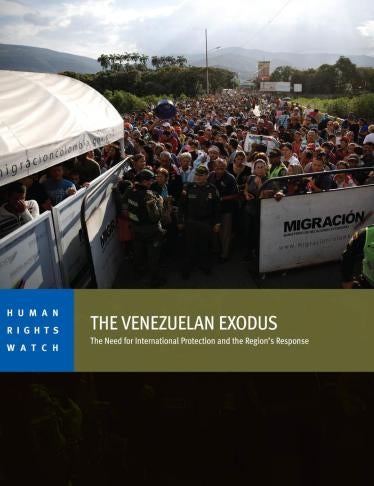
    The Need for a Regional Response to an Unprecedented Migration Crisis

    This report documents efforts by South American governments to address the massive numbers of Venezuelans crossing their borders, as well as recent setbacks that threaten Venezuelans’ ability to seek protection. In some Caribbean islands, Venezuelans are subject to arbitrary arrests and deportations. Xenophobic incidents are a growing concern. 

    photo gallery
    map content
    video content
    Cover
  • July 18, 2018

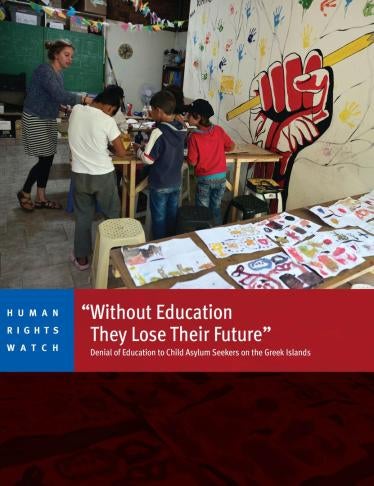
    Denial of Education to Child Asylum Seekers on the Greek Islands

    This report found that fewer than 15 percent of more than 3,000 school-age asylum-seeking children on the islands were enrolled in public school at the end of the 2017-2018 school year, and that in government-run camps on the islands, only about 100 children, all preschoolers, had access to formal education. The asylum-seeking children on the islands are denied the educational opportunities they would have on the mainland. Most of those who were able to go to school had been allowed to leave the government-run camps for housing run by local authorities and volunteers.

    map content
    video content
    Cover
  • August 1, 2017

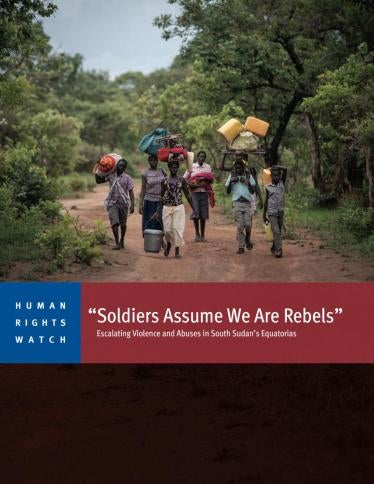
    Escalating Violence and Abuses in South Sudan’s Equatorias

    This report documents the spreading violence and serious abuses against civilians in the Greater Equatoria region in the last year. The report focuses on two areas: Kajo Keji county, in the former Central Equatoria state, and Pajok, a town in the former Eastern Equatoria state.

    photo gallery
    map content
    Cover of the South Sudan Report
  • July 26, 2017

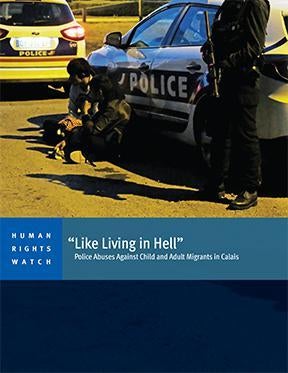
    Police Abuses Against Child and Adult Migrants in Calais

    This report finds that police forces in Calais, particularly the French riot police (Compagnies républicaines de sécurité, CRS), routinely use pepper spray on child and adult migrants while they are sleeping or in other circumstances in which they pose no threat. Police also regularly spray or confiscate sleeping bags, blankets, and clothing, and have sometimes used pepper spray on migrants’ food and water, apparently to press them to leave the area. Such acts violate the prohibition on inhuman and degrading treatment as well as international standards on police conduct, which call for police to use force only when it is unavoidable, and then only with restraint, in proportion to the circumstances, and for a legitimate law enforcement purpose.

    Cover of the France Calais Report
  • July 5, 2017

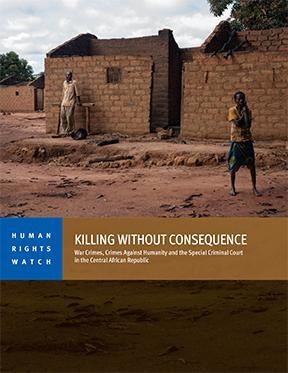
    War Crimes, Crimes Against Humanity and the Special Criminal Court in the Central African Republic

    This report presents a comprehensive account of war crimes committed in three central provinces since late 2014, including more than 560 civilian deaths and the destruction of more than 4,200 homes. The crimes fall under the jurisdiction of the International Criminal Court (ICC) and the Special Criminal Court (SCC), a new judicial body that, when operational, will investigate and prosecute grave human rights violations and war crimes in the country since 2003.

    map content
    video content
    Cover of the Central African Republic