Hanoi’s Continuing Assault on Workers’ Right to Organize
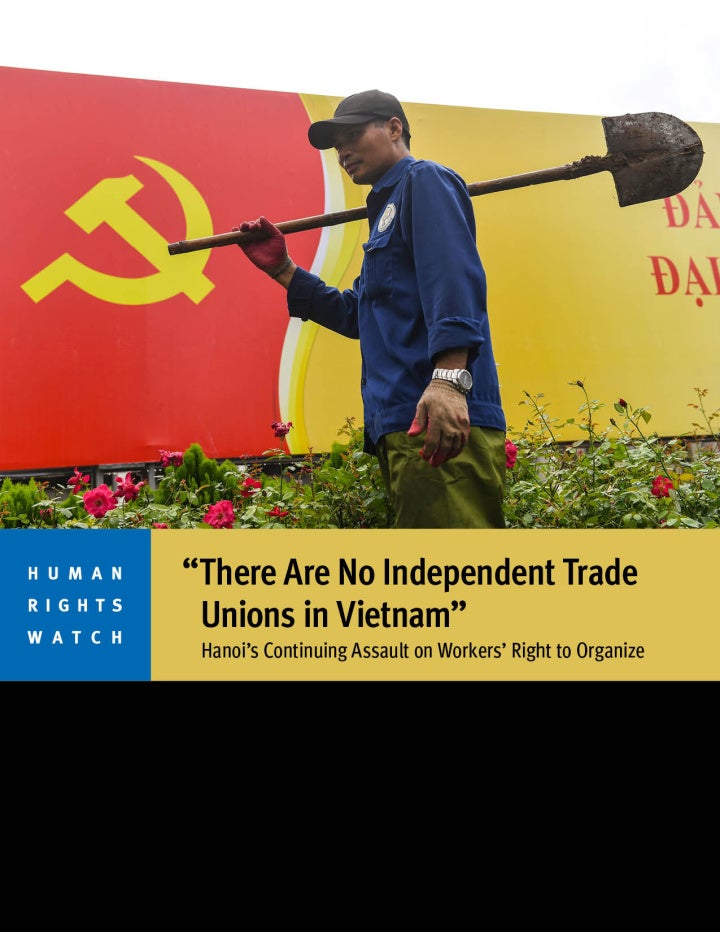
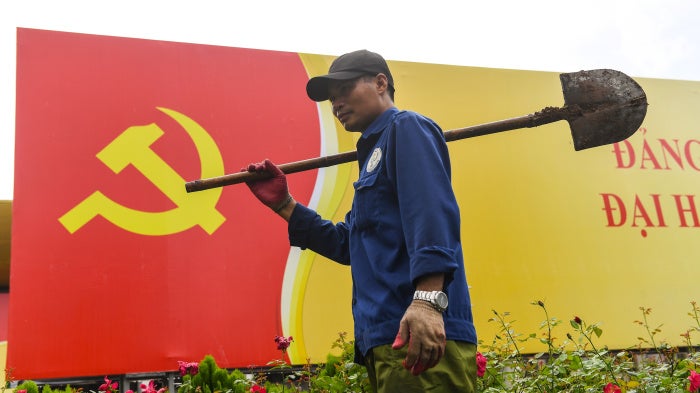
The 49-page report, “There Are No Independent Trade Unions in Vietnam: Hanoi’s Continuing Assault on Workers’ Right to Organize,” documents the Vietnamese governments’ continuing useof vague, overbroad criminal laws to suppress the activities of human rights and labor rights defenders, while maintaining an atmosphere of repression to thwart independent labor organizing. The government has issued decrees and articles in state-run media that reaffirm that all labor organizations in Vietnam are under the government’s authority, and portray independent trade unions as dangerous, anti-state entities.
Anti-Gay Purge by Local Authorities in Russia’s Chechen Republic
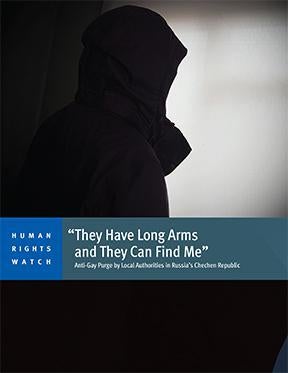
This report is based on first-hand interviews with victims of the campaign against gay men that Chechnya’s law enforcement and security officials conducted in spring, 2017.
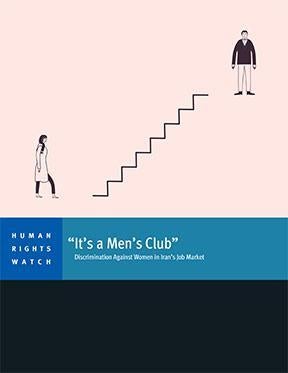
This report examines in detail the discriminatory provisions and insufficient protections in Iran’s legal system that represent obstacles to women’s equal access to the job market. Over the past four decades, Iranian women have become half of the country’s university graduates. But, based on the most recent official statistics available, for the period between March 2016 and March 2017, only 14.9 percent of Iran’s women are in the workforce, compared with 64.1 percent of men. This rate is lower than the average of 20 percent for all women in the Middle East and North Africa. The unemployment rate for women, currently 20.7 percent, is double that for men.
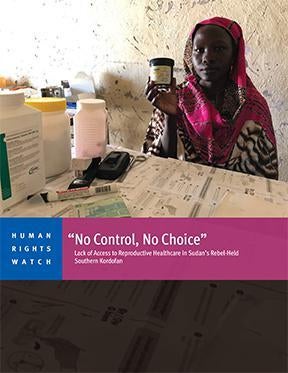
Lack of Access to Reproductive Healthcare in Sudan’s Rebel-Held Southern Kordofan
This report documents how women and girls cannot get contraception and have little access to health care if they face complications during pregnancy and childbirth. The parties to the six-year-long conflict, the Sudanese government and the rebel Sudan People’s Liberation Army-North (SPLA/M-North), have both obstructed impartial humanitarian aid.
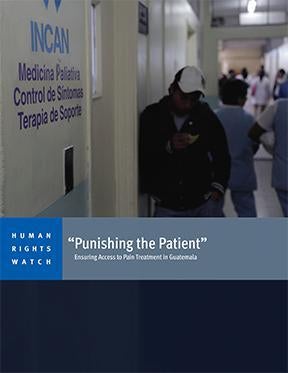
This report documents how Guatemala’s drug control regulations – meant to prevent drug abuse – make it almost impossible for many patients with cancer and other advanced illnesses to get strong pain medicines like morphine. Patients described their extreme pain and other symptoms and how they struggled to cope with a dim prognosis. They said they had to make visits to multiple doctors because many were unable to adequately treat pain, and many said they faced lengthy travel on crowded buses to reach hospitals that offer pain treatment.
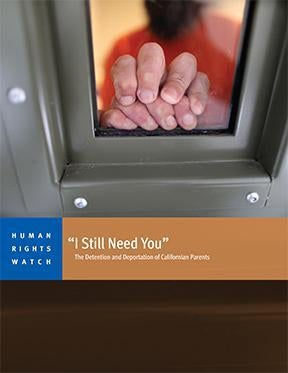
The Detention and Deportation of Californian Parents
This report is based on data obtained via a Freedom of Information Act request to federal immigration authorities. The data covers nearly 300,000 federal detentions of immigrants in facilities in California over a four-and-a-half-year span. Over that period, an average of about 65,000 immigrants a year were detained in California in 15 facilities. Many were parents of US citizen children. Although the records for most of the period do not specify whether detainees have US citizen children, the records for one nine-month span (October 2014 to June 2015) generally do, and statistical methods can reliably fill the gaps. Analyzing the records for that nine-month span, Human Rights Watch found that nearly half – 42 percent – of detainees had US citizen children.
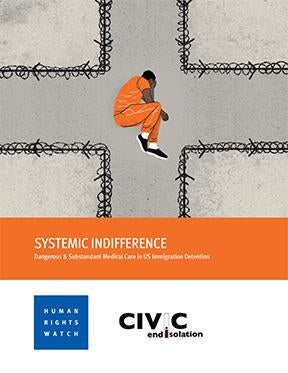
Dangerous & Substandard Medical Care in US Immigration Detention
This report reveals systemic failures, such as unreasonable delays in care and unqualified medical staff, that are likely to expose a record number of people to dangerous conditions under President Donald Trump’s ramped-up deportation and detention plans.
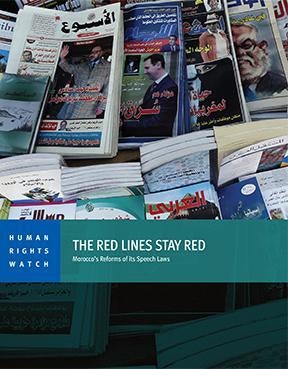
This report compares the new laws with those they replaced, and urges Morocco’s recently formed government and the parliament elected in October 2016 to adopt legislation decriminalizing all nonviolent speech offenses. Restrictions under the country’s penal code undercut the positive features of the new laws, Human Rights Watch said. Notably, the revised penal code maintains prison as punishment for speech that harms the monarchy, the person of the king, Islam, and Morocco’s “territorial integrity” – the “red lines” that limit critical discussion of some of the key issues in the kingdom.
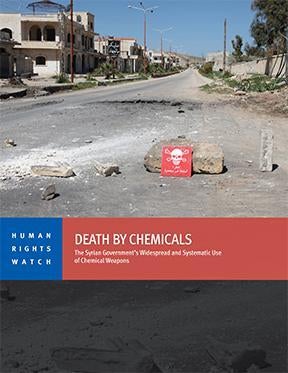
The Syrian Government’s Widespread and Systematic Use of Chemical Weapons
This report identifies three different systems being used to deliver chemical weapons: government warplanes appear to have dropped bombs with nerve agents on at least four occasions since December 12; government helicopter-dropped chlorine-filled munitions have become more systematic; and government or pro-government ground forces have started using improvised ground-launched munitions filled with chlorine.
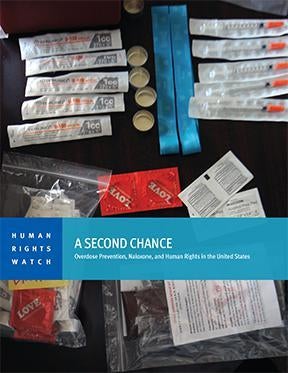
Overdose Prevention, Naloxone, and Human Rights in the United States
This report identifies federal and state laws and policies that are keeping naloxone out of the hands of people most likely to witness accidental overdoses, denying them the ability to save lives.
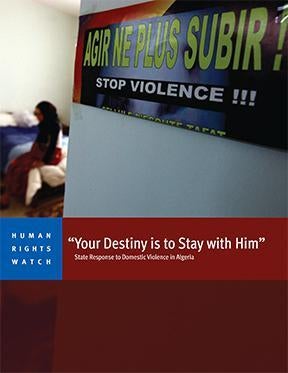
This report found that domestic violence survivors face an uphill struggle to obtain justice and personal security. They face social stigma, economic dependence on the abusers, a shortage of shelters, lack of an adequate response from the police, the prosecutors, and the judges in investigating abuse, and judicial hurdles such as unreasonable evidentiary requirements.
The Need for Supply Chain Transparency in the Garment and Footwear Industry
This report comes just ahead of the fourth anniversary of the Rana Plaza building collapse disaster in Bangladesh. It calls for companies to adopt the Apparel and Footwear Supply Chain Transparency Pledge. Companies that align with the pledge agree to publish information identifying the factories that produce their goods, addressing a key obstacle to rooting out abusive labor practices across the industry and helping to prevent disasters like the Rana Plaza collapse.
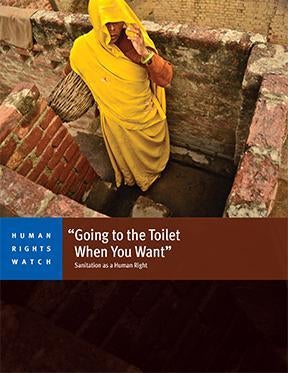
This report is based on more than a decade of reporting by Human Rights Watch on the abuses, discrimination, and other obstacles people encounter in trying to perform the simple act of relieving themselves with dignity and in safety. As of 2015, 2.4 billion people around the world were estimated to be using unimproved sanitation facilities, defined as those that do not hygienically separate human excreta from human contact. Nearly a billion people practice open defecation – which has been linked to malnutrition, stunting, and increased diarrheal disease, among other harmful effects.
US Authorities’ Failure to Take Adequate Precautions
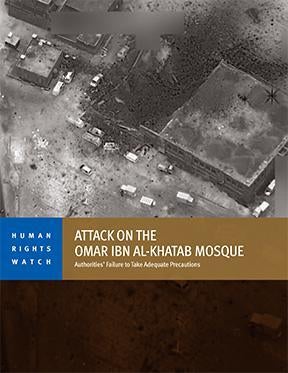
This report found that statements by US military authorities after the attack indicate that they failed to understand that the targeted building was a mosque, that prayer was about to begin, and that a religious lecture was taking place at the time of the attack. A proper analysis of the target and its use would probably have established at least some of these elements. Human Rights Watch has not found evidence to support the allegation that members of al-Qaeda or any other armed group were meeting in the mosque.
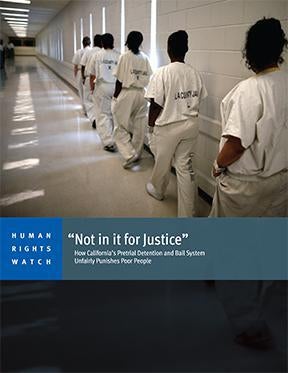
How California’s Pretrial Detention and Bail System Unfairly Punishes Poor People
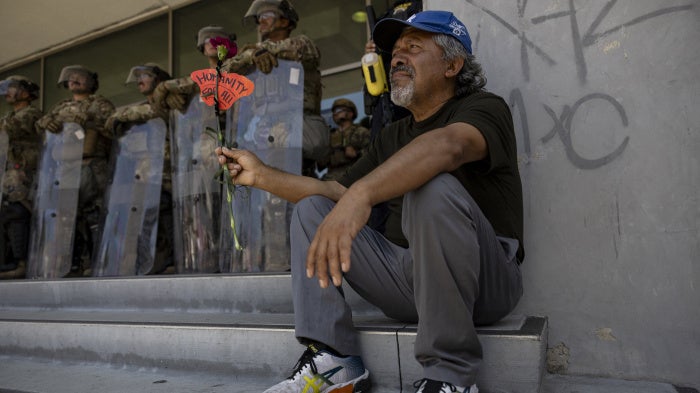
This report details how about 63 percent of prisoners in California county jails in recent years were not sentenced, with many being held awaiting trial because they could not afford bail.
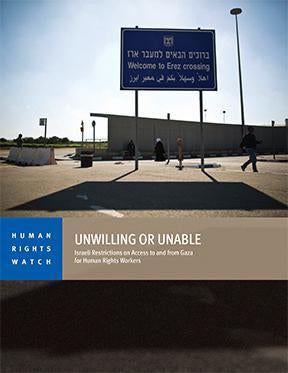
Israeli Restrictions on Access to and from Gaza for Human Rights Workers
This report documents how Israel systematically bars human rights workers from traveling into and out of Gaza, even where the Israeli security services make no security claims against them as individuals. Egypt is also imposing severe travel restrictions on its border with Gaza. The International Criminal Court (ICC) prosecutor’s office should take note of the restrictions in the context of its ongoing preliminary examination of the Palestine situation.