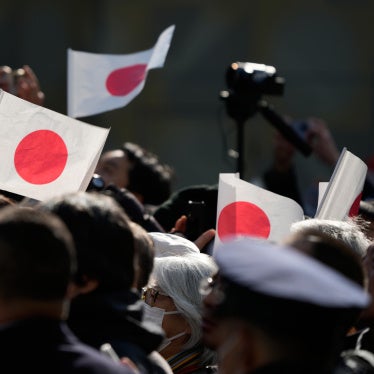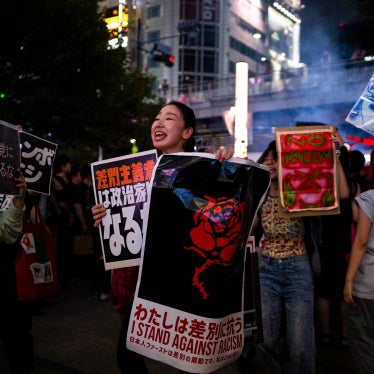
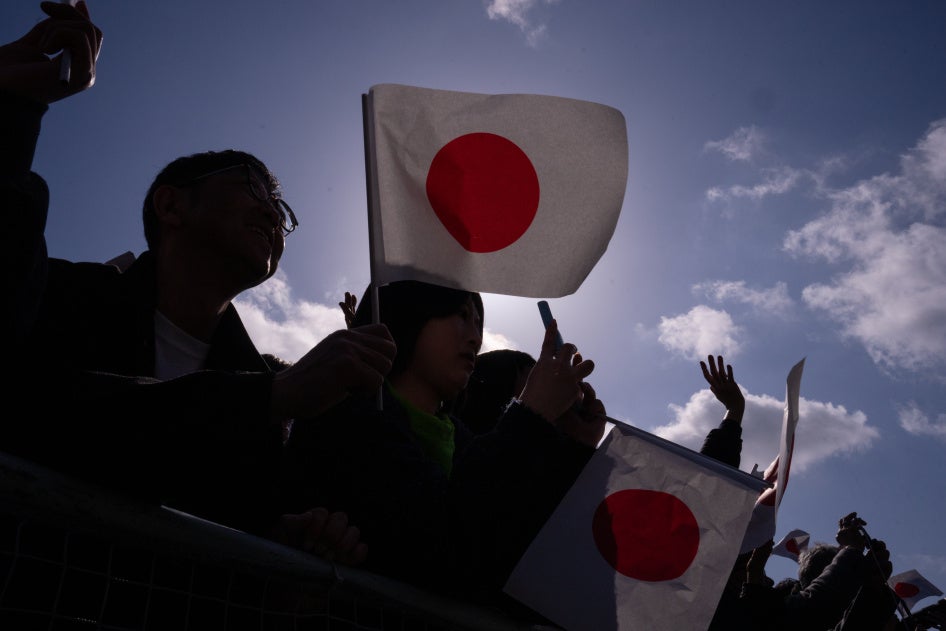
Japan’s ruling Liberal Democratic Party (LDP), along with its coalition partner Japan Innovation Party and the opposition Democratic Party for the People, and Sanseito, jointly submitted a bill on June 16 that would criminalize “publicly damaging, removing, or defacing” Japan’s national flag in a “way or situation that evokes significant discomfort or disgust in people.”
The bill proposes penalties of up to two years in prison or a maximum fine of 200,000 yen (US$1,250), identical to article 92 of Japan’s Penal Code which criminalizes the desecration of foreign flags.
The LDP initially included in the bill language that would penalize people for sharing videos of themselves desecrating a flag on social media, but dropped the provision over concerns it would restrict the right to free expression. Sanseito included language to be considered later that would penalize people for publicly displaying a damaged flag. The bill states that as authorities apply the law, “freedom and rights including freedom of expression protected by the Japanese Constitution should not be unjustifiably infringed.”
In its current form, the bill threatens the right to freedom of speech in violation of international human rights law. Notably, the International Covenant on Civil and Political Rights (ICCPR), in article 19, protects the right to freedom of expression, including symbolic acts. Legal restrictions to protect public order or national security are permitted only if they are necessary and proportionate. The United Nations Human Rights Committee has been clear that causing offense to patriotic sentiment or speech regarded as “deeply offensive” do not justify criminal punishment. The committee specifically “expresse[d] concern regarding laws on such matters as … flags and symbols.”
As Human Rights Watch previously noted, governments have used flag desecration laws to stifle dissent. In Hong Kong, two laws criminalizing the desecration of China’s national flag and Hong Kong’s regional flag are used against democracy activists. In 2019, a Hong Kong court sentenced a 13-year-old girl to 12 months’ probation for burning a Chinese flag during a pro-democracy protest. The late democracy activist Koo Sze-yiu had also been convicted at least eight times for violating the anti-flag laws.
As a party to the ICCPR, the Japanese government should reject this bill and ensure the right to freedom of expression is protected for all.