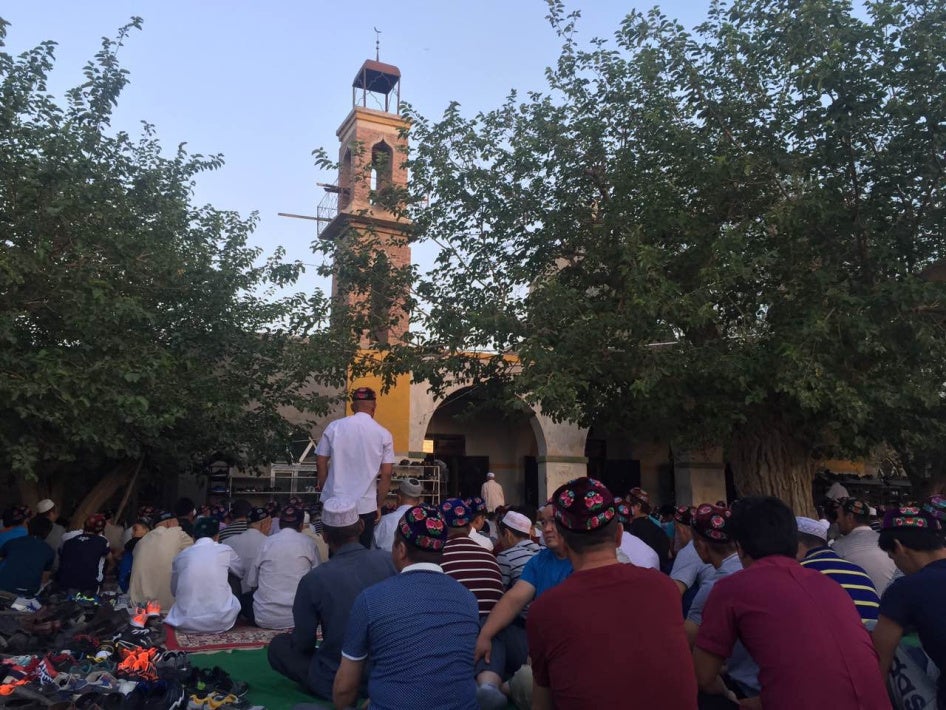
This Ramadan, as I sit down with a hot bowl of lentil soup and freshly made Uyghur noodles to break my day-long fast, I try very hard not to think about my father, thousands of miles away, in a prison, and what he does not get to eat, and if he even knows it is his favorite time of the year.
This Ramadan marks a decade since I last broke my fast with my father. Also, my last visit to my homeland, the Xinjiang Uyghur Autonomous Region in northwest China, where the authorities have committed atrocity crimes. I chose to speak out for my father and others and that choice cost me a disconnection, maybe forever, from those I love back home.
Growing up in a conservative Uyghur family, I began fasting at an early age. I remember my school years vividly—how I had to develop strategies to hide from teachers and peers that I fasted, prayed, and came from a religious household. During breaks, I would buy snacks from a shop, pretending I would eat them, only to secretly throw them away.
Living under the Chinese government’s repression forced me to develop survival skills early on. I learned to live two parallel lives: one of performative obedience, and one of quiet resistance.
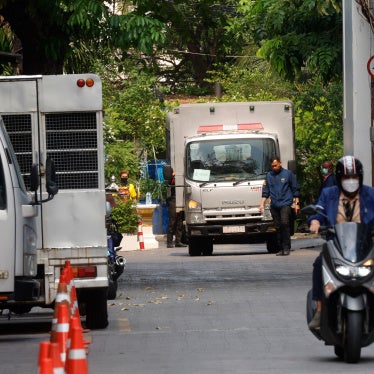
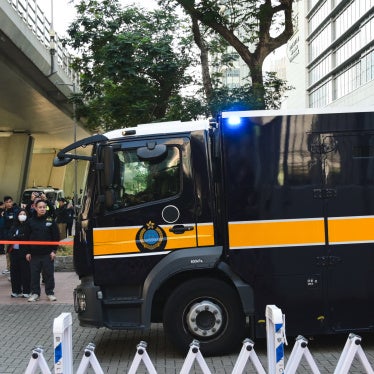
The Chinese government has carried out egregious human rights violations in the region since late 2016—including mass arbitrary detention, unjust imprisonments, mass surveillance, and forced labor—amounting to crimes against humanity. In June 2018, what I dreaded most happened: I lost contact with my father, Memet Yaqup. Later, I learned he had received a prison sentence of 16 years —one among hundreds of thousands of Uyghurs incarcerated simply for being who they are – in addition to my uncles, cousins, and other relatives who are also serving sentences from 15 years to life.
That part of the story is typical, widely known.
What the world does not see is what happened to the hundreds of thousands of Uyghurs living in the diaspora, like me, my mother, sister, and wife, whose lives were turned upside down during these years. During the height of the Chinese government’s “Strike Hard Campaign,” people back home were detained for contacting relatives abroad; authorities confiscated Uyghurs’ passports, and made it impossible to escape from the region.
When those of us living abroad demanded information about our disappeared family members, Chinese police threatened and intimidated us—acts now recognized as “transnational repression.” Some were even coerced to produce propaganda for the government or to gather information on the diaspora community, threatened with the safety of their families or with the hope of being reconnected with them after years of separation.
Like other Uyghurs in the diaspora, I waited in the anxious dark as my father’s silence stretched from days to months to years. It took two years after his arrest for me to learn he was still alive, and another two years to learn he had been imprisoned. The person who conveyed news of his sentence told me I should be grateful he survived at all. “We have lost many people,” the person said. To this day, I have no idea why he was imprisoned or anything about my 58-year-old father’s health
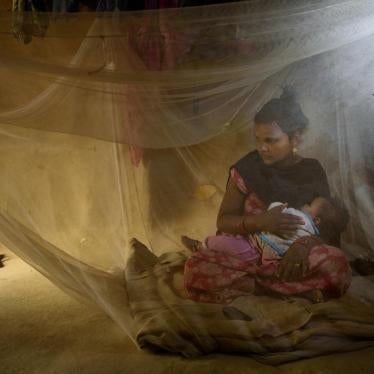
In 2020, I married the love of my life—also a Uyghur—without being able to have my father’s and her parents’ blessings. Our daughter, Nurbanu, was born in 2021. I posted a photo of her on the Chinese social media app Douyin, hoping someone back home, maybe my wife’s parents, might see it and share our joy, celebrating this important milestone in our life, even though they would not dare contact us because of strict surveillance. Instead, police interrogated several people simply because of that one image of me holding my baby. They asked if anyone had been in contact with me.
They also banned my Douyin account.
Now, as a researcher documenting the Chinese government’s human rights violations, I am at heightened risk of surveillance and intimidation. Beijing’s transnational repression may prevent me from ever safely speaking to anyone I grew up with—even if my father is freed one day.
My daughter passed away at the age of 2 from an incurable health condition in November 2023. When I held her lifeless body in the back seat of my car on a rainy day in Istanbul, sitting between my wife and mother on the way to her funeral, I felt the absence of not one, but two people. My father likely never knew he had a granddaughter and will never get to know her. The government punished him for being a Uyghur; it punished me because I refused performative obedience and dared to criticize Beijing.
Yet I remain stubbornly hopeful. One day, in my hometown, I will stand beside my father again and pray at the site of the mosque where I last attended Eid Al-fitr prayer in 2016—before the authorities destroyed it in 2019. I will tell him all about Nurbanu, and how she looked just like him.
Because I believe we will survive. We will rebuild our lives— and even our mosques— and thrive once again, because no tyranny lasts forever.