Summary
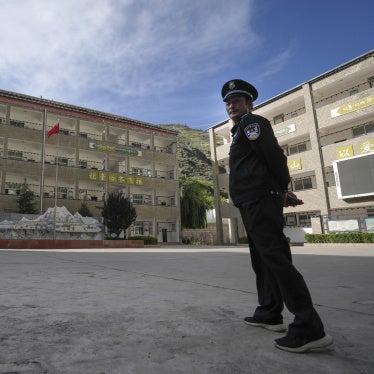
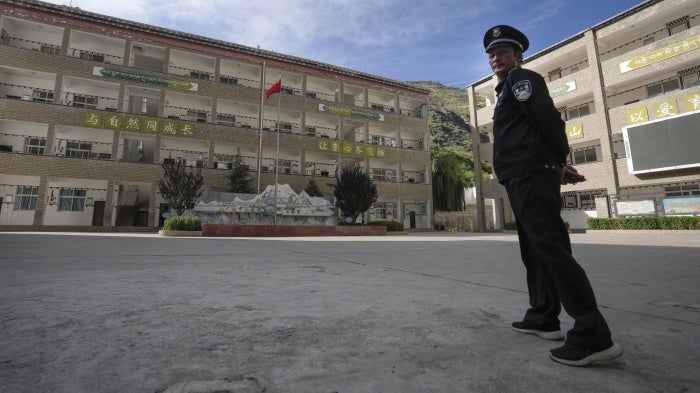
In July 2021, the Chinese Ministry of Education issued the “Children’s Speech Harmonization Plan,” mandating for the first time the use of the Chinese language as the medium of instruction and care in all preschools across the country, including in ethnic minority areas.
This report, based on an analysis of Chinese laws and policy documents, academic and media sources, and interviews with Tibetans and scholars with recent, direct knowledge of conditions in Tibetan areas, examines the consequences of this shift for Tibetan children, families, and communities in the Tibet Autonomous Region (TAR) and Tibetan autonomous prefectures and areas.
While representing a profound policy shift, the 2021 Harmonization Plan was not a sudden rupture. Rather, it was the near final step in a decades long process through which Chinese authorities progressively expanded the use of Chinese in education while eroding the role of Tibetan as a medium of instruction. Over time, education policies made Chinese increasingly required institutionally, while relegating Tibetan to a marginal or symbolic role.
What distinguishes the post 2021 period is the abandonment of even nominal commitments to bilingual education. The Harmonization Plan does not explicitly ban the minority languages in preschools, but in practice it ends the legal authority granted under the 1984 Regional Nationality Autonomy Law for minorities to decide on teaching languages at different levels of schooling. This effectively downgrades constitutional guarantees of minorities’ freedom to use and develop their own languages.
In Tibetan areas, the effects of the 2021 policy changes are reinforced by multiple, mutually reinforcing pressures. These include broader government efforts to expand preschool enrollment which have made attendance increasingly unavoidable. They also include Chinese language testing regimes in kindergartens that appear inconsistent with China’s own laws requiring play-based preschool education, as well as written requests to parents to speak Chinese to their children in their homes, and in some cases require them to provide videos of them speaking Chinese with their children. Together, these measures pressure and constrain families’ ability to transmit language and culture across generations.
Language policy in kindergartens is closely tied to broader political and ideological objectives. The 2021 Harmonization Plan also marks a key acceleration point in China’s gradual, decades-long transition from encouraging ethnic diversity 40 years ago to requiring the “integration” of minority nationalities into the Chinese nation today.
The political concepts that kindergartens in Tibetan areas and throughout the country are now required to inculcate include requiring children to love the Chinese Communist Party and the motherland, to identify themselves as members of the “China nation,” and to celebrate “traditional excellent Chinese culture.” The kindergartens are not allowed to refer to or to include any religious elements in their teaching, thus excluding Tibetan Buddhism and its customs, festivals, knowledge, or culture—core elements of cultural and ethnic identities—from the curriculum even in Tibetan areas.
By mandating Chinese not only for teaching but also for daily interaction, care, and play, the authorities have fundamentally reshaped young children’s linguistic environments at the very stage when mother tongue fluency is normally established. A minority child in China may now never experience any teaching in their mother-tongue throughout their entire childhoods and adolescence, apart from occasional classes in which their local language is the subject of study.
The effects are already visible and appear to be accelerating. Tibetans who have recently visited the region report that children as young as 3 or 4 rapidly stop speaking Tibetan after entering Chinese-medium kindergartens. Language loss is accompanied by broader cultural consequences, including weakening communication between children and elders, altering family dynamics, reduced transmission of religious and cultural knowledge, and growing perceptions among children that Tibetan language and identity are inferior. Although this report concentrates on Tibet, it recognizes that many of the dynamics described are not unique to Tibetan areas.
These developments raise serious concerns under international human rights law, including violations of children’s rights to language, culture, education, and family life, as well as protections afforded to minorities. They also appear to contravene provisions of Chinese law related to preschool education and minority autonomy. Taken together, the findings of this report show that post-2021 education policies do not merely risk language loss over time; they are actively reshaping the linguistic, cultural, and social foundations of Tibetan society, putting the survival of Tibetan language and culture at risk within a single generation.
Human Rights Watch urges the government of the People’s Republic of China to ensure that the education of minority children includes the development of respect for the child’s cultural identity, language, and values, in accordance with the Convention on the Rights of the Child and cease the policy of forcibly assimilating minorities in China.
The government of the Tibet Autonomous Region should ensure that the education of Tibetan children includes the development of respect for the child’s cultural identity, language, and values, and that all Tibetan children are able to learn and use Tibetan in kindergartens as well as in other levels of schooling.
Foreign governments should call on the Chinese government to respect the rights of minorities to education in their own language as articulated in international law and China’s constitution.
Methodology
Research into political and human rights conditions in Tibet is extremely restricted. Tibetans face severe risks of repercussions including potential arrest and prosecution if they are known to talk or communicate with foreigners or members of the Tibetan diaspora about political issues or conditions in Tibet. Authorities also severely restrict Tibetans’ access to passports and strictly limit the ability of Tibetans from the diaspora to travel to Tibet.
Foreigners need special permits and guides to visit the Tibet Autonomous Region (TAR), and sometimes in other Tibetan areas, even as tourists. The Chinese authorities also do not permit access for foreign researchers to Tibet except in extremely rare cases, and then only on subjects that are not likely to produce findings critical of the government.
Ethnic Han Chinese who are citizens of the People’s Republic of China (PRC) also face risks if they work on politically sensitive topics, especially with an overseas human rights organization. Chinese officials and diplomats rarely make themselves available to researchers from human rights organizations, and if they do, almost always provide standardized responses that deny any criticisms of the Chinese government. As a result of these limitations, which have increased under President Xi Jinping, this report is based primarily on the analysis of government publications in Chinese and Tibetan, such as newspapers, online news channels, websites, and WeChat accounts run by government offices. The Chinese government has not responded to Human Rights Watch’s emailed requests for comments on this report (see Appendix).
Human Rights Watch has also drawn on academic studies available in English or Chinese carried out by officially approved scholars in Tibet or other minority areas. Human Rights Watch interviewed five scholars of Tibetan studies who live abroad but spent time in eastern Tibetan areas during 2023 or 2024. All of them were fluent in Tibetan, including eastern Tibetan dialects. Two Tibetans from Tibet spoke at length to Human Rights Watch in August-September 2025 under conditions of anonymity.
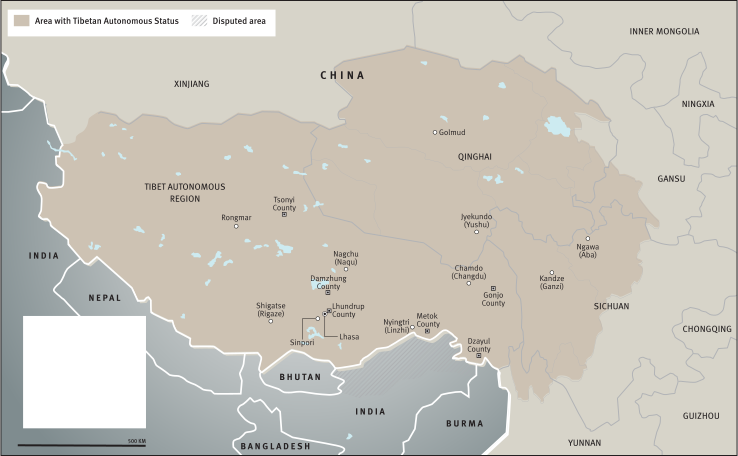
The term Tibet is used in this report to refer to areas within the PRC that were traditionally inhabited by Tibetans. It includes the eastern parts of the Tibetan plateau, which the Chinese government has, since the 1950s, organized into “Tibetan Autonomous Prefectures” (TAPs) within the provinces of Qinghai, Gansu, Sichuan, and Yunnan. It also includes the western and central parts of the Tibetan plateau, known as the Tibet Autonomous Region (TAR), a province-level administration established by China in 1965. In this report, Tibet refers to both the TAPs and the TAR, unlike statements by the Chinese government that use the word Tibet to refer only to the TAR.
In this report, the terms “kindergarten” and “preschool” are used interchangeably for the Chinese term (幼儿园). These entities provide education or daycare to children ages 3 to 6, though sometimes older in the case of Tibetans in rural areas. Primary schools refer to grades 1 to 6, and primary students are generally ages 6 to 12 but again may be older in some areas.
In recent years, the Chinese government has used the term “national common language” (国家通用语言文字) to replace the term “common tongue” or Putonghua (普通话) when referring to standard Mandarin Chinese.
Human Rights Watch uses the terms “assimilation” and “integration” differently. The report uses “assimilation” to refer to efforts by a larger, dominant ethnic community to absorb a smaller one, and to reduce the latter’s ethnic difference or identity to the extent where differences become minimal or superficial. The Chinese government does not use this term in English-language documents or its Chinese equivalent (同化). Instead, Chinese officials use the term “integration” (交融), the meaning of which is discussed in the following section.
In this report, where text appears in English in the form of quotations, all translations are by Human Rights Watch.
I. Background: The Goal of “Ethnic Integration”
China’s Shift from Diversity to “Ethnic Integration”
Changes in recent years in kindergarten education in Tibet should be situated within the Chinese government’s longer‑term evolution in ethnic and language policy. When the People’s Republic of China was founded in 1949, the new Communist government committed itself to treating minority nationalities and their cultures as equal partners in the new state. The 1954 Constitution declared the equality of all the nationalities within China, made any acts of discrimination against them illegal, promised autonomy to regions with large minority populations, and stated that “all the nationalities have freedom to use and foster the growth of their spoken and written languages.”[1] While the revised and current 1982 Constitution requires the state to promote standard Chinese use nationwide, the right of minorities to use their own language remains unchanged.
The use of local-language instruction in minority schools became a legal requirement in 1984, after the government passed the “Regional Nationality Autonomy Law,” which gave legal force to the right of minorities to exercise certain forms of “self-government” in their localities. The law specified—using the word “shall” rather than “may”—that the governments of autonomous areas “shall decide on plans for the development of education in these areas, on the establishment of various kinds of schools at different levels, and on their educational system, forms, curricula, [and] the language used in instruction.” The law also stated that the governments of autonomous areas “shall independently develop education for the nationalities” and that “schools (classes and grades) and other institutions of education where most of the students come from minority nationalities shall, whenever possible, use textbooks in their own languages and use their languages as the media of instruction.”[2]
Accordingly, minority areas in China, including the TAR, established schooling systems in their areas in the 1980s that provided education mainly in the mother-tongue of that nationality, at least at the primary level, together with employment opportunities for school or college graduates fluent in that language.
After the collapse of the Soviet Union in 1991, which analysts in China attributed to an overly lenient nationality policy, a number of Chinese scholars called for reducing the autonomy of China’s minorities and some of the concessions given to them. These calls for a new approach, later known as the “Second-Generation Ethnic Policy” (第二代民族政策), gained renewed attention after major protests against Chinese rule by Tibetans in 2008 and serious unrest in the Xinjiang region in 2009. [3] In 2011, the Second-Generation Ethnic Policy was endorsed by two leading Chinese policy advisors, Hu Angang and Hu Lianhe, who proposed that China’s aim should be to “integrate” minorities within the larger “Chinese nation” (中华民族) by a series of steps that they termed “contact, exchange, integration” (交流,交往,交融).[4] In 2014, this proposal was publicly endorsed by President Xi Jinping in his first, pivotal speech on nationality issues and became state policy.[5] Xi repeated the same principles in a major speech on Tibet policy six years later.[6]
While the Chinese government under Xi has said there will be no alterations to the system of regional autonomy for ethnic minorities, its stated aim is no longer promoting ethnic diversity but instead achieving the “integration” of all ethnic groups within “the Chinese nation.” The ethnic integration policy is based on the goal of “forging the common consciousness of the Chinese nation” (筑牢中华民族共同体意识), a concept explained in one Chinese study as “internalizing the concept of national unity.”[7]
The Chinese government has not clarified the meaning of “integration” in this context, but the 2026 Law on Promoting Ethnic Unity and Progress requires local governments to arrange for different ethnicities in China to work, study, and live together, and to share Chinese values and practices as prescribed by the Chinese Communist Party and the state.[8] The government’s methods for achieving these aims have primarily consisted of rapid economic development and urbanization, encouraging or sending minorities to work in Chinese-majority regions, the “Sinicization” of religions, the rewriting of minority cultural histories, intensive political education in schools, and enforcing the primacy of Chinese language and culture.[9] Critics of the policy have described it as a form of forced assimilation. Chinese politicians and official scholars insist that the distinct identities, languages, and cultures of minorities will be respected and maintained despite the process of “integration,” and that the policy does not involve weakening or diminishing local languages or cultures.[10]
“Ethnic Integration” in Schools
When Xi Jinping first presented the “ethnic integration” policy in 2014 and later in a major speech on Tibet policy in 2020, he made clear that this process should focus on schooling and that there is a need to “integrate the spirit of patriotism throughout the entire process of education at all levels and types of schools.”[11] In the 2020 speech, Xi also said his ethnic policy requires “the people of all ethnic groups to enhance their identification with the great motherland, the Chinese nation, Chinese culture, and the path of socialism with Chinese characteristics,” a practice known as the “four identifications,” later upgraded to the “five identifications” (adding the Chinese Communist Party). School and kindergarten education is frequently described as serving these objectives.[12] This involves teaching children about select aspects of Han Chinese or “traditional” culture, and above all teaching them that they are members of the “Chinese nation,” a Han-centric concept in which minority cultures and identities are now seen as secondary. Built into this “cultural” education is also identification with the Chinese Communist Party and the People’s Liberation Army.
The ethnic integration policy in schools has been combined with three major national education drives to improve education quality that had been underway in China at least since the early 2000s. In minority areas, these three nationwide drives are now led by Xi Jinping’s goal of achieving ethnic integration and thus have a very different impact from elsewhere in the country, contributing to major loss of cultural and linguistic capacity among minority children.
The first of the three drives in recent educational policy in China has been the effort to ensure that all children in China become fluent speakers of standard Chinese, due to longstanding concerns among China’s leaders and policy advisors that many members of the ethnic Han Chinese majority were proficient in their own local dialects and not in standard Chinese. In minority areas, such efforts included a “bilingual education” drive from the 2000s onwards (see Gradual Transition to Chinese-Medium Schooling: 1980s–2021). The second drive was launched in or just after 2010, when China began a nationwide program to increase the enrollment of children in kindergarten (see Mandated Chinese-Medium Teaching in Kindergartens).[13] The third drive is the 2001 program known as “concentrated schooling” or “school consolidation.” This involved “closing and consolidating” (撤点并校) primary and middle schools in remote areas, which meant that children previously served by these schools in their villages or localities have since then been required to enroll in “central schools” located far away, often in county towns, on the grounds that these are better resourced.[14] As a result, many minority children of primary school age, and the vast majority of those of secondary school age, have been required to become boarders (see Kindergartens in Tibet: Language, Erasure, Political Indoctrination, and Compulsion).
II. Gradual Transition to Chinese-Medium Schooling: 1980s–2021
The Chinese government had promoted local language-use in minority schools in the 1980s but shifted in the 1990s to requiring Chinese-medium schooling in secondary schools. In the 2000s, under the name of “bilingual education,” it gradually imposed Chinese-medium instruction in primary schools.
By far the most rapid and most aggressive implementation of China’s policies regarding the imposition of Chinese-medium instruction in education has been in Xinjiang, an area of northwest China that is home to 12 million Uyghurs and other Turkic Muslim populations. There, the use of a local language as a medium of instruction was almost totally ended in the early 2000s, first in institutions of higher education in 2002 and, two years later, in most schools and kindergartens.[15] The authorities ended bilingual education last in Inner Mongolia, where all primary and secondary schools had been shifted to Chinese medium by 2020. These changes occurred in five main phases, with Chinese-medium schooling being introduced or imposed at an ever-younger age.
Phase 1: Minority Schools Required to Use Minority Languages as the Medium of Instruction
From the 1980s onwards, China’s Regional National Autonomy Law required minority communities to use “their own languages” as the medium of instruction in schools “whenever possible.”[16] In the mid-1980s, a number of minority regions established local-language schooling systems. This requirement has not been repealed and is still on the lawbooks in China. Some minority areas interpreted this law as giving them the freedom to choose which teaching language to use. In the Tibet Autonomous Region (TAR), for example, the local administration chose to have Chinese as the main teaching language in secondary schools.[17] In primary schools during this period, however, the TAR established a Tibetan-language medium system of education, with Chinese as a language subject from Grade 4, or in some urban primary schools, from Grade 1.[18]
Phase 2: Minority Schools Permitted to Use Local Languages as the Medium of Instruction; Teaching of Chinese Required
In the mid-1990s, China adjusted its policy on language in education, mandating the learning and use of Chinese in all schools, except where its laws allowed for the use of other languages. This approach was defined by the 2000 Law on the Standard Spoken and Written Chinese Language, which stated that “Putonghua and the standardized Chinese characters shall be used as the basic language in education and teaching in schools and other institutions of education, except where otherwise provided for in laws.”[19] In the Education Law of 1995, which declared Chinese to be “the basic oral and written language for education,” the state no longer said that schools with minority students should use local languages, but still permitted them to do so.[20] In practice, schools in minority areas were still required to use local languages, at least at primary level, and in February 2005, a government White Paper on China’s “regional ethnic autonomy” system said that “schools (classes) and other educational institutions whose students are predominantly from ethnic minority families should, if possible, use textbooks printed in their own languages, and lessons should be taught in those languages.”[21]
Phase 3: “Bilingual Education” Encouraged
In the mid-2000s, the Chinese government shifted to a national policy of formally promoting, but not requiring, what it called “bilingual education.” As a government order put it, “the state encourages ethnic autonomous regions to gradually promote ‘bilingual teaching’ in minority languages and Chinese.”[22] There did not appear to be a standard interpretation of the word “bilingual education”: in some areas, both national and local languages were used in teaching, at least in primary schools, while in other areas, such as the TAR, primary schools chose between using the local language or Chinese as the main medium of instruction, but could not use both.[23] Most of the minority areas made no major changes at this stage, as many already practiced some version of bilingual schooling.
In the TAR, a government White Paper in May 2004 described Tibetan as still the main language of instruction in schools, but no longer the only one, explaining that “both Tibetan and Chinese languages are used in all schools in Tibet, with Tibetan as the major one.”[24] In fact, classes in secondary schools in the TAR had already been taught mainly in Chinese for decades. But it was correct that kindergartens and primary schools in the TAR at that time used Tibetan as the main medium of instruction.
Phase 4: “Bilingual Education” Required; Minority Primary Schools Switch to Chinese-Medium
From 2010 onwards, the government no longer merely “promoted” “bilingual education” in minority areas but began requiring those areas to implement this policy. In 2005, the sentence in the Education Law that said minority schools were permitted to use the local language for teaching was removed. In its place, the Education Law was amended so that “bilingual education” was now a legal requirement in those schools: “in schools and other institutions of education located in ethnic autonomous areas, and in which students of minority ethnic groups constitute the majority, bilingual education shall be adopted in teaching and learning.”[25] According to the law, this meant that schools “should use both the standard spoken and written Chinese language as well as the spoken and written language used by the specific ethnic group or commonly used by the local ethnic groups.” However, the law and the national-level policy documents on bilingual education conspicuously avoided saying that Chinese and the minority languages should be given equal status in bilingual schools.
The central Chinese authorities seem to have left each province or region to decide for itself how to interpret what was meant by the term “bilingual education.” Few of the provincial or regional authorities described it as meaning equal status for both languages. Rather, they referred to either a “Model 1” or “Model 2” form of bilingual education.[26] The Model 1 approach, in which the minority language is the main medium of instruction, and the Model 2 approach, in which Standard Chinese is used as the medium of instruction, and the minority language being only a subject of study.
Inner Mongolia was one of very few minority areas that opted for a system of bilingual education close to the Model 1 approach. As a result, it achieved a very high level of bilingualism among its Mongolian students during this period.[27] Sichuan province took a similar approach on paper, defining “bilingual education” as meaning that Chinese and the local language should be given equal weight in minority schools, but this seems generally not to have happened in practice. [28]
In most other minority areas of China, local governments adopted the “Model 2” form of bilingual education. In Xinjiang, the authorities had already implemented that model very rapidly from 2002 onwards. Most other areas shifted to the Model 2 approach in a gradual way. In Qinghai province, the majority of which consists of Tibetan Autonomous Prefectures, the government announced in 2010 that secondary schools would switch to mainly Chinese-medium teaching, but suspended the implementation of that policy for several years following protests by Tibetan students.[29] In the TAR, officials appear to have pushed schools to switch to Model 2 once resources were available, as Human Rights Watch detailed in 2020.[30]
Phase 5: Minority Schools Required to Teach in Chinese for Three Subjects from Grade 1
From 2017 onwards, the Chinese authorities required that Chinese be the medium of instruction in all minority schools nationwide from the first year of primary school onwards for three subjects—Chinese Language and Literature; History; and “Morality and the Rule of Law” (sometimes referred to as “Politics”). The policy was introduced in the form of a mandated curriculum known as the “Unified Three-Subjects Textbooks” (三科统编教材). In effect, the state withdrew the right or freedom of minorities to choose the medium of instruction or to choose the Model 1 approach for those three subjects.
The new curriculum for these three subjects was implemented in most minority areas of China from the third quarter of 2017.[31] China’s Ministry of Education issued an official implementation plan for use of the three textbooks in 2019, but many areas had already carried out the change by that time.[32] In the TAR, authorities had begun training ethnic minority teachers to prepare to teach these textbooks in Chinese in 2016, and they introduced the “Unified Three-Subjects Textbooks” in Chinese for all primary and secondary students in 2018.[33]
In Inner Mongolia, the same regulation was introduced in August 2020, with implementation of Chinese-language teaching for the three subjects spread over the following three years.[34] After widespread protests against this policy in Inner Mongolia—including suicides—officials there assured parents that the minority language would still be used for other subjects, although this did not happen.[35]
In April 2020, a national order was issued requiring “minority teachers and rural teachers in primary and secondary schools and kindergartens in ethnic minority areas and poor areas” to “improve Putonghua proficiency and Putonghua teaching ability.”[36] Classes teaching Chinese as a language now had to be started in minority schools in Grade 1, instead of in Grade 4, as had been the case in some rural areas. Nevertheless, the “bilingual” policy was still in force on paper and was officially required in schools with ethnic minority students. There were no requirements regarding the main language used in kindergartens, and a school in minority areas could still, at least in theory, opt to use local languages to teach subjects other than the three “unified” classes. This, however, became increasingly rare.
Trends in Tibetan Language Use Prior to 2021
Five studies by Chinese scholars describing Tibetan-language use in different areas of Tibet provide important context for understanding the vulnerability of Tibetan-language use prior to the 2021 Harmonization Plan. They suggest that the use of Tibetan is stronger among older people, in rural communities, and in areas far removed from inland China or with smaller Chinese populations. They also suggest that Tibetan-language use is likely lower among younger generations, and especially among those with higher educational attainment.
Of these five studies, the one that was conducted in the area furthest from the Chinese hinterland with a relatively low proportion of ethnic Chinese people found that, in 2021, Tibetan language was still widely used even among the 270 surveyed youth in the far west of the TAR.[37] Nevertheless, about 54 percent of the surveyed students said that they used Chinese to speak with their siblings, 71 percent used Chinese in public spaces, while 88 percent mainly watched Chinese-language television.
Three of the five studies showed a poor grasp of Tibetan among the surveyed young people. A study of 20 first-year Tibetan students at a university in Kandze (Ch.: Ganzi, 甘孜) Tibetan Autonomous Prefecture, a Tibetan area in Sichuan province that borders inland China, in 2018, found that their knowledge of Tibetan was negligible to non-existent. The students scored only 20 percent on average on a Tibetan language exam, just over half of them had never had a class in Tibetan, and nearly two-thirds of them came from families that spoke Chinese at home and considered Chinese their native tongue.[38]
Another studied a group of 150 Tibetan students at a university in Yunnan in 2018, on the southeast edge of the Tibetan plateau, bordering China proper.[39] It showed that only half of the Tibetan students were able to understand spoken Tibetan completely. As for writing, only 24 percent of the respondents were able to write their names in Tibetan, and 11 percent could not write Tibetan at all. By contrast, 94 percent were fluent in Chinese, including in writing and reading, and they reported that their knowledge of Chinese was improving, while whatever Tibetan they knew was decreasing.
Finally, a 2014 study in Huari (Ch.: Tianzhu, 天祝) county, close to China proper where Tibetans made up only about a third of its population, found that 84 percent 0f the 466 Tibetan residents questioned were fluent or reasonably proficient in the use of Chinese but that only 30 percent could use Tibetan to the same extent as Chinese.[40] Most 62 percent) could not speak or use Tibetan, half of the families only used Chinese in their homes, and some that used Tibetan did so only for festivals and Buddhist ceremonies or when entertaining guests. Reflecting on an earlier survey conducted in 1988 in the same area, the researchers suggest the number of Tibetan respondents who could speak Tibetan had declined in the intervening years. The authors concluded that:
[T]he trend of switching to Chinese has begun to appear among children and young people as a whole, which signals that the survival and development of the Tibetan language in the Tianzhu Tibetan area in the future will face a serious test, and that if there are no measures to protect it at present, the Tibetan language will probably disappear from the area in a few years’ time.[41]
These broader trends were accompanied by changing attitudes toward the Tibetan language itself. In a 2014 study, the linguists Wang Haoyu and He Junfang found that language loss among Tibetans was closely linked to the perceived social status of Tibetan relative to Chinese. “In the Tianzhu Tibetan area,” they wrote, “the language concept of ‘the uselessness of the Tibetan language’ is common among the local Tibetan residents, especially among the Tibetan youth.”[42] The researchers attributed this in part to practical factors such as the limited prospects for further education, employment, and personal development for Tibetan speakers, which led young Tibetans to perceive their language as having low status. In particular, Wang and He found that young Tibetans in Tianzhu considered their language backward or “embarrassing” when compared to Chinese. This had led in Tianzhu to what the researchers termed a “can speak but don’t speak” linguistic habit among local Tibetan youths, one of whom explained it to the researchers as follows:
[Among] many of our classmates, both [in a conversation] can speak Tibetan, but when together, they don’t speak it. This seems to have already become a habit. [We] don’t speak it at home either. Usually, [we] speak Chinese. [We] don’t have that habit of speaking Tibetan when we’re together. Another thing is, when walking on the street, many people speak Chinese, right? If they speak Tibetan on the street, others won’t understand, and they’ll feel it’s very strange and stare at them. They [the Tibetan speakers] would certainly feel embarrassed.
These factors add to already prevalent discriminatory views within China towards minorities, particularly people considered to be herders. The US-based anthropologist Huatse Gyal, who grew up in the early 2000s in a Tibetan area of Qinghai province, described the attitude of teachers towards him and other children from Tibetan pastoralist families, and the effect it had on their sense of cultural self-worth:
“If you don’t want to lead the backward lives of your parents, study hard.” “If you don’t study hard, you will be nothing but a stupid nomad.” Our teachers drove us to hate our heritage, our elders, and even our parents. As embodiments of the state, they were there to plant the sense in us that a good life was on the outside, and not in our communities. They were there to punish us for being the children of Tibetan nomads. We felt ashamed of our cultural background; we developed an antipathy to our socio-cultural world itself.[43]
Scholars in China have expressed similar concerns.[44] The educationalist Bama Amo wrote in a 2017 paper that carrying out teaching in Tibetan kindergartens “completely in Chinese under the pretext that ‘it is beneficial to adapt to standard Chinese early’” leads to serious cultural damage:
The result of this kind of education is that herders do not want to herd, farmers do not want to farm, and children in the mountains want to leave the mountains. However, … this results in the dilemma of “cultural rupture”: … The children have lost their mother tongue and are not proficient in Chinese, and they have lost their national culture but cannot fully integrate into the mainstream society. Because of this, [they] cannot compete with children who have grown up in the mainstream culture in terms of academic standards. Therefore, most children from the agricultural and pastoral Tibetan areas who have passed the middle school entrance examination and the college entrance examination can only return to their original communities … as “losers,” … unable to adapt to the environment they face.[45]
The scholars who carried out the 2014 language survey, Wang and He, noted that young Tibetans saw learning to speak Chinese and giving up Tibetan as a way to overcome prejudices against them and to find employment. But the researchers found that this strategy often failed.[46] This contradicts the claim by Xi Jinping and most Chinese scholars that knowledge of Chinese language will lead to “social equity” and remove ethnic disparities in terms of employment and income generation.[47]
Concerns Expressed by Scholars Prior to the 2021 Policy Shift
In the 2010s, when the Chinese government required minority kindergartens and schools to implement what it called “bilingual education,” a number of Chinese and Tibetan scholars in China tried to stress the importance of genuine bilingual teaching. This appears to have been a subtle pushback against more extreme forms of bilingual policy.
In a 2017 academic study, for example, Bama Amo, a Tibetan education expert who is a vice-dean of the School of Education at Sichuan Nationalities University, argued forcefully that in Tibetan kindergartens:
The curriculum content should include both the excellent culture of the ethnic group and the excellent culture of other ethnic groups, so that preschool children will be curious about the world, understand the common culture of mankind, and learn to reflect on their own ethnic culture; second, the language of education should include the mother tongue, Chinese, and a foreign language, so as to lay a good foundation for cultivating talents who are proficient in their mother tongue, proficient in Chinese, and can use foreign languages.[48]
One teacher in Lhasa published an article saying that the bilingual teaching model should “help children inherit their own ethnic language while learning the national common language.”[49] Other researchers, including four Chinese scholars writing in English, argued for greater inclusion of Tibetan cultural content in the preschool curriculum for Tibetans.[50]
Among these academic critiques was one that was unusually explicit and much more surprising. It came in a 2019 paper by Ma Rong, a distinguished social scientist at one of China’s most prestigious universities who is viewed as the initiator and most prominent promoter in China of the “Second-generation Ethnic Policy.” In his 2019 paper, however, Ma Rong warned that Chinese-medium teaching in minority schools would damage local-language ability. Such teaching, he noted, “[W]ill inevitably have an impact on the mother-tongue learning and traditional culture inheritance of ethnic minority students…. The decline in the mother-tongue language ability of some ethnic minority students is likely to be a reality we must face.”[51]
Ma called for China to create a genuine, fully-fledged bilingual system by reopening minority schools that teach in the local language, and by requiring Chinese students to learn minority languages. Such recommendations appear to have been an extraordinary case of buyer’s remorse—an attempt to persuade the government to compensate for the outcome of the policies Ma himself had largely inspired. [52] Ma’s suggestions, however, like those of other critical scholars and education experts in China, had no evident impact.
III. Mandated Chinese-Medium Teaching in Kindergartens
In 2021, the Chinese Communist Party issued the Children’s Speech Harmonization Plan as well as appeared to delete references to bilingual education from a range of official documents. The government has continued to take other public steps to curtail the right or freedom of minorities to use their language in schools and to further marginalize any significant use of local languages in education. These steps suggest the central government, aware of obstacles in its own laws to mandating the use of Chinese as the medium of instructions at all levels, has been acting to alter China’s longstanding legal provision for local language use in education.
The “‘Children’s Harmonization’ Plan”
The “‘Children’s Harmonization’ Plan” was issued in July 2021 by the Ministry of Education to regulate teaching in kindergartens throughout the country. Its purpose was to “implement the spirit of General Secretary Xi Jinping’s instruction of ‘start with the young children’ (要从娃娃娃娃抓起) in national common language education.” The Plan required that children be taught Chinese during “the critical period of language learning in the early childhood period,” especially in “ethnic and rural areas.” It instructed all kindergartens in China to “use the national common language and script for childcare and education activities” from September 2021 onwards and told kindergarten teachers to “organize a variety of activities to let children listen more, speak more, want to speak, dare to speak, and have the opportunity to speak.” Teachers were required to use Chinese not just in teaching in kindergartens, but also in “childcare” (保教), “health care” (保健), and “nurture” (养育 ).[53] They were also required to “use opportunities in daily life and games to encourage children to communicate with adults and peers in Putonghua.”
The immediate aim was “to create a rich Putonghua education environment” in the kindergartens so as to improve children’s Chinese-language ability. [54] The overall goal was to “forge the common consciousness of the Chinese nation” in the minds of preschool children, particularly those from minorities. There was no mention in the “Plan” or in official media reports about it of whether minority languages could continue to be used in preschool education. [55] The “Plan” does not ban the use of minority languages in kindergartens, but it severely limits the time available for teachers to use the mother-tongue with students from minorities. In Tibetan areas, only a limited number of kindergartens, particularly privately-run ones in urban areas, appear to still hold additional classes or sessions in Tibetan.
The “Plan” also ordered that kindergarten teachers be given additional training in using Chinese for all their interactions with children.[56] Since 2021, 8,000 kindergarten teachers from Inner Mongolia, Tibet, Xinjiang, and other minority areas, particularly those whose “Putonghua proficiency has not yet met the necessary standards,” have been trained by the government annually, including at least 200 from the TAR and 1,200 from Tibetan areas of Qinghai.[57] According to these media accounts, one seven-day training course covered three main topics: ideology and politics (including a session on “Forging a Strong Common Consciousness of the Chinese Nation”); improving teachers’ Chinese-language ability (one session was on “Scientific Pronunciation and Scientific Use of Voice”); and teaching Chinese to infants (“Language Guidance for Children's Game Activities”). At least three sessions were devoted to ensuring correct pronunciation and tone production in Chinese, and one session was on “Reciting Chinese Classics,” a required feature of school curricula and now evidently in kindergartens, too.
Other Legal, Policy Efforts to Prioritize the Chinese Language Political Indoctrination in the School System
Taken together, a series of legal rulings, education laws, and government policies since 2021 have worked to eliminate remaining legal and policy space for minority‑language education while embedding political and cultural indoctrination throughout the school system, including at preschool level.
The most notable instance of the Chinese government’s attempts to systematically dismantle the legal regime enabling the use of minority languages in education came in January 2021. China’s Legislative Affairs Commission, part of China’s legislature, abruptly ruled that it was illegal and unconstitutional for a local government in China to require teaching to be carried out in a minority language. [58] It declared that two longstanding local language laws were invalid because they required that schools for minority pupils in their areas provide teaching mostly in the language of that minority.[59] As noted previously, those laws did not infringe the constitution, which only requires Chinese to be “promoted” as the language of instruction.
Reporting on the commission’s ruling, the Global Times, an important news outlet for the government, published an article saying that local regulations that allow ethnic schools to use ethnic languages in teaching are “inconsistent with [the] Chinese Constitution’s order to promote Putonghua in the country.”[60]
In 2022, the Legislative Affairs Commission clarified that it had ruled the two local language laws as invalid because they “were not conducive to promoting ethnic exchange, communication, and integration.” The commission added that “all regions of the country, including ethnic minority areas, should fully promote the education and teaching of the national standard spoken and written language.”[61] The word “fully” implied that the use of Chinese as the main teaching language was now compulsory, and that autonomous areas no longer have the constitutional freedom or legal authority to choose to use a minority language as the main medium of instruction.
In a related development in 2023, the Legislative Affairs Commission reported that it had ruled that regulations about examinations for positions in autonomous administrations were illegal if they gave advantage to a candidate for using the minority language of that autonomous area.[62] In August 2025, the Chinese authorities announced the ending of the option for Tibetans to take Tibetan language as a subject in the annual National College Entrance Examination (高考) in the TAR. This decision, supposedly introduced in order “to truly achieve student success and social equity,” removed the main incentive for Tibetan high-school students to study their own language.[63] Tibetan and other minority languages had already been removed as optional papers for the college entrance exam, in Qinghai by 2025, and in most other areas with Tibetan populations.[64]
In November 2024, when the National People’s Congress passed a Preschool Education Law, the principal element of the Harmonization Plan was made a legal requirement: it declared that “kindergartens should use the national common language and script as the basic language for childcare and education.”[65] The new law made no reference to the use or inclusion of minority languages or of minority cultural content in kindergartens. The 2026 Law on Promoting Ethnic Unity and Progress threatens legal penalties for any individuals who “obstruct citizens from learning or using the national common spoken and written language.”[66]
In parallel with these language policies, the Chinese government has adopted laws and policies that embed political and cultural indoctrination throughout the school system, including at preschool level. The Patriotic Education Law of 2023 requires patriotism to be included in education “at all levels.”[67]
The 2025 Preschool Education Law further states that kindergarten children should be taught “China’s excellent traditional culture, revolutionary culture, and advanced socialist culture” and “the common consciousness of the Chinese nation.”[68] The 14th Five-Year Plan contains a policy requirement that children be exposed to “excellent traditional Chinese culture.”[69]
The 2026 Law on Promoting Ethnic Unity and Progress requires “schools at all levels and types” to “integrate the requirements for forging a strong common consciousness of the Chinese nation throughout the entire educational process,” including by requiring preschool children to learn to speak standard Chinese, and to “be able to basically master” the language by the end of their compulsory education—typically at age 15.[70]
IV. Kindergartens in Tibet: Language, Erasure, Political Indoctrination, and Compulsion
Policy shifts since 2021 have reshaped kindergarten education in Tibetan areas, beginning with the disappearance of “bilingual kindergartens” from official discourse and practice and the normalization of Chinese‑language environments. These changes have also involved the extension of political and cultural indoctrination into early childhood education. They are reinforced by enrollment pressures that leave parents with little meaningful choice, and by practices that reach beyond the classroom into family life. Taken together, these developments represent a systematic transformation of early childhood education with far‑reaching implications for Tibetan language transmission and identity.
The Disappearance of “Bilingual Kindergartens” in the Tibet Autonomous Region
As noted in the Background, from the late 1980s the government’s instructions on kindergarten teaching had acknowledged local languages and specified that they should be used in appropriate situations. For example, the 1989 regulations for kindergartens had said that those “that enroll mainly ethnic minorities may use the language commonly used by their own ethnic group.”[71] As late as 2012, the TAR Education Department had said that children in TAR kindergartens were being “taught in both the Mandarin and Tibetan languages,” and that “the government is actively pushing for bilingual preschool education.”[72]
The meaning of “bilingual” in the context of kindergartens was, however, left ambiguous in the TAR, but government statements and media reports made it clear that kindergarten teachers could use Tibetan.[73] Teachers were, however, required to familiarize preschool-age children with Chinese and there were some implicit indications that this was their priority. A 2016 central government directive on education policy in Tibetan areas, for example, stated that the purpose of “bilingual education” at all levels, including preschools, was to “effectively improve the ability of ethnic minority students to adapt to social development and employment,” widely understood to mean to improve their ability in Chinese language.[74] A 2017 survey of 50 kindergarten teachers in Chushul, near the TAR capital, Lhasa, found that 67 percent of the teachers believed the “most important objective” of “bilingual teaching” was to improve children’s ability in Chinese.[75]
There were also practical indications of the primacy given to Chinese teaching: although some kindergartens, at least in towns, were large enough to have more than one class for each grade, reportedly they did not divide classes according to ethnicity or language. As one person from Lhasa told Human Rights Watch in 2017, “in the kindergartens there are no separate Tibetan or Chinese classes: they are mixed together, all with one language, and the teachers have to speak in Chinese.”[76] In urban kindergartens, which are increasingly likely to include Han Chinese children, the possibility of Tibetan being used in the classroom is further reduced, since there is a convention in Tibet that Chinese should be used if there is a non-Tibetan speaker present.
In 2014, Xi Jinping himself ordered teachers and officials to end single-language classes or groupings:
Efforts should be made to actively promote the integration of schools for both Han and ethnic minority students, including mixed-class arrangements, in order to create an atmosphere and conditions for learning and progressing together, and to avoid situations where students of different ethnic groups still stick to their own groups and walk in their own circles when they arrive at school.[77]
Officials in Tibet and other minority regions were therefore obligated to prevent single-ethnicity classes and to promote mixed classes, and in some cases, officials place ethnic Chinese children and teachers in classes with Tibetan children to ensure that the Tibetan pupils use Chinese.[78] Some Chinese education experts are strong proponents of this practice.[79]
Despite this, during the “bilingual kindergarten” era, from around 2010 to 2021, kindergartens in Tibetan areas were free to use Tibetan in their classes so long as they prioritized the teaching of Chinese. It is thus likely that, especially in rural kindergartens and in privately-run ones serving urban Tibetan families, Tibetan was used frequently as a teaching language.
But references to “bilingual kindergartens” disappeared from official media and government publications following the issuing of the 14th Five-Year Plan and the “Harmonization Plan” in mid-2021. In March 2021, when China’s 14th Five-Year Plan was issued, it omitted any references to “bilingual education” or “bilingual kindergartens,” unlike the two previous five-year plans. The TAR issued a 200-page explanation of the regional government’s objectives and targets for the 14th Five-Year Plan in 2021, which contained no references to bilingual education.[80] The only goal it mentioned regarding kindergartens was “strengthening Putonghua education for preschool children.”[81] The Chinese-language edition of the Tibet Daily, the official mouthpiece of the Chinese Communist Party in the TAR, which had published 177 articles referring to “bilingual kindergartens” between 2010 and 2021—an average of 16 articles on the topic each year— had only 6 articles referring to them in 2023 and 3 in 2024. As for the term “bilingual education,” the number of Tibet Daily articles using this term dropped from an average of 31 articles per year between 2010 and 2021 to fewer than 3 articles per year between 2021 and 2024.[82] As with the 14th Five-Year Plan and the “Outline for the Development of Chinese Children (2021-2030),” compared to previous years’ documents, there have been no such claims or promises in policy documents and government statements issued since 2021.
Enrollment Pressure Makes Attendance at Chinese-Medium Kindergartens Effectively Compulsory
As noted in the Background, in the last 15 years, government policy has strongly promoted increased participation in preschool education in Tibet, as in other parts of China. This process began in 2011 when China initiated a nationwide drive, as part of the country’s 12th Five-Year Plan, to “basically universalize” kindergarten attendance.[83] Accordingly, the TAR and Tibetan areas outside the TAR set goals for a rapid increase in preschool enrollment.[84] By 2024, the TAR reported a preschool enrollment rate of over 91 percent.[85] As part of the Chinese government’s 15th Five-Year Plan, the Ministry of Education is also encouraging “qualified preschools”―including those in Tibetan areas―to further lower the admission age from three to two years of age.[86]
Kindergarten enrollment was compulsory in Tibet from around 2011 until 2014, according to frequent statements by the TAR government at that time.[87] These statements referred to kindergarten attendance as part of the TAR’s “15-year compulsory education” program, as did the authorities in Tibetan areas of Sichuan and Qinghai provinces.[88] This claim turned out to be illegal under Chinese law. As noted by Dolma Kyab, formerly a lawyer in Tibet and now based in the US, “there is no legal requirement for children under six to attend preschool” in China.[89] For the TAR authorities to require attendance at kindergartens was, he pointed out, in contravention of China’s laws. This view was confirmed by China’s Ministry of Education in a public statement in March 2017, in which it said that only the central authorities could change the length of compulsory education in China and that provinces were not allowed to declare preschool attendance to be compulsory.[90]
The TAR authorities stopped referring to preschool education as compulsory in early 2014.[91] Instead, the TAR has since referred to preschools in the region as part of the TAR’s “15-year free education system.”[92]
The TAR authorities have not stated that kindergarten attendance is not compulsory. Multiple factors in practice substantially shape—and in many cases constrain—parental choices about whether, when, and where young children enroll.
In urban areas of the TAR, public announcements by primary schools now routinely ask to see a child’s kindergarten attendance record as a requirement of admission.[93] A former part-time teacher from Lhasa told Human Rights Watch that by at least 2018, primary schools in Lhasa were requiring parents to prove that their children had attended a kindergarten before they could be admitted to a primary school:
The kids have to go to kindergarten, it is kind of mandatory, by, I think, the age of four. … There is a whole new system, they need to have a report book or credit report in order to enroll in the elementary school, and it carries in it all the details of your schooling years, which teachers need to sign, saying from which year you began in the kindergarten.… It is very difficult to enroll at the elementary school, you have to have kindergarten signatures in there to enroll, you must have a record from kindergarten, it should be two years or three years, at least in Lhasa city, I don’t know elsewhere.
She said her cousin’s son enrolled in the kindergarten, although they wanted to keep him at home another year:
But in order to get enrolled later [in an elementary school], they had to do that, to get the record—it is called a xueji (学籍) card. So she didn’t want to, but she had to send him by age 3 to the kindergarten in order to get that card.[94]
This practice has not yet been observed in rural primary schools.[95] However, Human Rights Watch received accounts in 2025 that Tibetan children who had not been to kindergartens and so were not proficient in Chinese were required to retake Year 1 of primary school two or three times.[96]
In rural and pastoral areas, enrollment has been promoted through a combination of material incentives and administrative pressure. Although available data suggests that many urban Tibetan parents see knowledge of Chinese as an asset for their children, and are often interested in enrolling their children in kindergartens, Chinese researchers frequently complain that many rural Tibetans do not want to send their children for early schooling, particularly if it involves learning Chinese at that stage.[97] [98] In the view of such researchers, this is because those Tibetans are too “backward” in their thinking or development to appreciate the benefits of the policy.[99] Local authorities have encouraged participation through cash subsidies (the “three guarantees”), while local officials are often tasked with meeting enrollment targets. In Sichuan, for example, a campaign used the slogan “Don’t let children lose at the starting line” to get parents to overcome “the educational concepts and teaching methods of the past” and to “absorb more advanced ideas” by agreeing to send their children to kindergartens. [100] [101] In the TAR, official media reports describe visits by officials to the homes of rural families who are “reluctant to send their children to kindergartens too early.” These visits at times are led by Han Chinese CCP cadres from lowland areas of China who are assigned to work in Tibet and are highly motivated to hit quota targets to boost their career prospects.[102] The reports describe the officials as “investigating” and “doing work on” the families, terms that could indicate the use of pressure on the parents, pressure that vulnerable ethnic minority communities are least able to resist.
Crucially, for families who do choose—or feel compelled by circumstance—to enroll their children, the scope of meaningful choice is limited. In rural areas, there is only one available kindergarten, and parents are required to apply to the kindergarten nearest to their place of residence.[103] Other than in more affluent urban areas, after the 2021 Harmonization Plan, parents have little opportunity to select a preschool environment that offers sustained instruction or care in Tibetan.
Taken together, the combination of policy incentives, administrative practices, and the absence of Tibetan-medium alternatives means that for many families, early entry into Chinese-medium kindergartens has become the default pathway rather than a genuinely free choice.
Official Pressures on Kindergarten Children, Parents, and Teachers to use Chinese
Beyond mandating Chinese‑language use in kindergarten teaching, Chinese authorities have implemented a range of measures that directly pressure young children, their parents, and teachers to adopt Chinese as the language of daily communication. These measures include testing kindergarten children’s Chinese‑language ability, requiring teachers to conduct all interactions in Chinese, and urging parents to speak Chinese with their children at home.
Learning Chinese is presented as a form of patriotic education. It is also understood as part of each child’s duty to the nation, as illustrated by a media report of a language competition in a kindergarten in Golog TAP, Qinghai province: “The children expressed their love for the motherland in a recitation with passion and emotion.... This activity lets [the children] know that learning and speaking Putonghua well is the responsibility and mission of every student.”[104]
Use of Chinese-Language Testing in Kindergartens
In Tibet, Chinese-language proficiency testing has been introduced into kindergartens, apparently on a random basis and always involving outside examiners. The testing scheme in Ngari prefecture, one of the seven prefecture-level administrative units in the TAR, was highlighted as an exemplary case of good policy implementation in a book of such cases published by China’s Nationalities Affairs Commission in January 2025. There, the commission wrote, in 2024, “3,478 children from 40 kindergartens were tested by 180 examiners on their Mandarin skills.”[105] The tests were part of a nationwide testing policy, reportedly defined in a notice issued by the Ministry of Education about “2024 Preschool Children’s Mandarin Proficiency Monitoring Work.”[106] In another case in the TAR, two examiners were sent in May 2024 to “conduct Putonghua proficiency tracking and monitoring” of 90 children in a kindergarten in Nyemo county near Lhasa, “through conversation, question-and-answer sessions, reading aloud and observation.”[107]
These tests appear contrary to China’s law on preschool education, which, as part of an earlier, nationwide drive to reduce pressure on kindergarten children, requires teaching in kindergartens to be based only on games. It therefore forbids the use of formal teaching methods in kindergartens, such as the use of textbooks or “implementing ‘primary school-like’ education in advance.” [108] [109] The administering of examinations appears to violate these prohibitions.[110] Not only does the Ministry of Education test Chinese language ability of children in kindergartens in the TAR, the tests are also conducted by outside examiners previously unknown to the children. The examiners are sent from other areas or regions, apparently to avoid any favoritism or cheating by local teachers.
There are no reports of tests of the children’s abilities in Tibetan.
Pressure on Children and Parents to use Chinese at Home
Besides testing kindergarten children on their Chinese-language ability, the government requires kindergartens to encourage or put pressure on parents and children to speak Chinese in their homes. This drive reflects frequent complaints by Chinese education experts and researchers that Tibetan and other minority children are not learning Chinese fast enough because they speak Tibetan at home or outside the school. As one Chinese researcher put it, “many members of minority families communicate with children using their native language or dialect, which artificially hinders children’s acquisition and use of the national common language. Therefore, parents should be encouraged to communicate with children in Mandarin in their daily interactions.”[111] The researcher recommended that parents “should also pay attention to not using inappropriate or non-standard language when communicating with children and try to avoid negative influences. They should not mix languages in their daily lives, either.”
As another study by Chinese scholars put it, “schools are the main ‘battlefield’ for building the common consciousness of the Chinese nation, but it must not be limited to the classroom or to academic teaching.”[112] A number of Chinese academic studies and media reports argue that by arranging for parents to use Chinese at home with children below school age, those parents and other adults will also be encouraged to learn Chinese. Authorities call this the “home-school co-education” teaching model, or the “small hands holding big hands” activity.[113] This “activity” was described in a 2024 article as “students passing on good, civilized habits and civilized awareness to their parents and society, subtly affecting the people’s living habits.” This task was a national priority, mandated by the Ministry of Education in all areas in 2022:
Education and language departments at all levels should organize and guide schools of all levels and types to carry out “small hands holding big hands” Putonghua learning and education activities for children and parents … so as to create an environment for families to learn and use Putonghua. [They] should combine this with the implementation of the Chinese Classics Recitation … and hold Putonghua promotion activities such as “small hands holding big hands,” “big hands holding small hands” recitations, families reading a book together, and family reading days.[114]
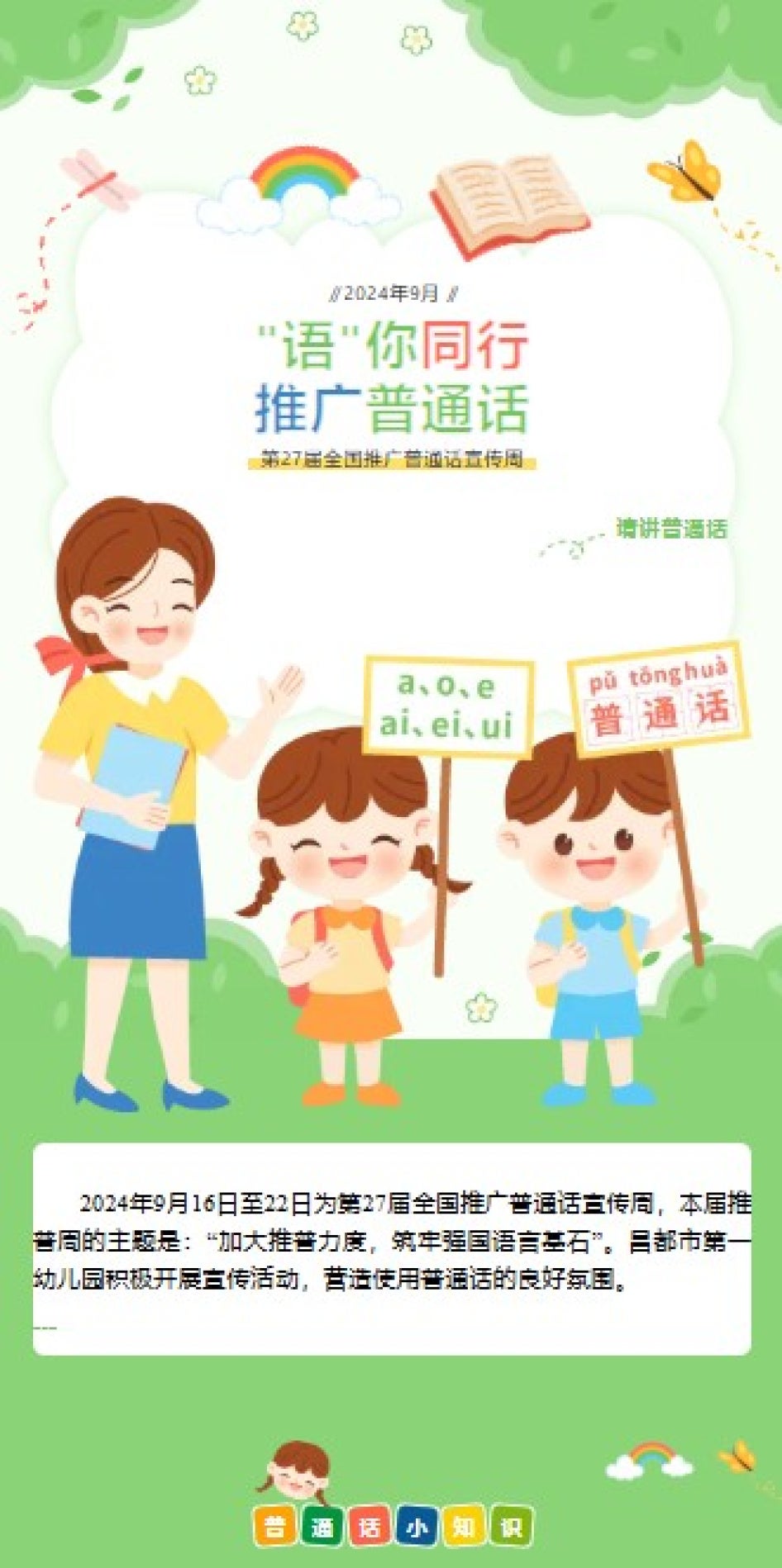
Accordingly, some kindergartens and local media outlets have published videos of children speaking Chinese with their parents or teaching their parents to speak Chinese, while others have published their online requests to parents to speak Chinese at home.[115] One kindergarten in Chamdo, eastern TAR, wrote in an online post addressing parents, “In kindergarten and at home, let us all become little messengers of Putonghua, communicate in Putonghua, and create a warm and harmonious language environment.”[116] The main slogan in the notice again emphasized that being able to speak Chinese constitutes being civilized: “speak Putonghua, write standard characters, use civilized language, and be civilized people.”
“Cultural” Education
Xi Jinping has emphasized the need to expose children to “excellent traditional Chinese culture,” and this was a policy requirement under the 14th Five-Year Plan. This type of cultural education includes celebrating certain traditional Chinese festivals that are part of the Han Chinese cultural lineage, and which are now increasingly a feature of the kindergarten calendar. Tibetan kindergartens, for example, now prominently feature events to mark the Dragon Boat festival, a Chinese tradition, through such activities as “making rice dumplings, acting out rowing dragon boats, hanging sachets, and tying colored sashes.” In the words of one kindergarten, the purpose is “so that children can feel the connotation of traditional Chinese culture, cherish the memory of their ancestors, and inherit the national spirit.”[117] These Chinese festivals are now presented in kindergartens as if they are part of Tibetan culture, although they have not previously been celebrated by Tibetans or been a part of school programs in Tibet.
Cultural education in kindergartens increasingly includes teaching children to recite Chinese classics in kindergartens, in line with a 2017 State Council “Opinion,” which called on “all sectors of society and schools at all levels to carry out Chinese classics recitation.”[118] A 2020 report from Machen county, Qinghai province, described how kindergarten children “recite classic Chinese classics and poetry” in order “to build the Chinese dream of language and characters, and inherit and carry forward the excellent traditional Chinese culture.”[119] In Chamdo municipality, a kindergarten asked parents in 2024 to “choose picture books and reading materials with standard [Chinese] text for your children, and recite [Chinese] classics with them so that they can feel the beauty of the Chinese language and inherit Chinese culture.”[120] By August 2025, the practice of classics recitation in kindergartens was so widespread in Nyingtri municipality in the TAR that the authorities were able to hold a prefecture-wide competition for the best Chinese classics recitation by kindergarten children.[121] The teaching of “revolutionary culture,” a legal requirement under the 2025 Preschool Education Law, refers primarily to the history of revolutionary heroes and to military achievements by the People’s Liberation Army (PLA). Some Tibetan kindergartens have children dress up as soldiers from the former Red Army or from the PLA and act out killing Japanese soldiers or members of the Chinese Nationalist Party―the political party the PLA under the Chinese Communist Party fought and that fled to Taiwan in 1949. Others are taken on excursions to CCP revolutionary sites, to attend talks by soldiers about Party history, or to watch military events and anniversaries of battles on television.[122]
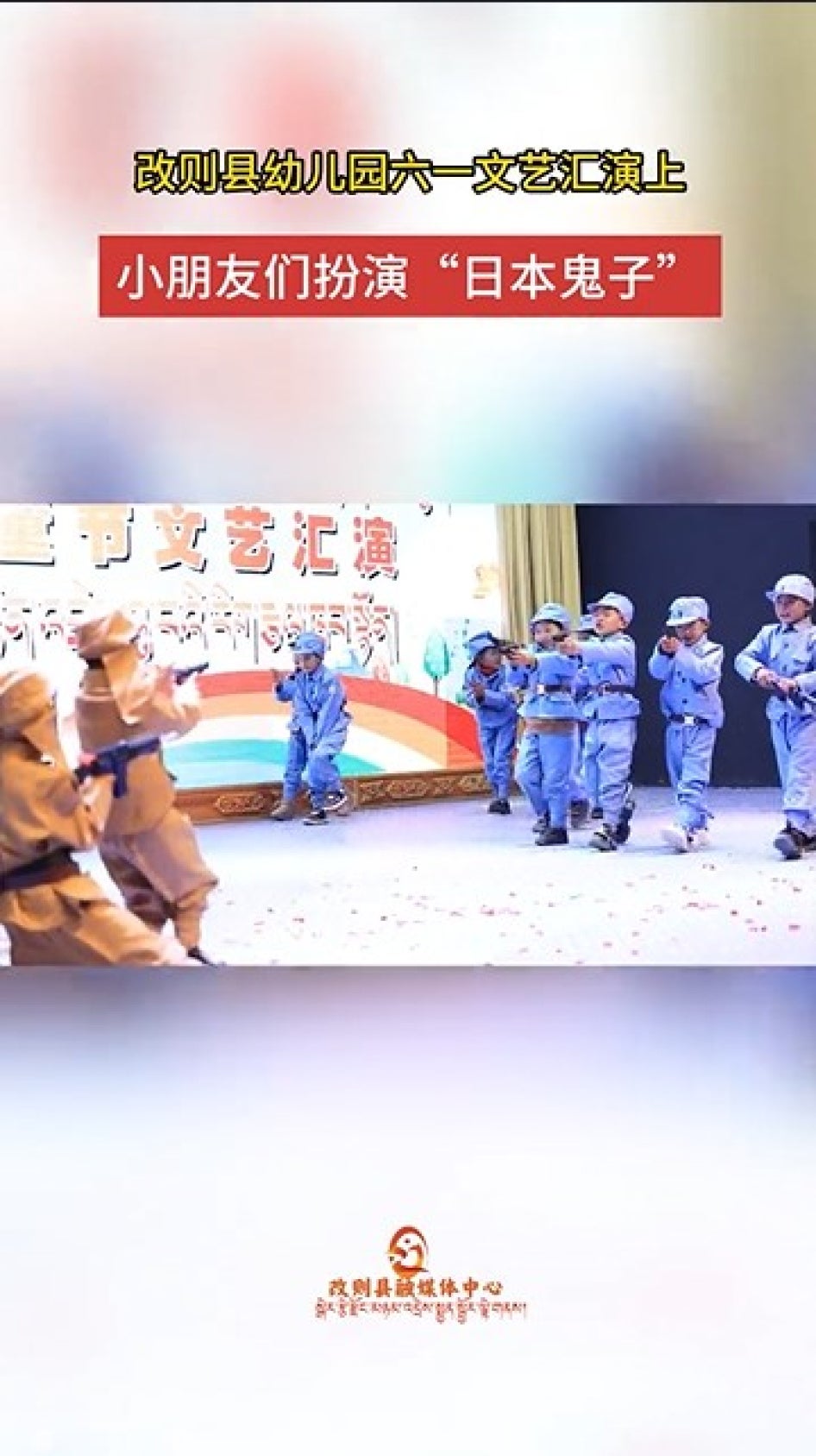
Numerous media reports describe Tibetan kindergartens carrying out patriotic education and teaching “love for the Party.” For the first class of the 2025 school year in the three main kindergartens in Pashoe county in the TAR, for example, the teachers “integrated patriotism and ethnic unity education into their curriculum” in order to “forge a strong common consciousness of the Chinese nation.”[123] In Sakya county, TAR, in June 2025, a kindergarten celebrated the 104th anniversary of the founding of the Communist Party of China by devoting a day to the theme of “Children’s Hearts Towards the Party, Red Heritage,” in which “the children learned about the glorious history of the Party, felt its greatness, and further strengthened their sense of national pride, planting the seeds of love for the Party and the country in their hearts.”[124]
Boarding Kindergartens: Further Risks to Language and Culture
The use of residential kindergartens—about which publicly available evidence remains limited—raises serious concerns when young children are immersed in a language other than their mother tongue. These concerns include risks to children’s ability to acquire and retain their language and culture, as well as to parents’ right to choose.
While many day kindergartens in Tibet have recently extended their hours to 5 p.m. or so in some areas, the children return each evening to their families.[125] This is not the case for residential kindergartens, where children do not see their parents from each Sunday afternoon until the following Friday afternoon, heightening the risk of acute linguistic and cultural loss. One 2024 report says that in boarding primary schools in Nyagchukha, a Tibetan county in Kandze TAP, children and teachers are allowed only to communicate in Chinese, and that when the children come home for school holidays, they do not communicate with their families.[126]
Residential kindergartens (宿制幼儿园), also called boarding kindergartens, were founded in major Chinese cities from the 1950s onwards to cater to the children of the well-off or of high-level cadres.[127] Since the kindergarten enrollment drive of the early 2010s, however, charitable organizations as well as the government have established residential kindergartens in some areas of China to accommodate the children of poor families, particularly those living in remote rural settlements, or to address special needs, such as those of abandoned children, children with disabilities, or those whose parents have migrated in search of work.[128] However, besides occasional references in the Chinese media and in academic literature, there is very limited information available about such kindergartens.[129]
The only account of conditions in a residential kindergarten in a Tibetan area that researchers found was a social media account by a non-Tibetan college student about the two months she spent in 2017 at the boarding kindergarten in Gansu Province located at Thangkarnang in Sangchu county, Kanlho (Ch.: Gannan, 甘南) TAP.[130] Before beginning work at Thangkarnang, the student, together with other interns assigned to kindergartens in Kanlho, was taught to perform a Tibetan circle dance and was given five hours of training in Tibetan, but otherwise was not equipped with knowledge of Tibetan language or culture. The student notes that “because it [Thangkarnang] was a boarding school, most of the children went back to school on Sunday and stayed until Friday” and that “after 8:30 pm, we take them back to the dormitory and our work day is over.”[131] The student noted that the children in the kindergarten and in an associated primary school “sleep generally two or three to each [bed]” and “use a sheepskin [Tibetan chupa or robe] as their mattress.” In some cases, children had to be strapped to their beds to prevent them from falling. During the two-hour afternoon recess, the children slept at their desks.
Conditions seem to have been severe, since the student notes that “toys were confiscated from the children, but I don’t know why they were not allowed to play with them.” The account suggests that teaching was largely limited to songs and dances to be performed at official events such as Children’s Day. She concludes that “due to the situation, I didn’t actually teach them much, but I still tried my best.” She later says of her experience teaching in a nearby Tibetan kindergarten that “the preschoolers couldn’t understand Chinese! So teaching was like talking to a wall; it was incredibly difficult.”
One academic study that notes that 83 of the 260 rural kindergartens in Yunnan province —32 percent—offered some boarding facilities.[132] The total number of such kindergartens in other provinces or regions of China or in Tibet specifically is unknown.[133]
Occasional reports in the Chinese media have referred to a total of 13 kindergartens in Tibetan areas that have residential facilities. The one known residential kindergarten serving special needs in Tibet is the Kyemda township kindergarten in Pashoe county, Chamdo municipality.[134] There are seven boarding kindergartens established in Tibet for children whose homes are in remote locations, according to official media reports, five of which are under construction. One is the Tsangshung kindergarten in a remote area of Tanggo township in Lhundrub county, with 33 children as boarders in 2020.[135] A second boarding kindergarten serving remote families has been described in a village called Shangdui in Duna township, Yadong county, near Tibet’s border with India and Bhutan.[136] It was renovated or expanded in 2023-24 by an “Aid Tibet Team” from Shanghai.[137] The same government-organized team referred to another boarding kindergarten it was constructing in or near Duna. The team said that these boarding kindergartens were needed because “the distance for children to go to kindergarten was quite far, nearly 20 kilometers, which greatly affected the enrollment rate of children,” and because one kindergarten was serving four villages.[138] In addition, construction work began in spring 2025 on four boarding kindergartens in pastoral counties of Ngaba prefecture in order to “solve problems such as the long distance and difficulty of attending kindergarten in remote areas.”[139]
Five other boarding kindergartens in Tibetan areas have been reported in official media or on social media, but without explanations as to why they are needed: three in the TAR, one in Gansu province, and one in Sichuan province.[140]
There are additional reports of a major cluster of boarding kindergartens in Kanlho TAP in Gansu province and in neighboring areas of the Ngaba Tibetan and Qiang Autonomous Prefecture in Sichuan province. This cluster has been reported by the Tibetan education expert Gyal Lo, who has said that, while teaching at Yunnan Normal University from 2017 to 2020, he visited more than 50 boarding kindergartens, apparently all situated in Kanlho or Ngaba.[141] However, apart from the Thangkarnang Boarding Kindergarten, the names and details of these facilities have not been made public.
The number of children in residential boarding kindergartens in Tibet is also unknown. Though a credible estimate, based on official figures, suggest that 800,000 to 900,000 Tibetan children are in primary- and secondary-level boarding schools.[142]
Academic studies of residential kindergartens in rural China have documented significant psychological harm, developmental delays, and functional challenges among children placed in these institutions. A 2013 study of a rural boarding kindergarten in Yunnan described children’s behavior and activities as “greatly restricted,” referred to cases of children trying to run away, and detailed conditions that overall were “extremely detrimental to the construction of a healthy mind for children.”[143] A 2023 observational study of 32 children in four boarding preschools in rural areas of Yunnan found that the children “frequently experienced no interaction with others,” that teacher-child interactions “tended to be of low quality,” and that children had limited social competence and above-average solitary activities.[144] Two other studies by Chinese scholars found that preschool boarders were below average in “self-help, assertiveness, and communication,” and one concluded that boarding “tended to … impair their emotional well-being.”[145]
V. Impacts of Expanding Chinese-Medium Education
The expansion of Chinese‑medium education to ever younger ages has had wide‑ranging effects on Tibetan children, families, and communities. While academic studies discussed earlier in this report documented long‑term declines in Tibetan language use prior to 2021, accounts gathered by Human Rights Watch—including interviews with scholars and members of the Tibetan diaspora who have recently visited Tibet, reports by Tibetan exile media, social media posts by parents, and critiques published inside China—indicate that the imposition of Chinese-medium education since 2021 has intensified Tibetan language loss at a particularly formative stage of childhood.
These accounts suggest that urban Tibetans under the age of 16 or so increasingly use Chinese with friends and schoolmates, and that, as their Chinese improves, their knowledge of Tibetan weakens, a phenomenon referred to by education experts as “subtractive bilingualism.”[146] These accounts described the situation as more acute for children of preschool age, even in rural areas, who are increasingly no longer comfortable speaking in Tibetan, even within their own families. They also describe broader consequences for cultural identity, social status, and family relationships.
Language Loss
Language Loss Among Preschool Children
Accounts gathered by Human Rights Watch indicate that children as young as 3 or 4 increasingly stop using Tibetan shortly after entering Chinese‑medium kindergartens, even in households where Tibetan continues to be spoken by adults. Parents, family members, and scholars described these changes as occurring within weeks or months of enrollment, at a stage when children are still acquiring their first language and forming basic patterns of communication.
One scholar, “A”, said families told them how their children, who spoke Tibetan before entering kindergarten, stopped doing so shortly afterward. One mother said a few weeks after her 5-year-old daughter started preschool, she had “completely stopped speaking Tibetan.” The scholar noted that, nine months later:
Even though she is still able to understand it [Tibetan], she only answers in Chinese. After some time, she managed to give me some simple (single word) answers in Tibetan, but it was obvious she was making a great effort to do so…. The girl also keeps saying that she can only speak Chinese, that she comes from Xining [the capital of Qinghai province] (although she doesn’t), that she is Chinese and not Tibetan. The mother thinks that the daughter is just repeating what she is constantly told at school. The mother is convinced that the government aims to eradicate Tibetan. The preschool the girl attends costs about 1,500 yuan [US$220] per year. There are two preschools in the town, and the mother chose the one where Tibetan language is not completely banned: the children are only spoken to in Chinese, but they are allowed to speak Tibetan in the playground.[147]
The scholar also described an 8-year-old girl in another family who spoke Tibetan until she went to a kindergarten at the age of 5 or 6 and “is still not bad in spoken Tibetan. But Chinese has already become her main language.”[148]
The decline in the knowledge of Tibetan among children once they enter kindergarten and primary school is widely observed, including in rural areas. A Tibetan exile who lived for several months with her family in Amdo in 2023 and 2024 told Human Rights Watch that her relatives living in a village made similar observations:
The signs of language loss are quite apparent. My uncle mentioned how, once the kids go to school, he knows they will lose a lot of their Tibetan language ability. So the elders are trying their hardest to instill as much as they can in the children before they reach the required age to attend school. Among my cousin’s children, all the little ones mainly communicate in Tibetan right now because they are around 3 to 4-years-old. But one of my cousins has a stepdaughter who is around 10 years old, and I noticed that when her mother talks to her in Tibetan, she always replies in Chinese.[149]
Among the five families who had children of preschool age observed by the visiting Tibetan scholar “A”, only one of them was still fluent in Tibetan. According to the scholar:
In another family with a daughter born in 2020, I was struck by the fact that their small girl could speak Tibetan very well. She is the real exception, the only child under 6 whom I met there in two years who was able to interact in Tibetan. She usually lives in a village with her grandparents, doesn’t go to school [yet], and spends a lot of time with different adults in her [extended] family—almost all of them have a high level of education.[150]
The rest of the preschool-aged children in these five families could understand Tibetan but could hardly speak it. In one family, where the parents only used Tibetan at home:
I tried to talk with the oldest boy. He was not yet going to preschool. He seemed to understand quite well, but he was unable to make a sentence in Tibetan. He knows the colors in Chinese, but not in Tibetan. Similarly, he can count in Chinese, but not in Tibetan, and even knows some kinship terms only in Chinese—for instance, he only knows ye ye [Chinese] for grandfather, and not a mnyes [Tibetan].
The scholar added that she met the father in 2025, one year after visiting his family, and “he told me that I would no longer be able to talk with his children [in Tibetan], because all of them only speak Chinese now.”[151]
A second overseas scholar, “B,” who spent time with a family from Lhasa in 2024, reported that all the younger children had difficulties in Tibetan:
The youngest one was in kindergarten in Lhasa. … [H]e could not speak Tibetan well, as all the kids there only speak Chinese to each other. Maybe they understand what is said to them in Tibetan, but they usually reply in Chinese. It was really shocking. He could only talk with me in Tibetan [since I don’t know Chinese], but he had to really focus, he found it really stressful and hard.[152]
Scholar “A” also noted the dilemma faced by Tibetan parents who have effectively no choice since 2021 but to send their children to Chinese-medium kindergartens. In one case, the scholar described a father who:
doesn’t want to send his son to preschool, because “he will only learn Chinese.” So far, he has been able to avoid it. He and his wife are considering sending the boy to preschool for only one year before he starts primary school so that he will experience the longest possible socialization in a Tibetan environment, while trying not to create too many difficulties for him once he starts school, where most of the subjects will be taught in Chinese.[153]
These observations are consistent with videos posted online by Tibetans. One, posted by a Tibetan father on the social media site Douyin, shows how he repeatedly tried to get his young child to speak in Tibetan, but when his son spoke, he sounded like a Chinese speaker. The video title says, “sigh, children now cannot speak Tibetan well, though their standard Chinese is at [grade] 4 or 5 level.”[154] In another, also a Douyin video posted by a Tibetan parent according to a New York Times report in January 2025, the parent said, “After just one month in kindergarten … my child basically no longer speaks Tibetan. Now when we speak to our child in Tibetan, they only respond in Mandarin. … No matter how we try to teach Tibetan now, they won’t learn it. I’m really heartbroken.”[155] They are also consistent with a 2023 report by Radio Free Asia, which quoted a visiting Tibetan who said she met young children ages 3 to 6 who spoke Chinese even though they attended day schools, and that when she spoke to them in Tibetan, “they looked confused and puzzled.”[156]
Language loss among children is reshaping family relationships, weakening communication between generations. The Tibetan education expert and former university lecturer Gyal Lo, now based in North America, wrote after visits to Tibet between 2016 and 2020 that children of preschool age in his family had “forgotten the Tibetan they knew and could no longer speak it properly. … The parents and the children couldn’t have a proper conversation with each other in Tibetan.”[157] Gyal Lo carried out unofficial research and visited a number of kindergartens in or near Kanlho TAP during those visits and found that, even then, there was often little teaching of Tibetan language or culture.
One Tibetan former teacher, now living abroad, told Human Rights Watch in 2017:
For their grandparents, it is really worrisome, [and] for their parents, many of whom I taught, [because] they were dropouts from school [and so don’t speak Chinese], they are very lost. … [Older] people always complain about the lack of Tibetan, the fact that their grandkids cannot speak proper Tibetan at home.[158]
Language Loss Among Youth
Among Tibetan youth, especially those who have passed through Chinese-medium schooling, Tibetan language use is increasingly limited, weak, or confined to passive understanding rather than active fluency.
Scholar “B,” who spent time with a family from Lhasa in 2024, reported that all the younger children had difficulties in Tibetan:
Even the older child, his brother, who was 12 or 13 then, who theoretically would have studied Tibetan at school, and their sister who is 20 years old, and so would certainly have had Tibetan at school, were weak. When I tested the older girl on some Tibetan spelling, she failed completely.[159]
Another overseas scholar similarly concurred that, after a one-month visit to eastern Tibet in 2023, that “children’s knowledge of Tibetan has deteriorated—some of the young ones don’t use complex verb forms, they don’t know about more advanced verb forms, so the language is in deterioration among the younger generation.”[160] The scholar reported that their spouse, also a Tibetologist, had noted after visiting an eastern Tibetan area in 2024 that the children “talk Chinese to each other,” and that a Tibetan friend who stayed for one month in a remote rural area with no Chinese residents, also reported that “the children there speak Chinese to each other, [and] their Chinese is very good.” The scholar noted that this is due to social media and the influence of Chinese-language songs as well as attendance at schools or kindergartens.
The same scholar said another father of two girls ages 10 and 14 studying in Xining told him that: “When they go to visit their cousins in the village, my daughters are not able to speak Tibetan well enough to communicate with people in the village.”
Another scholar reported that the older children in families they have visited—those ages between 8 and 14—had retained some Tibetan-language ability, but only at a basic level, and they did not use it with their friends. They included an 8-year-old girl, who, according to the scholar, after one year in primary school, “speaks only Chinese with her [Tibetan] friends, even though the family speaks only Tibetan at home.”[161] A girl in Grade 3 of primary school told the scholar that she “mainly speaks Chinese with her sister, friends and so on,” and explained “that she finds Tibetan difficult.” The scholar noted that “she clearly feels more confident in Chinese [both written and spoken].”[162]
Another scholar, “D,” described to Human Rights Watch a family in an eastern Tibetan area with two children, ages 6 and 12, in 2023. The older one had been taught initially in a Tibetan-medium environment, while the younger one had only schooling in Chinese:
I can tell you about a family where both parents are highly educated and live in a Tibetan town. Both children go to school. The older one is 12 and can speak Tibetan okay at home, because his [early] schooling was in Tibetan, with it as the main language. The younger one, 6 years old, only speaks Chinese at home since his schooling is only in Chinese, although 90 percent of the children [in his school] are Tibetans. So he understands Tibetan but does not speak it.
The older one has one class of Tibetan each day, but this is in fact a problem because teachers tend to cram so much content (grammar, literature, spelling, etc.) into each class that the children have a disproportionate amount of homework to do, which in fact turns them away from Tibetan. [163]
Another scholar who travelled widely in eastern Tibetan areas for nearly three months in 2024 reported widespread concern about language loss. The scholar concluded overall that Tibetans age 15 or younger in eastern Tibetan areas have largely lost fluency in Tibetan:
My general assessment from these limited encounters, that took place mostly in Tibetan, or more rarely in Chinese, [is that] below 15 years of age, it is rare to meet Tibetans who are fluent in Tibetan—that is, who are comfortable expressing themselves on a variety of topics other than basic greetings. … Most young kids of kindergarten age or in compulsory education play with each other in Chinese, not Tibetan. I saw one family where the parents forced the kids to switch to Tibetan, with success. But when the parents were gone, the kids switched back to Chinese. [As for Tibetans from Xining], I met several young Tibetans who could barely speak Tibetan and could not write it at all.[164]
Impact of Language Loss for Culture and Status
Research by foreign and domestic scholars has indicated that many Tibetans and other members of minorities in urban areas favor Chinese-medium education because it is expected to improve their children’s employment prospects.[165] However, dissatisfaction with the downgrading of Tibetan-medium education appears to have been quite widespread in certain Tibetan areas. In Ngaba Tibetan and Qiang Autonomous Prefecture in Sichuan province, for example, 97 percent of 28,000 people who voted in an informal online poll in April 2020 were in favor of Tibetan-medium education, according to an exile monitoring organization based in India, which obtained a photograph of the poll results.[166] The same organization published translations of open letters written by three Tibetan intellectuals from Ngaba prefecture in Sichuan province in April 2020, which presented detailed arguments against the switch to Chinese-medium teaching in Tibetan schools in that area.[167]
In late 2024 and in 2025, a number of Tibetans posted videos online expressing concern about policies leading to the loss of Tibetan language ability among their children or in the community. One woman, referring to the cancellation of Tibetan as a subject in school graduation examinations, said: “All children today speak Chinese in daily life, so if Tibetan gradually disappears—this language our ancestors created thousands of years ago—if it’s erased this way, I feel heartbroken. That’s what I’m saying, not that I want to overthrow the state.”[168]
A Tibetan university student, also responding to the elimination of Tibetan from the graduation examinations, posted a video saying: “Gradually, training in Tibetan language will disappear. There is a grave danger that there will be no people who have learnt about Tibetan language and related content. Please don’t keep quiet—speak out about it.”[169]
One of the scholars who spoke to Human Rights Watch similarly reported widespread concern about language loss:
I was with mostly “poor” Tibetans as I was travelling in a “cheap” way by car-sharing. So I met very few intellectuals or educated Tibetans. The intellectuals I met were more articulate, angrier than the ordinary Tibetans, and had a sense of what was being lost. [But] “language loss” was the No. 1 topic of conversation of every single person I met, and even more so with the intellectuals, immediately we started speaking, whether we knew each other from before or not. Contrary to what I had expected, this reflection was not delivered in an angry-type emotional tone, but more in a matter-of-fact, “what-to-do,” “defeated” type of tone, and ending with some vague, hopeful comment, like, “we hope our children will remember our great culture and that it will get better in the future.”[170]
The same scholar also reported being told by many people from Lhasa that “young Tibetans there are very happy to forget their language and culture and blend in [with] Chinese culture, especially those below 15 years old.” However, the scholar noted “numerous exceptions to these general trends,” at least with those above 25 years of age, including several “very committed and highly educated Lhasa people who are 25-30 years old, and do care about Tibetan language and culture and are fluent in written Tibetan.”
For some Tibetans, the issue of greatest concern is not the downgrading of Tibetan-language use in kindergartens, but broader concerns about those children’s views of their own culture and identity, and its perceived status and importance. Scholar “A” noted that “almost every Tibetan I talked to complained that Tibetan children speak less and less Tibetan, and that some of them have “bad pronunciation.” They conclude: “We are going to become Chinese.”[171]
A Tibetan official involved in the implementation of cultural policy who spoke with Human Rights Watch in mid-2025 said:
All the families [with children of preschool age] feel that nothing good is coming out of this kindergarten policy, for Tibetan parents. This is not only about not teaching the Tibetan language. … It is diluting the nature or quality of the nationality. It is carefully done to manage the way children think and believe. The problem is that the kindergarten platform is designed in favor of the Han Chinese nationality—the way you talk, the topic, how to recognize objects, any knowledge that is introduced. Not even a whiff of the Tibetan way of thinking is there. The result is that when the children come out of kindergarten at age 6, even if both parents are Tibetan, the children think that they are Chinese….
Many Tibetan parents are not happy with their 4-year-olds being trained to be like marsung mak [Red Guards], which is part of the kindergarten program now. They are not happy with that at all. They don’t see that this is a good way to teach at such a young age. … There is a huge weight of worry hanging over the community … everyone is talking about this. It has become very sensitive for the government, this training of the children to become nationalist, to make the children a completely different generation. Day by day, the children are coming back and acting in bizarre ways. And no one can tell where this will lead to in the future for the culture.[172]
The official added: “In a decade or two, maybe the culture will die, and be only in a museum.”[173]
Scholar “B”, who spent several weeks in central Tibet, expressed similar views: “All kids below 10 speak Chinese to each other. They do not speak Tibetan to each other. If you force them to, they speak Tibetan, but how well depends on the parents. It’s a lost cause―and it’s happened in one generation.”[174]
Tibetan academic “E” said there is widespread concern about how language loss is leading to a loss of connection to Tibetan Buddhism:
Among those who are 40 years old or more, [there was] widespread angst about the end of language, culture, and also Buddhism. … [T]hey fear that monasteries will be empty in 20 years. I saw strong devotion and religious practice among people of 50 years of age or older, and also among what appeared to be poor rural people, but I have seen no youth devotees in monasteries, except for those on pilgrimage coming from a faraway place. Some pilgrims had to demonstrate to their kids what to do when it came to prostrations or prayers, which I had not seen before—things had to be said, demonstrated. A few older ones told me that they had a hard time transmitting their faith to their grandkids, let alone the language. They did not see them as being as strong believers as them.[175]
One visiting Tibetan exile was more cautious about the extent of language loss in the village, saying it was “too early to tell at the moment,” but that it was a matter of acute concern within the community:
[T]hese children are the guinea pigs—they will be the first generation [from the village] to have gone to elementary school outside of their village and to middle school or high school in the nearby township. So there’s a strong fear of the loss of not only language but also of connection to their villages. So it’s very much on people’s minds, and many people are distressed over it. So their hopes remain with retired grandparents and with family members who are farmers or laborers who have the time to be with the children and to speak to them and spend time with them. Or with those who work as Tibetan teachers or have a history in that field.[176]
She said among her relatives, brought up in the city of Xining with a majority Han Chinese population, and mostly working in the government, there was already little use of Tibetan:
No one at all on my mother’s side [in the city] can write in Tibetan except for two of my oldest cousins, who were sent to a [private Tibetan] school for a short time because their mother came from a nomadic family and highly values speaking in Tibetan—but even those cousins don’t have amazing Tibetan skills and they continue to lose them. Even my own mother cannot write in Tibetan and her Chinese is far better than her Tibetan, and that’s the same with all of her siblings. I only knew maybe one kid there who was around kindergarten age—my cousin’s son … he can understand Tibetan but 90 percent of the time he spoke in Chinese.
As noted in earlier studies discussed in Section II, some Tibetans—particularly young people—had already begun to associate Chinese with opportunity and Tibetan with social disadvantage. This view is reinforced by official Chinese speeches and documents which repeatedly equate the acquisition of Chinese language and culture with “civilization,” implying that Tibetan and other minority languages are deficient or inferior. As noted above, a kindergarten in Chamdo featured the slogan “speak Putonghua, write standard characters, use civilized language, and be civilized people,“ prominently on its website.[177] A media report on testing the Chinese-language ability of kindergarten children in Nyingtri described “strengthening the Putonghua education of preschool children” as necessary “to create a harmonious and civilized kindergarten environment.”[178]
Repression of Dissent Against Chinese-Medium Teaching
The consequences for Tibetans who have spoken online about their concerns are not known. In the past, however, the authorities have punished Tibetan critics of the switch to Chinese-medium teaching in Tibetan schools and advocates for the preservation of Tibetan language and culture. A prominent case involved the language campaigner Tashi Wangchuk, who is from Yushu, a TAP in Qinghai province: Tashi Wangchuk received a five-year prison sentence when a New York Times reporter filmed him trying to submit a petition in Beijing in 2015 calling for more Tibetan-language teaching in his area.[179]
In April 2024, a Tibetan teacher in Ngaba prefecture in Sichuan province was interrogated by police and expelled from his school for promoting the study of Tibetan language.[180] One month later, 20 Tibetans from Golog TAP in Qinghai province were detained, reportedly for promoting the preservation of Tibetan language and culture. They were still unaccounted for more than a year later, except for one: village leader Gonpo Namgyal, who was released from detention on medical grounds in December 2024. He died three days after release, apparently as a result of torture and abuse in custody.[181]
VI. International Law
International human rights law obligates China to provide Tibetan-language instruction to the ethnic Tibetan population. The United Nations Convention on the Rights of the Child, which China ratified in 1992, states that “a child belonging to a … minority … shall not be denied the right … to use his or her own language.”[182] The International Covenant on Civil and Political Rights, which China has signed but not ratified, contains similar language.[183] China also supported the UN Declaration on the Rights of Indigenous Peoples, which both endorses rights to Indigenous language education and the right of Indigenous people to control their educational systems and institutions.[184]
The Convention on the Rights of the Child further affirms that the best interests of the child must be a primary consideration in all decisions concerning them, and that children have the right not to be separated from their parents against their will.[185] It guarantees the right of children to enjoy their own culture in community with others, and it obliges states to ensure that education fosters respect for the child’s own “cultural identity, language, and values.”[186] Article 17(d) emphasizes that children should have access to mass media content that reflects their linguistic needs.
Over the past decades, three UN human rights treaty bodies―committees of independent experts that monitor state compliance with international human rights conventions―have repeatedly expressed concern about China’s handling of minority language instruction in education.[187] In their most recent review of China’s record, in 2013, the UN Committee on the Rights of the Child called on the Chinese government to “effectively implement the bilingual language policy to ensure use and promotion of ethnic minority languages and ensure participation by ethnic minorities, including Tibetan and Uighur children … in the decision-making process of the education system” and “eliminate all restrictions, including the closure of Tibetan schools, that severely restrict the ability of Tibetan children to learn and use the Tibetan language in schools.”[188] In 2018, the UN Committee on the Elimination of All Forms of Racial Discrimination expressed concern that “Tibetan language teaching in schools in the [TAR] has not been placed on an equal footing in law, policy and practice with Chinese, and that it has been significantly restricted.” It called on the Chinese government to preserve the language by encouraging its use in education and other fields.[189] Similarly, in its 2023 review of China, the UN Committee on Economic, Social and Cultural Rights expressed concerns about “severe restrictions in the realization of [ethnic minorities’] right to take part in cultural life, including the right to use and teach minority languages, history and culture.”[190]
Recommendations
To the Government of the People’s Republic of China
Ensure that the education of minority children includes the development of respect for the child’s cultural identity, language, and values, in accordance with the Convention on the Rights of the Child.
Cease the policy of forcibly assimilating minorities in China.
Reaffirm the established rights of minorities to mother-tongue instruction in education and revise relevant education policies to ensure the protection of such rights.
Adopt legislation to reverse legal rulings that declare local laws requiring or promoting mother-tongue instruction in minority schools to be illegal or unconstitutional.
Ensure voluntary and consensual implementation of language policy in schools, including by consulting with and ensuring participation of ethnic minority parents and children during the revision process.
Ensure that educational objectives and not political objectives hold priority in the formulation of education policy in minority areas.
Ensure that promotion of “nationality unity” does not violate basic civil and cultural rights and does not restrict public debate over issues such as education in ethnic minority areas.
Ensure that all teaching and learning materials for kindergartens are available in ethnic minority languages and reflect culturally appropriate content.
Ensure teachers who are moved to teach in minority regions are provided with training in the relevant and appropriate minority language for the region they are sent to.
Comply with all outstanding recommendations on education from UN treaty bodies.
Grant access to Tibetan areas and Tibetan schools at all levels as requested by several UN special rapporteurs.
To the Government of the Tibet Autonomous Region
Ensure that the education of Tibetan children includes the development of respect for the child’s cultural identity, language, and values, in accordance with the Convention on the Rights of the Child.
Ensure that all Tibetan children are able to learn and use Tibetan in kindergartens as well as in other levels of schooling.
End the promotion or forced imposition of “ethnic mingling” measures in Tibetan education, such as “mixed classes” and the required addition of ethnic Chinese teachers.
Ensure that children are not exposed to political indoctrination or military education.
Ensure that children’s education at preschool level includes Tibetan cultural traditions and values, including Tibetan festivals, and that Chinese traditions and festivals are not misleadingly presented as Tibetan.
Ensure that Tibetan parents have the option to choose a bilingual preschool or to not send their child to a preschool that does not offer Tibetan language instruction.
Unconditionally release Tibetans detained or prosecuted for peaceful opposition to or criticism of state education policies.
End the suppression of any activities or organizations calling for increased mother-tongue education. Allow all public discussion of education issues without threat of reprisal.
Hold consultations with parents, communities, and children prior to determining which languages should be used and taught in each government-run preschool.
Refrain from the use of boarding kindergartens, unless an individual assessment has determined that attendance is in the best interests of the child.
To Foreign Governments
Call on the Chinese government and its representatives to respect the rights of minorities to education in their own language as articulated in international law and in China’s constitution.
Call on the Chinese government to grant access to Tibetan areas and in particular schools and preschools as requested by several UN special rapporteurs.
To the UN Human Rights Council and Other UN Bodies
The UN Human Rights Council should establish an impartial and independent United Nations mechanism to monitor and report annually the human rights situation in Tibet, Xinjiang, Hong Kong, and China as recommended by over 50 UN independent human rights experts.
The Office of the UN High Commissioner for Human Rights should publicly press for the establishment of such a mandate, by keeping the Human Rights Council regularly informed about the Chinese government’s violations of human rights.
The UN High Commissioner for Human Rights should press the Chinese government for unfettered access to Tibet, so that it can investigate the restrictions on mother-tongue education in the region, including the situation of Tibetan children held in boarding kindergartens.
Acknowledgments
This report was edited by Maya Wang, deputy Asia director at Human Rights Watch. Anagha Neelakantan, senior program editor, and James Ross, legal and policy director, provided programmatic and legal review respectively. Jo Becker, children’s rights advocacy director, and Brian Root, senior advisor of technology rights and investigations, reviewed the report. Jody Chen, senior associate in the Asia division, provided editorial and production assistance. The report was prepared for publication by Travis Carr, publications manager.
Human Rights Watch is especially grateful to the scholars and Tibetans who spoke to us and shared their experience and expertise.