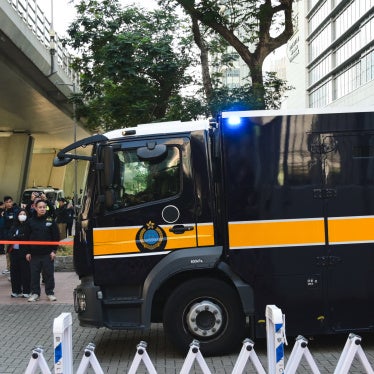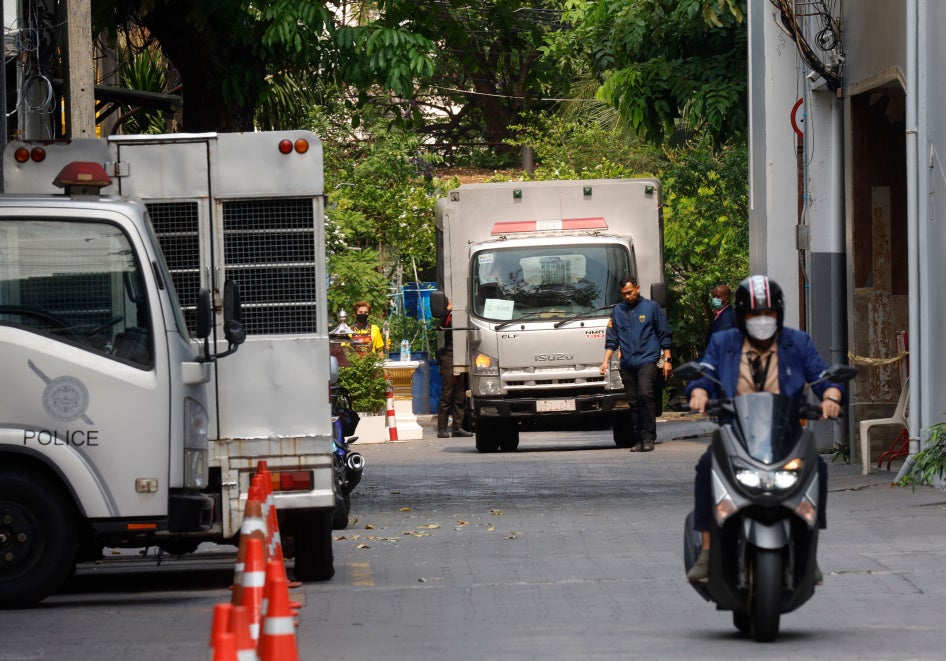
Last February, Thai authorities in Bangkok loaded 40 Uyghur men into blacked-out trucks and forcibly returned them to China. Their fates remain unknown.
The men had spent over a decade in Thai immigration detention after having fled repression in Xinjiang in northwest China. Because the men faced grave risks of torture and other abuses in China, Thailand’s deportation—under pressure from Beijing—violated the principle of nonrefoulement under of international law.
Both the Thai and Chinese governments portrayed the returns as family reunifications, but their family members abroad have heard nothing from the men since their deportation. Aside from a staged visit by a Thai government delegation to meet a few returnees in Xinjiang last March, no independent observers or United Nations experts have been granted access to the men. Thailand promised to regularly visit Xinjiang to ensure the returned Uyghurs’ well-being, but those visits appeared to stop in June.
The Chinese government’s refusal to report on their fate or whereabouts amounts to forced disappearances under international law.
The Thai government knew the risks facing the deported men. Since 2016, Chinese authorities under President Xi Jinping have carried out a widespread and systematic campaign of abuses against Uyghurs amounting to crimes against humanity. Uyghurs who leave China without state approval are, if returned, viewed with intense suspicion and subject to arbitrary detention, interrogation, torture, and other cruel treatment.
Thailand is not alone in yielding to pressure from Beijing. Over the past decade, Uyghurs have been arbitrarily detained and deported after China’s request or pressure from Egypt, Cambodia, Malaysia, Morocco, Saudi Arabia, Tajikistan, and even Türkiye, once considered a safe haven for Uyghurs.
The United Nations refugee agency, UNHCR, which determines refugee status in Thailand, said it had “repeatedly sought access” to the group prior to their deportation, but Bangkok refused.
Because Uyghurs in Thailand and elsewhere have a well-founded fear of persecution if forcibly returned to China, governments and the UNHCR should recognize them as refugees on a prima facie basis—that is, as a group without individual determinations.
Governments should respect the principle of nonrefoulement and halt all deportations of Uyghurs, either directly to China or to a third country where they risk onward repatriation. Bangkok and others should press Beijing to allow unfettered access to the 40 men to monitor their conditions and well-being. They shouldn’t be forgotten.