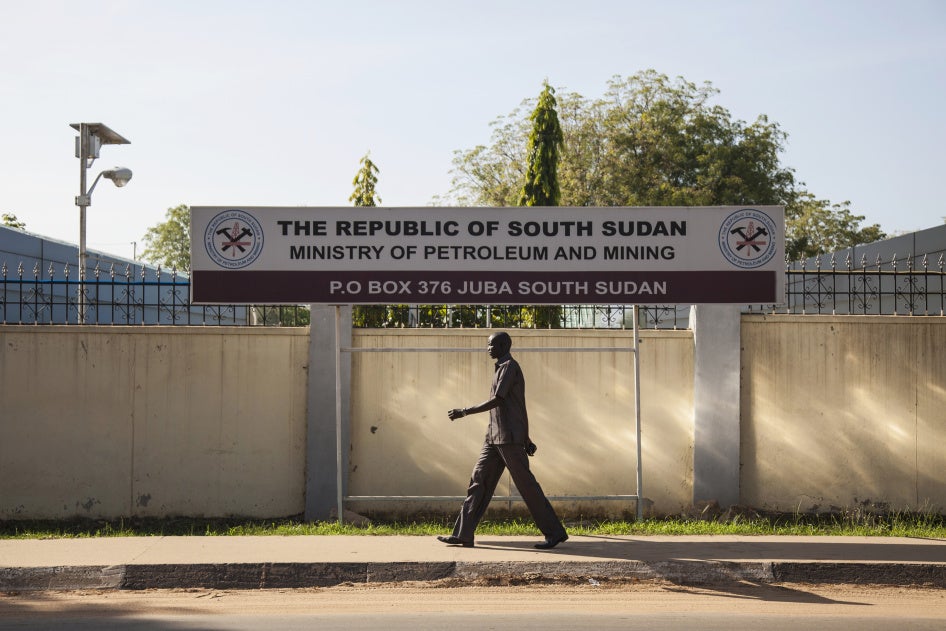
In a wave of arrests that began on February 24, South Sudanese authorities have detained at least six current and former officials linked to the country’s oil and financial sectors.
While authorities have yet to publicly clarify if charges have been brought, Minister for Information Ateny Wek Ateny told media that the arrests were not political and that a committee was investigating “financial malpractices.”
However, previous high-profile detentions give reason to scrutinize such claims.
Those detained in the recent wave of arrests include former Finance Ministers Dr. Bak Barnaba Chol and Dr. Marial Dongrin Ater; former Governor of the Bank of South Sudan Moses Makur Deng Manguak; former Director of Security at the Ministry of Petroleum Maj. Gen. Mannasseh Machar Bol; former Petroleum Undersecretary Deng Lual Wol and former Commissioner General of the South Sudan Revenue Authority Simon Akue. Authorities also detained businessman Bol [Abuk] Kuanyin Bol.
Six are being held at the National Security Services headquarters in Juba, which has a reputation as a place of detainee abuse, and one is under house arrest, a local source told Human Rights Watch.
The same source said that the arrests were carried out by National Security Service and the presidential guard, Tiger Division, however officials from the Ministry of Justice and Constitutional Affairs and the Ministry of Interior are the ones leading a joint investigative committee. The roles in the investigation of the Office of the Auditor General and the South Sudan Anti-Corruption Commission, both constitutionally mandated to ensure oversight and accountability in public spending and both plagued by a lack of independence and chronic underfunding, are unclear.
All action taken in pursuit of the investigation, detentions—be it under house arrest or on remand in a detention center—asset freezes, or confiscations requires a clear legal basis, including where appropriate prior judicial authorization, and be subject to judicial review.
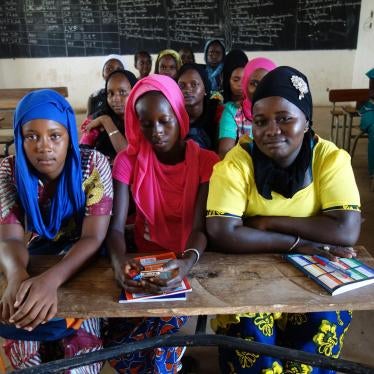
Government corruption in South Sudan is endemic and has direct human rights consequences. For example, diversion of oil revenues and public funds has undermined delivery of essential public services, including health care and education, as well as payment of civil servant salaries.
However, for anti-corruption efforts, though badly needed, to be credible, authorities need to address the systemic nature of the corruption that permeates most institutions in South Sudan, as well as ensuring transparency and respecting fundamental rights of all involved.