The recent arrest of a prominent political analyst on Myanmar visiting China demonstrates Beijing’s intensifying intolerance of any independent voices or viewpoints not to their liking.
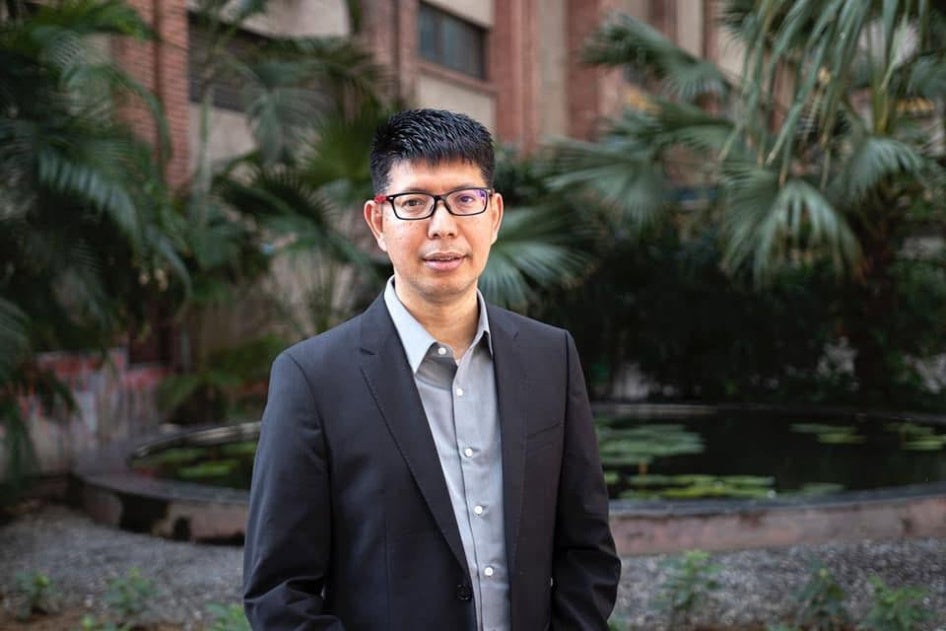
On June 3, Chinese authorities reportedly detained Min Zin, a US citizen from Myanmar and the executive director of the Institute for Strategy and Policy-Myanmar, as he flew into Yunnan province for meetings at the invitation of an academic institution. The Chinese Foreign Ministry confirmed the arrest, stating that Min Zin had engaged in “espionage activities that endanger China’s national security.”
Min Zin’s think tank documents the Myanmar political landscape, including China-Myanmar relations since the Myanmar military’s 2021 coup. China is the Myanmar junta’s primary source of financial, military, and diplomatic support. Junta leader Min Aung Hlaing met with China’s President Xi Jinping on June 16 during a weeklong visit to China, Min Aung Hlaing’s first since he installed himself as president following sham elections.
The US State Department has acknowledged the arrest but not made any further public comment on China’s actions. The Trump administration has demonstrated little interest in raising human rights concerns in China or elsewhere, nor has much credibility to do so, for a variety of reasons.
The US government should have an interest in better countering China’s expanding global censorship of critical voices. The Chinese government benefits when less information is known about its already-opaque governance and its harmful actions and abuses, both inside and outside the country. This is why Beijing has long muzzled domestic and diasporic voices and why self-censorship among foreign scholars studying China is so common. Censorship impedes efforts to respond to the government’s repressive behavior.
Beyond stifling voices, there is additional damage from the government’s internal and transnational repression: policymakers, journalists, and people everywhere know less about China, leaving everyone unable to make informed decisions about the country, or question Beijing’s rosy account of itself.
Moreover, Min Zin is a US citizen, and under existing US policy, the State Department is supposed to escalate their interventions when citizens are, as in this case, wrongfully detained. Conducting research is not a crime. The State Department should formally declare that Min Zin’s detention is a wrongful detention, a determination that will help ensure his case is raised with Chinese officials at a higher level of prioritization. China’s growing attacks on free speech cannot be met with silence.