Dozens of my family members, including my father, Memet Yaqup, have disappeared into China’s system of mass incarceration over the past decade simply for being Uyghurs. When international attention to our plight surged — through joint statements at the United Nations, extensive media coverage, national parliaments recognizing atrocity crimes — I believed there would be enough pressure to secure the release of my loved ones.
Yet, eight years into my father’s enforced disappearance, I still have no information about his whereabouts, health or the allegations that led to his imprisonment. Meanwhile, the world’s attention has moved on.
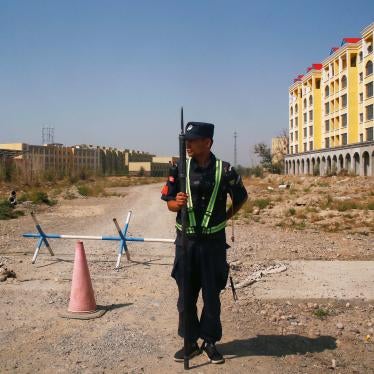
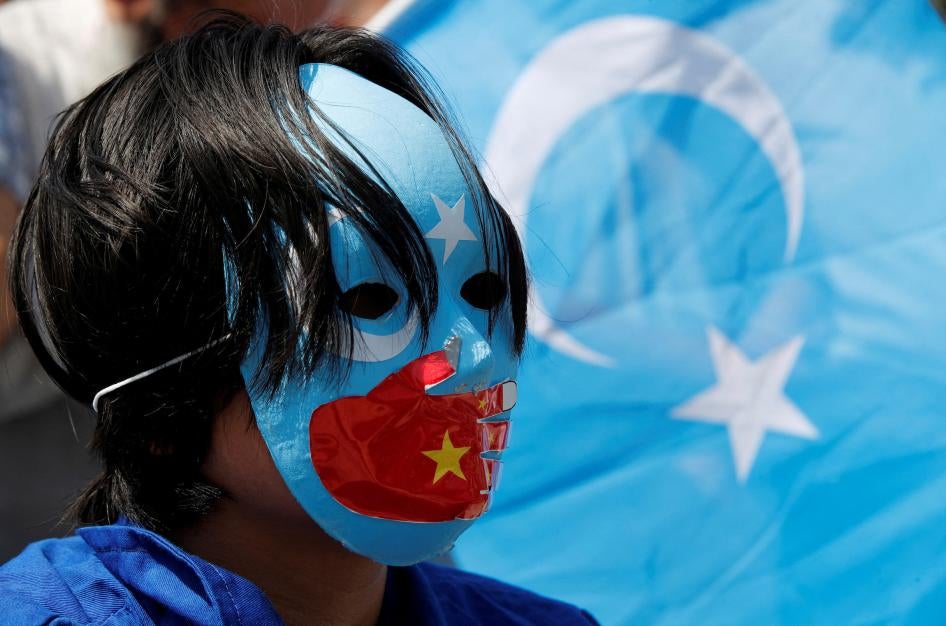
My father is one of the hundreds of thousands who since 2016 have suffered the Chinese government’s grave human rights violations in the Xinjiang Uyghur Autonomous Region. The Chinese authorities have subjected Uyghurs and other Turkic Muslims to mass arbitrary detention, unjust imprisonments, intrusive surveillance and forced labor.
The UN Office of the High Commissioner for Human Rights concluded in a landmark 2022 report that the Chinese government may have committed crimes against humanity in Xinjiang. That acknowledgement marked a rare moment when the Uyghur people appeared to have the world’s attention. Yet even then, China’s global influence was on full display.
Efforts by a group of countries who tried to place Xinjiang on the formal agenda of the UN Human Rights Council were narrowly defeated after heavy pressure from Beijing. What happened read like a page taken from the Beijing playbook: intimidation of critics, the cultivation and mobilization of allies, and a steady erosion of momentum for such criticism.
In Xinjiang, the Chinese government weaponizes information about people’s everyday lives — lawful and peaceful behaviors — and uses it against them. The authorities have put mass surveillance tools in place, including one called the Integrated Joint Operations Platform, to track everyone, their movements, contacts, phone use and contents, vehicle location and interaction with people abroad.
The authorities have punished Uyghurs who have foreign ties by detaining and imprisoning those who have family in, or who have visited, countries that authorities arbitrarily and secretly categorized as sensitive. The tool also helped them to identify people who used apps, such as WhatsApp or a Virtual Private Network (VPN), that allow people in Xinjiang to circumvent some state surveillance.
Beijing has worked aggressively to undermine international advocacy by raising the cost of challenging its narrative and manufacturing an illusion of normalcy in Xinjiang. Chinese authorities have expanded surveillance of Uyghurs abroad, intimidated diaspora activists and researchers, interfered with UN human rights mechanisms and staged tightly controlled propaganda tours for foreign diplomats and journalists, while blocking independent access for human rights investigators and UN experts.
Yet China’s success in shifting the narrative is not solely the result of repression. It also reflects a changing global context. An increasingly unpredictable US foreign policy has reshaped political and economic incentives for governments engaging with Beijing. As governments line up to meet President Xi Jinping as a hedge against the Trump administration, human rights concerns in China are routinely sidelined in bilateral engagements, allowing Beijing to effectively whitewash its crimes and recast China as a reliable global power and an alternative to the United States.
Nearly ten years since the start of the mass arbitrary detention, and almost four years since the UN report, there has been no accountability for crimes against Uyghurs. But accountability is possible if other governments publicly condemn Beijing’s behavior, impose targeted sanctions and integrate human rights into their investment, trade and security policies.
An important step for Australia is to enact a ban on importing anything produced by forced labor. Doing so is not only vital for those living under repression in China, but also for the future of the international human rights system itself, now under strain from sustained attacks by the two superpowers: the United States and China.
As China promotes its own narrative and global attention fades, some may begin to believe that things in Xinjiang are returning to “normal”. This is simply wrong. I am often asked what real normality would look like. The answer is clear: freedom, accountability and unfettered access:
- freedom for unjustly imprisoned Uyghurs like my father;
- accountability for crimes against humanity and other abuses;
- and unfettered access so experts — including exiled Uyghur researchers like me — can enter Xinjiang, speak freely with victims, document abuses and advocate respect for human rights without fear of retaliation.
The Chinese government may be powerful enough to construct a vast system of mass surveillance, imprison without basis hundreds of thousands of people, evade accountability and shape the global narrative on Xinjiang through propaganda.
But the world’s leaders are not powerless: they can puncture this carefully cultivated mirage by speaking out for Uyghurs, working with others to block China’s repressive actions abroad, and by taking concrete measures to press for respect for human rights in Xinjiang — especially at moments when global attention fades and Uyghurs feel betrayed by the world.
Uyghur lives are at stake, and the cost of neglecting them is high.
This opinion piece is a part of a three-part series, published by the ABC, about the Attention Economy of Suffering, delivered in partnership with the Ethics Centre.