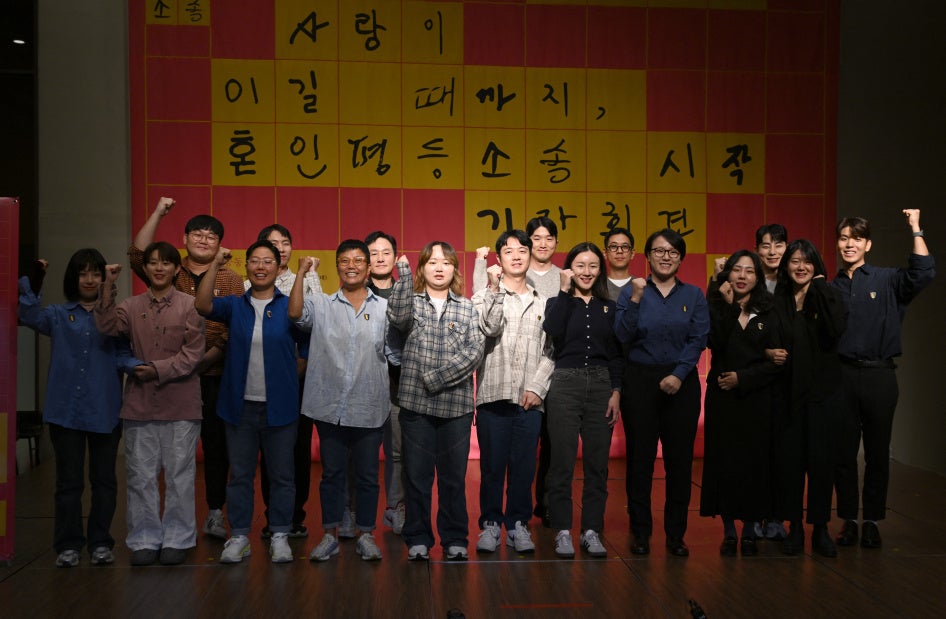
The National Human Rights Commission of Korea has been reviewing a discrimination petition filed last October by a man in a same-sex relationship who was denied marriage leave by his employer.
The employer’s policy offered marriage leave without defining marriage or providing criteria for employees to satisfy to claim the benefit. When the employee provided a wedding invitation and sought a short leave to have a ceremony with his same-sex partner, he was instead marked for an unauthorized absence and his pay was docked.
The human rights commission, an independent agency within South Korea’s executive branch, has reportedly completed its review and is now deliberating its decision.
There are strong grounds for finding the denial of the marriage benefit to be discriminatory. While South Korean law does not allow same-sex couples to legally marry, the Supreme Court ruled in 2024 that it was discriminatory to provide dependent health insurance benefits to heterosexual partners but not to same-sex partners.
International human rights mechanisms have reached similar conclusions. The Inter-American Court of Human Rights has gone furthest in requiring states to extend marriage to same-sex couples on equal terms with heterosexual couples based on the rights to private and family life and to equal protection of the laws. The European Court of Human Rights does not require states to extend marriage rights, but has found that failing to provide similar recognition and benefits to same-sex partnerships violates the right to respect for private and family life and freedom from discrimination.
The United Nations Office of the High Commissioner for Human Rights has urged states to recognize “same-sex relationships on an equal basis with others.”
The Supreme Court’s decision on health insurance was a landmark recognition of the rights and dignity of same-sex couples in South Korea. The human rights commission now has an opportunity to reaffirm that promise by ensuring that same-sex partners have the opportunity to celebrate and protect their unions in the workplace on the same footing as their heterosexual colleagues through a clear legal framework.
The petition underscores the need for South Korean lawmakers to legally recognize same-sex partnerships. Relying on the human rights commission and the judiciary to respond to discrimination after the fact denies same-sex couples the equality and predictability that formal recognition provides.