French President Emmanuel Macron addressed the need for reparations in connection with France’s role in the transatlantic slave trade on May 21.
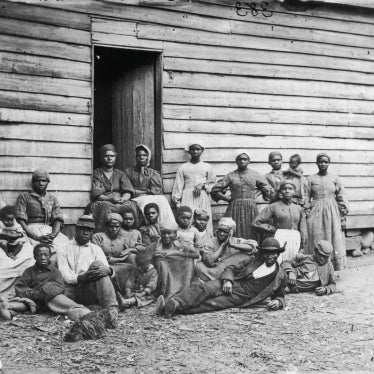
Macron said that reparations for enslavement crimes should no longer be ignored. He also warned against “false promises,” emphasizing that the legacy of enslavement could never be fully repaired because it was “impossible.” Macron backed the symbolic repeal of the never-abolished “Code Noir,” which were royal decrees from the 17th and 18th century that governed enslavement in French colonies.
France was a top influential transatlantic slave-trading European nation.
Macron’s remarks, made during a 25th anniversary commemoration of France’s law recognizing enslavement and the transatlantic slave trade as crimes against humanity, constituted a notable rhetorical shift by the French government. But Macron stopped short of specifying the kind of reparations that he envisions and whether financial redress will be part of it.
Macron focused on initiatives related to memorialization, education, and research, while also supporting an international scientific research project launched by Ghana on the legacies of enslavement. These measures, while important, are not a substitute for a comprehensive reparatory framework with full reparations, including measures that address contemporary systemic inequalities and racism rooted in enslavement legacies.
Civil society groups, descendants of enslaved people, as well as African and Caribbean states—including France’s overseas departments—have repeatedly called on France and other former European colonial powers for reparatory measures that address the daily lives of communities, which continue to feel the impacts of colonial and enslavement legacies. International pressure for reparations is also growing. In March, the United Nations General Assembly adopted a resolution introduced by Ghana, which affirmed the transatlantic slave trade as a “crime against humanity” and recognized reparations as a pathway to justice. France, together with other European Union member states, abstained from voting, a move that drew criticism, particularly from representatives of France’s overseas territories.
With reparations now placed on the political agenda, the French government should develop a national framework grounded in international human rights law and standards designed to provide full reparations for past and present harm linked to France’s colonial and enslavement legacies.