Reports emerged in April that the US government was considering resetting diplomatic ties with Eritrea. Doing so could include lifting sanctions the United States imposed on the country’s ruling party and military in 2021 for committing serious abuses during the armed conflict in neighboring Ethiopia’s Tigray region.
Easing sanctions now—in the absence of accountability for grave violations both in Eritrea and in Ethiopia’s Tigray region, and clear human rights benchmarks—would signal tolerance for unchecked abuses in the future.
Eritrea, which sits along the Red Sea corridor, has taken on increased importance amid the escalating conflict in the Middle East and threats from the Houthi armed group in Yemen to shut down maritime traffic along the Red Sea. The United States is not alone in their move. The European Union and Canada have cautiously explored engagement, often tied to development or migration-related concerns. Yet, transactional diplomacy that ignores human rights abuses risks further entrenching impunity for decades of widespread violations.
Since 1993, Eritrea’s President Isaias Afwerki has maintained one of the most repressive governments in the world. Its policy of indefinite national service, continues to trap generations of Eritreans in abusive conditions amounting to forced labor, while punishing draft evaders and their families. The government has dismantled independent media and has detained many Eritreans—notably perceived critics, religious leaders, and journalists—incommunicado without due process, often for years or decades. This year marks 25 years since Eritrea locked up 11 government officials and 10 journalists who publicly called for basic reforms.
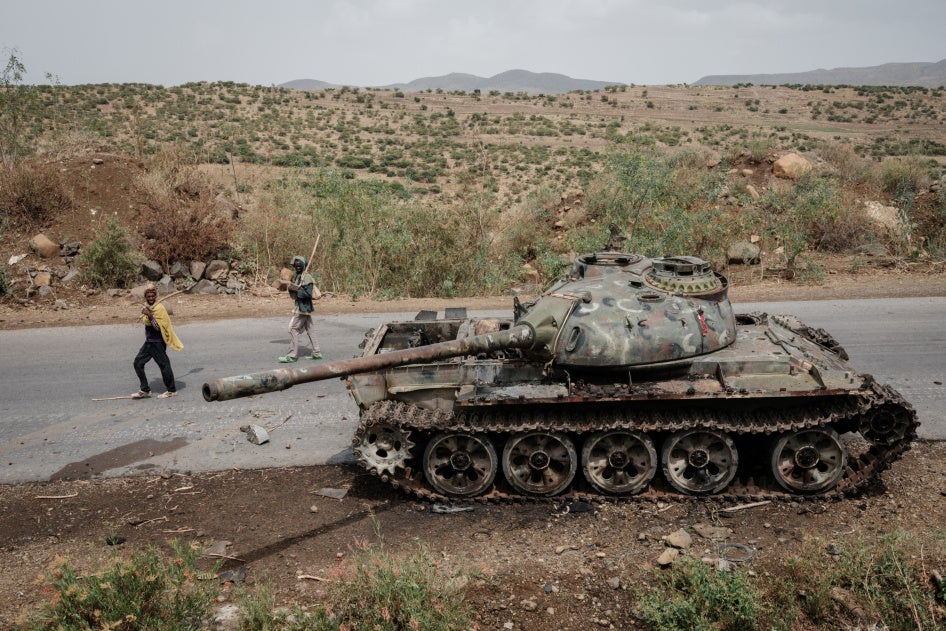
In Ethiopia’s Tigray region, Eritrean forces committed massacres, widespread sexual violence, abductions, and pillage during the conflict from 2020 to 2022. Still today, Eritrean forces commit abuses in parts of Tigray they occupy.
The United States should not consider lifting sanctions until Eritrea has taken major steps toward accountability for violations and demonstrated a clear break from abusive past and present practices. All countries should support renewing the United Nations Human Rights Council’s special rapporteur on Eritrea in July, which is one of the few tools available to document the abuses by Eritrean officials and forces, and to one day offer hope to the victims and their families for accountability.