This statement was delivered by Human Rights Watch at the 47th Ordinary Session of the African Committee of Experts on the Rights and Welfare of the Child in Maseru, Lesotho, on April 17, 2026.
Honorable Chairperson, Distinguished Members of the Committee,
Human Rights Watch congratulates the newly elected and re-elected members of the African Committee of Experts on the Rights and Welfare of the Child. Your mandate comes at a critical moment for children across the continent, as armed conflict, political violence, and accountability gaps continue to expose children to grave violations. We look forward to working with you to strengthen measures for prevention, protection, and accountability.
Zambia
On April 16, 2026, civil society organizations and concerned residents lodged a complaint before this Committee regarding widespread lead poisoning of children in Kabwe, Zambia—one of the most polluted cities in the world, where decades of mining contamination have left children exposed to toxic lead dust in homes, schools, and playgrounds.
The complaint calls on the Committee to urgently engage Zambia and request provisional measures, including comprehensive environmental remediation of the former mine and its waste, large-scale blood-lead testing and treatment, and education support for affected children. It also urges the Committee to investigate violations of the rights to health, development, education, and a safe environment of children in Kabwe, and to call for accountability and long-term remediation measures.
Human Rights Watch urges the Committee to prioritize this communication, request urgent provisional measures, and engage the Zambian government to ensure immediate screening, treatment, environmental cleanup, and accountability for children affected by toxic exposure.
Draft Convention on Crimes Against Humanity
Human Rights Watch welcomes the ongoing development of the draft Convention on the Prevention and Punishment of Crimes Against Humanity. This process presents a rare opportunity to strengthen accountability and prevention of atrocity crimes affecting children.
Children are frequently targeted in crimes against humanity, yet the current draft articles refer to children only minimally. International law has evolved significantly since the adoption of the Rome Statute, including through the African Charter on the Rights and Welfare of the Child, which provides strong protections for children.
We encourage member countries to seek to include offenses against children in the crimes against humanity treaty, protections for children accused of crimes, and protections for child victims and witnesses, including by incorporating principles from the African Charter on the Rights and Welfare of the Child. Specifically, the treaty should explicitly recognize persecution on the basis of age, and establish recruitment and use of children as a crime against humanity.
We further urge states to ensure that children accused of crimes are treated within child justice frameworks, and that child victims and witnesses benefit from child-sensitive procedures, participation rights, and reparations.
Free Education Protocol
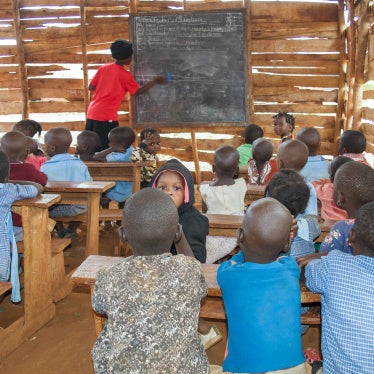
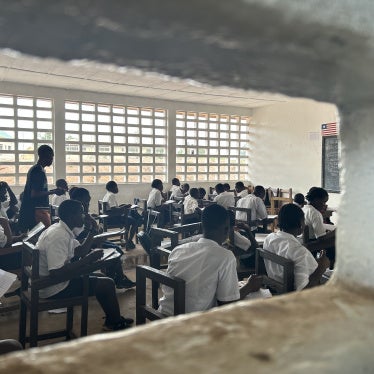
We welcome the leadership of Sierra Leone as chair of the United Nations process to strengthen the right to free education through a new optional protocol to the Convention on the Rights of the Child. We also welcome the stated support for the protocol from African states, including Botswana, Burundi, Gambia, Ghana, Malawi, South Africa, South Sudan, Togo, and Zambia, and encourage all African states to support the protocol and participate actively in the upcoming intergovernmental working group in Geneva from August 31 to September 3.
Mozambique
In northern Mozambique’s Cabo Delgado province, an armed group locally known as Al-Shabab, affiliated with ISIS, has increasingly abducted children, with Human Rights Watch reporting a surge in 2025, including more than 120 children abductions over a period of days in Cabo Delgado. Patterns of abduction and exploitation are consistent with earlier waves of violence, including the widespread abduction of women and girls documented in 2021.
The abducted children are often used to transport looted goods, subjected to forced labor, forced marriages and sexual exploitation, and compelled to participate in fighting.
Although some children abducted earlier this year have been released, many remain missing, and those who return struggle with reintegration. Those who return often face trauma, stigma, and limited access to support, making reintegration extremely challenging. Human Rights Watch urges Mozambican authorities to prevent further abductions, investigate abuses, fairly prosecute those responsible, and ensure that rescued children receive medical care, psychosocial support, and safe reintegration.
Democratic Republic of Congo
In eastern Democratic Republic of Congo, M23 forces with Rwandan support forcibly rounded up thousands of civilians in 2025, including children as young as 12, and sent them to military camps in Tshanzu and Rumangabo.
Children were subjected to military training, forced labor, and brutal punishment. Some were compelled to beat fellow detainees, while others were held in life-threatening conditions. These abuses underscore the urgent need for accountability and protection mechanisms for children affected by armed conflict in eastern Congo.
South Sudan
The renewal of hostilities since the unravelling of South Sudan’s peace agreement has had devastating consequences for children’s rights. Fighting since early 2025 across Upper Nile, Equatoria, and Jonglei States has led to abuses including killings, displacement, sexual violence, and recruitment of children.
Government forces have carried out indiscriminate aerial bombardments in populated areas, in some cases with incendiary weapons, reportedly with Ugandan support, killing and injuring civilians including children. Armed groups, notably members of the South Sudan People’s Defense Forces, Sudan People’s Liberation Army in Opposition, and the National Salvation Front and their respective allies, have committed abductions, sexual slavery, rape, and forced recruitment of children. South Sudan’s police, army and other security forces committed abuses including the forced recruitment children as young as 13 during a crackdown against alleged gangs in Juba.
The humanitarian situation is catastrophic. Since December 2025, at least 280,000 people have been displaced from Jonglei, half of them children. UNICEF warns that 2.3 million children face acute malnutrition, and nearly 70 percent of children are out of school.
Human Rights Watch urges the Committee to publicly call on all warring parties to end abuses against civilians including children, release children associated with armed groups, ensure humanitarian access, and support accountability. The Committee should also engage the South Sudan government toward ratification and implementation of the African Charter and coordinate with regional and international mechanisms to strengthen protection.
Chairperson, distinguished members,
Across Zambia, Mozambique, the Democratic Republic of Congo, and South Sudan, children continue to bear the brunt of conflict and impunity. The Committee’s leadership is essential to ensure accountability, prevention, and protection.
Human Rights Watch stands ready to support the Committee in advancing these priorities.
Thank you.