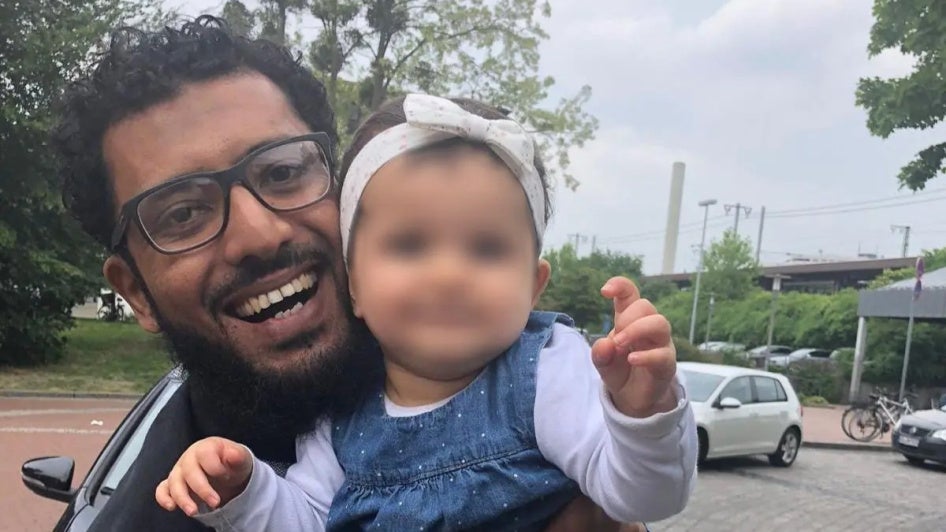
(London, April 15, 2026) – The Singaporean government should immediately halt the execution of Omar bin Yacob Bamadhaj, scheduled for April 16, 2026, for trafficking cannabis, Human Rights Watch, Amnesty International, Capital Punishment Justice Project (CPJP), and Anti-Death Penalty Asia Network (ADPAN) said today.
Singaporean authorities arrested Omar, a Singaporean national, now 46, on July 12, 2018, and a court later convicted him of importing just over one kilogram of cannabis, considered a Class A controlled drug under the 1973 Misuse of Drugs Act. He was sentenced to death in February 2021. Singapore's highest court dismissed his appeal in October 2021.
“The death penalty is the ultimate cruel, inhumane, and degrading punishment,” said Rachel Chhoa-Howard, Southeast Asia researcher at Amnesty International. “Singapore’s continued use of the death penalty for drug-related offenses is a violation of international human rights law and standards and places the city-state increasingly out of step with the rest of the world on this issue.”
On April 2, 2026, Omar’s family received a notice from the Singapore Prison Service that he would be executed two weeks later. His wife, Alexandra Maria, a German national, wrote a letter to the office of President Tharman Shanmugaratnam on April 12, appealing for clemency.
On July 12, 2018, Omar was found in possession of 1,009 grams of cannabis during a routine check at the Woodlands Checkpoint border crossing between Singapore and Malaysia and was arrested.
At the time of his arrest, he was living in Germany and was no longer a resident of Singapore. In her plea, his wife said that her husband had returned to Singapore to spend the holy month of Ramadan with his extended family. His wife, daughter Amal, and son Naqeeb were in Germany at the time. Due to their son’s health conditions requiring specialized medical treatment and their financial situation, the family has not been able to visit Omar in prison. Naqeeb passed away in November 2025 at age 11.
“Omar and his family have already endured unimaginable suffering since his incarceration in 2018,” said Karen Gomez-Dumpit, convenor at ADPAN. “Executing him now would only compound that pain and leave his daughter without ever truly knowing her father.”
Singapore’s criminal justice system provides for the death penalty for a range of offenses, including trafficking, importing, or exporting quantities of drugs above a certain threshold. International human rights law and standards say that countries that have not abolished the death penalty should reserve its use “only for the most serious crimes,” which United Nations experts, including the UN high commissioner for human rights, agree do not include drug-related offenses.
The judge in Omar’s case found that his involvement was limited to transporting drugs, but the prosecution did not provide him with a certificate confirming that he substantively assisted investigations to disrupt further drug trafficking activities. These two conditions are required under the Misuse of Drugs Act for defendants to qualify for sentencing discretion in drug trafficking cases. So, the judge had no option but to impose the mandatory death penalty.
Since January 1, 2026, Singapore has executed seven people, all for drug-related offenses. In 2025, the authorities executed fifteen people for drug-related offenses, seven more than the previous year.
The government also routinely uses overly broad and restrictive laws to silence anti-death penalty activists and human rights defenders, stifling informed public debate on the issue.
“While neighboring countries in Asia have taken important steps in recent years to reduce their reliance on capital punishment, Singapore appears committed to its continued use and ramping-up of executions, particularly for drug-related crimes,” said Jacinta Smith, chair at CPJP. “The Singaporean government’s stance on capital punishment reflects a total disregard for the right to life.”
There is precedent in Singapore for presidential clemency. On August 14, 2025, President Shanmugaratnam granted clemency to Tristan Tan Yi Rui, 33, who had been sentenced to death in 2023 for trafficking 337.6 grams of methamphetamine—also a Class A controlled drug—in 2018. His death sentence was commuted to life imprisonment.
At the time, the Home Affairs Ministry said that clemency had been recommended by Singapore’s Cabinet “because of the specific facts and circumstances of the case.”
In her letter to the president, Omar’s wife referred to the president’s decision in the Tan Yi Ru case as an “act of compassion and fairness [that] was seen by many around the world as a powerful sign of a justice system that is capable of recognising unique human circumstances and the possibility of redemption.” She also wrote: “Please give Amal, who is nine years old this year, the opportunity to experience the joy of reconnecting with her father, and not the irrevocable pain and regret of never having gotten to know him.”
“Concerned governments should urgently call on Singapore to immediately halt the execution of Omar bin Yacob Bamadhaj and commute his death sentence,” said Bryony Lau, deputy Asia director at Human Rights Watch. “The Singaporean government should commute death sentences for everyone convicted only of drug-related offenses as a first step toward full abolition.”