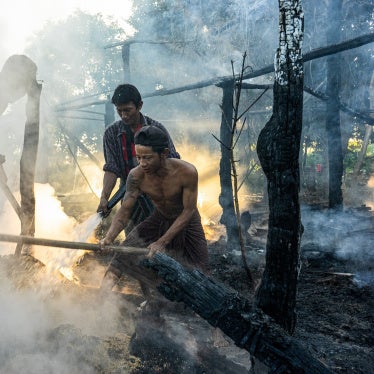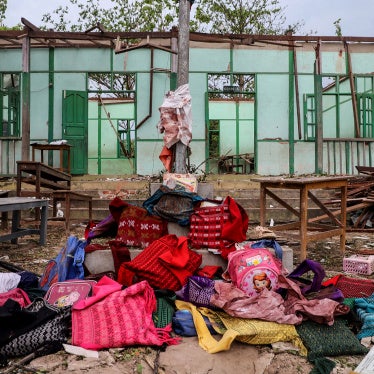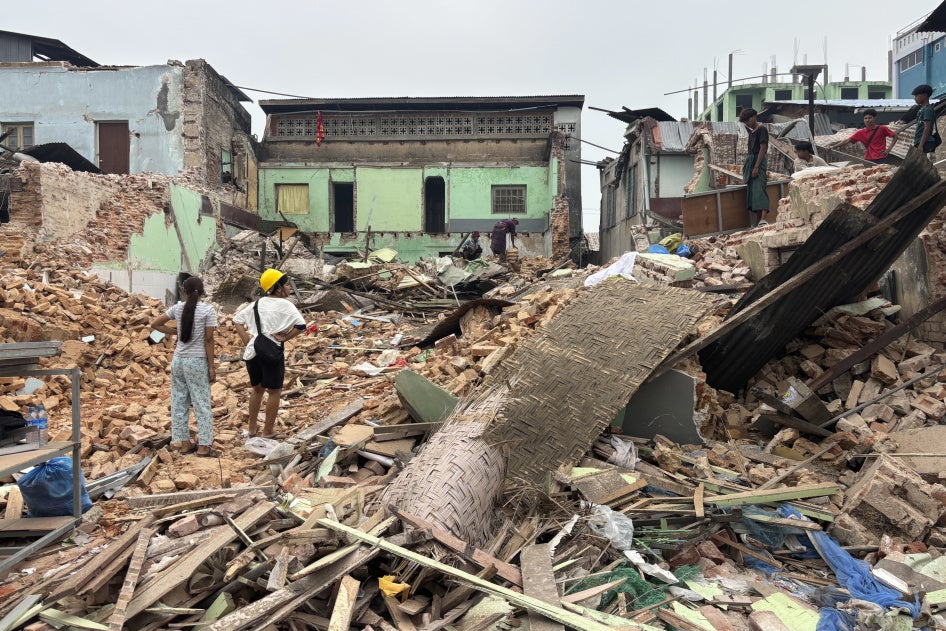
On March 28, 2025, a 7.7-magnitude earthquake struck central Myanmar, killing thousands and devastating communities already affected by armed conflict, displacement, and economic collapse.
The quake and its aftershock toppled buildings and collapsed roads and bridges across several of the country’s states and regions. Essential services were brought to the “verge of collapse,” according to the United Nations Office for the Coordination of Humanitarian Affairs, impacting millions of people. But rather than receiving support, most were left to contend with the junta’s misuse of aid for military purposes.
Junta officials denied and delayed visas for international emergency response teams, confiscated medicine, extorted and harassed aid workers, and blocked internet access. Areas under the opposition’s control—large swathes of the affected regions—were left “largely devoid of external assistance,” according to an internal UN report. Hundreds of thousands were displaced and exposed to extreme heat without access to clean water or medical care.
The junta took advantage of this catastrophe to ruthlessly attack civilians in affected areas, despite its announcement of a ceasefire to allow for relief. In the two months after the earthquake, the military carried out more than 550 aerial and artillery attacks, killing hundreds of civilians. More airstrikes were launched in April 2025 than in any prior month since the 2021 military coup.
Over the past year, the military has benefitted from increased support from China and Russia. Military operations to retake territory from opposition forces ahead of the junta’s recent sham national elections involved numerous airstrikes killing and wounding civilians that amounted to war crimes.
Earlier this month, the junta convened its new proxy parliament, a military body in all but name. Army chief Sr. Gen. Min Aung Hlaing, who has overseen the military’s war crimes, crimes against humanity, and genocidal acts for 15 years, is seeking the role of president.
After the earthquake, the UN Security Council released a statement calling for timely and effective assistance, echoing its December 2022 resolution. But the council has remained largely deadlocked and ineffectual on Myanmar and the junta’s frequent violations of the resolution.
Waves of overlapping crises—humanitarian, man-made, and natural—continue to threaten the lives and well-being of people across Myanmar. The junta has driven these conditions. Governments should increase pressure on the military to protect the rights of everyone in Myanmar, now and in future disasters.