
The British government labeled Palestine Action a “terrorist organization.” That’s not just overreach, it’s a signal. By equating direct action protest with terrorism, the government is treating dissent as a security threat.
Over 2,700 people across the United Kingdom have been arrested under the Terrorism Act 2000, many simply protesting the government’s decision by holding signs saying, “I oppose genocide, I support Palestine Action.”
On February 13, the High Court ruled the proscription unlawful. It was a stark reminder: if individuals commit crimes during direct action, ordinary law, not counterterrorism legislation, should be sufficient. Blanket criminalization of an entire movement is an unjustifiable restriction on the right to protest and free speech.
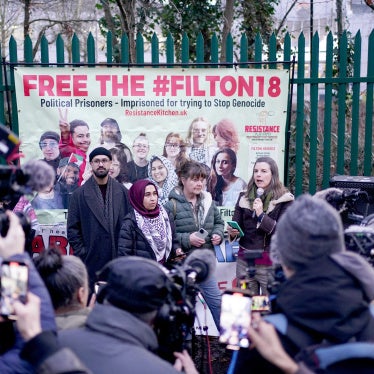
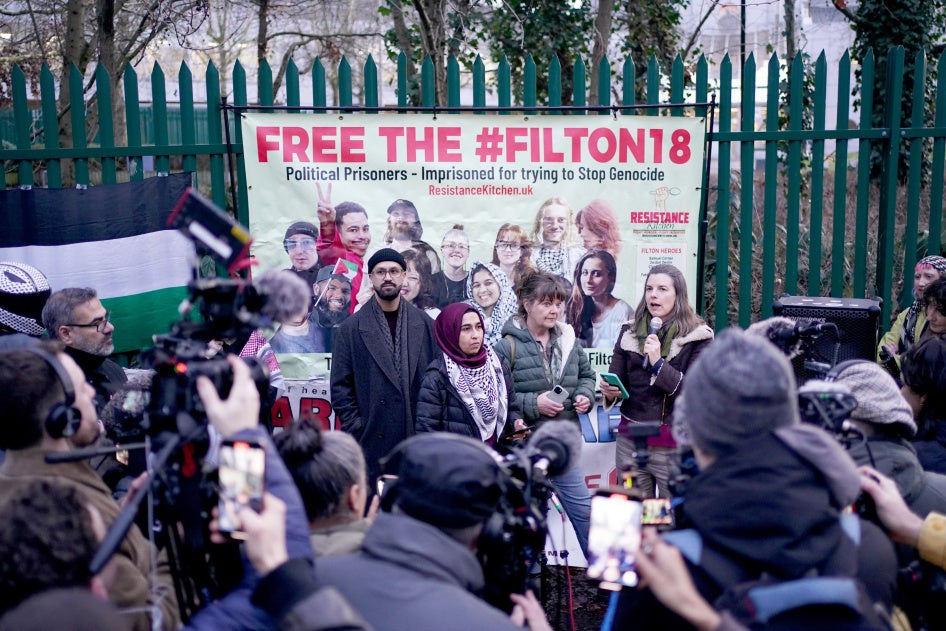
Consider the human cost. Six people who were initially arrested under counterterror laws for a break-in in Filton at Elbit Systems UK, a defense firm linked to the Israeli military, were acquitted of aggravated burglary in February. The jury could not reach a verdict on other charges. Yet these individuals sat in pre-trial detention for more than 500 days, more than twice the Crown Prosecution Service’s recommended maximum.
Treating civic action as a security threat is not unique to the UK. In the United States, the deaths of Renee Nicole Good and Alex Pretti, unarmed civilians shot by federal immigration agents, sparked nationwide protests. Their killings highlighted the lethal consequences of treating civic activism as a security threat. In Britain, proposals to emulate US Immigration and Customs Enforcement (ICE) signal a willingness by some political parties to emulate a similarly aggressive approach to enforcement that risks eroding human rights under the guise of “security”.
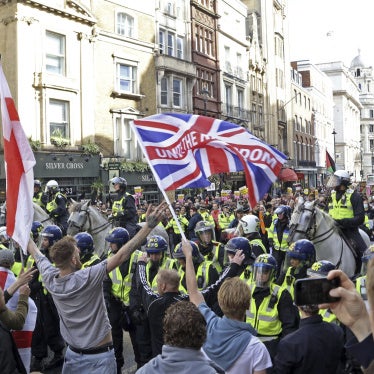
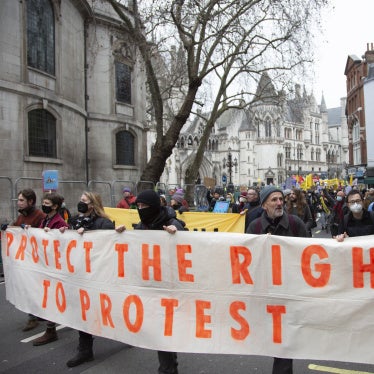
Here in the UK, police powers to curb “disruptive” demonstrations have expanded. Peaceful protest tactics are criminalized, arrests have become common, and extended pre-trial detention has been deployed in cases concerning those engaged in direct action protests. Tools designed for exceptional circumstances are now used against those engaging in civic participation and it’s shrinking the space for a public voice.
Democracy depends on civic engagement and dissent. Many of the human rights we cherish – civil liberties, workers’ protections, votes for women, environmental safeguards – were won through protest once deemed unlawful or controversial. When governments treat civic action as inherently dangerous, they hollow out those rights.
The High Court’s ruling on Palestine Action and the jury verdicts in the above-mentioned case are a clear signal: protest is a right, not a threat. Civic engagement is the lifeblood of democracy. When the state blurs the line between activism and terrorism, it is not defending security, it is undermining freedom. Just ask the six young people who have lost over a year of their lives in pre-trial detention, only to be acquitted.
Protecting the right to speak, assemble, and challenge power is not optional. It is the cornerstone of a free society.