
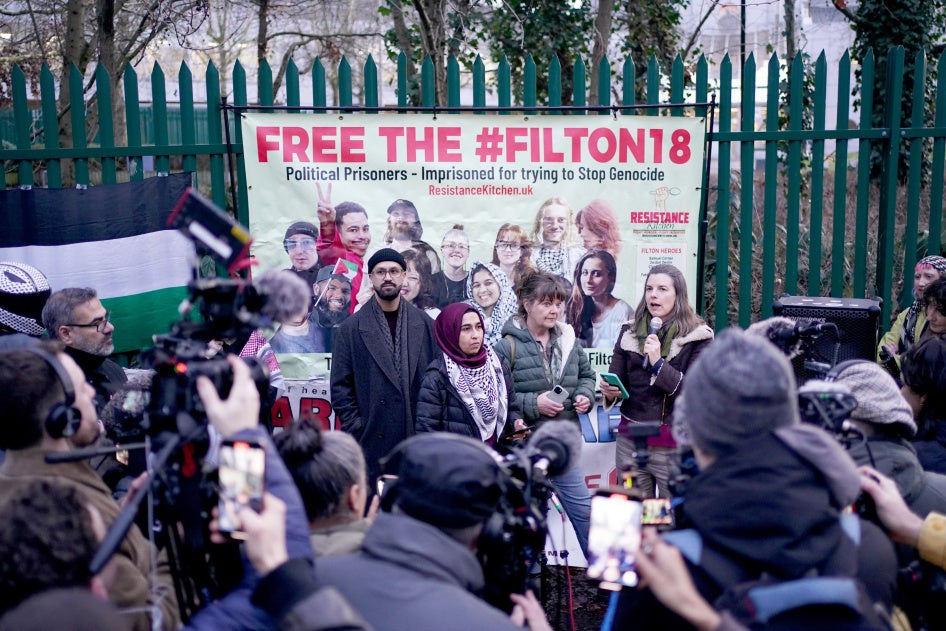
Last week, six people linked to Palestine Action, a direct action protest group, were acquitted of aggravated burglary in connection with an alleged break in at Elbit Systems, a defense firm with close ties to the Israeli military, in August 2024. The jury was unable to reach a verdict on charges of criminal damage.
The six individuals had experienced lengthy pretrial detention, some of over 500 days, more than double the maximum limit set by the Crown Prosecution Service (CPS). In response to a January 2026 letter by Human Rights Watch expressing concern about pretrial detention, CPS shared that its limits “can be extended by the court where it considers that there is “good and sufficient cause” for doing so and that the prosecution has acted with “due diligence and expedition.”
More than 20 Palestine Action members are still awaiting trial and many have been held beyond maximum detention limits. These include Heba Muraisi, a 31-year-old former lifeguard and florist who engaged in a 72-day hunger strike to protest the United Kingdom’s actions with respect to Gaza and her treatment in prison.
Last year, several United Nations experts expressed concern about these prisoners as well as the application of counterterrorism legislation to police political protests. They warned against the criminalization of conduct that falls within the protected exercise of the rights to freedom of assembly, association, and expression, and the suppression of legitimate political dissent, including advocacy related to Palestine.
In July 2025, the government proscribed Palestine Action as a terrorist organization. Since then, over 2,700 peaceful protestershave been arrested under counterterrorism legislation, most for peacefully holding signs reading “I oppose genocide, I support Palestine Action.” This proscription is currently subject to a judicial review at the High Court, with a verdict expected in the coming weeks.
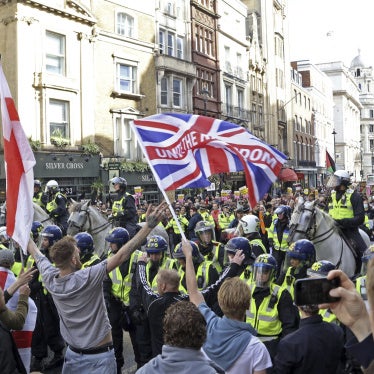
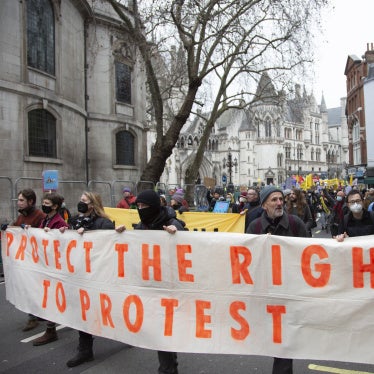
These arrests occur against a backdrop of repeated crackdowns on protest in recent years, which have been documented in Human Rights Watch’s report Silencing the Streets: The Right to Protest Under Attack in the United Kingdom. The government has not only failed to repeal legislation introduced by the last administration that restricted lawful protest but has introduced new measuresthat will further restrict protest rights. This undermines the rule of law and is already having a chilling effect.
An important opportunity to address widespread concerns raised by politicians and civil society will be the government’s independent review of Public Order and Hate Crime Legislation; however, the review does not cover the use of counterterrorism legislation. This is a huge missed opportunity and indicates this government is intent, at least in part, on continuing to try to silence the streets.
To safeguard democratic participation, the UK government needs to end its crackdown on the right to peaceful assembly and abandon its misuse of terrorism legislation.