Samer Muscati
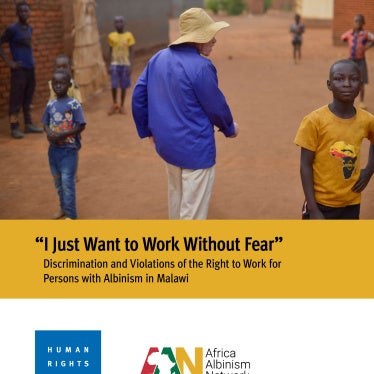
Samer is Deputy Director of Human Rights Watch's Disability Rights Division, where he helps lead the division's global strategy and oversees research and advocacy on disability rights worldwide. His work spans humanitarian crises, immigration detention, community-based mental health, and the rights of people with albinism. He led a three-year national campaign that helped end Canada's use of provincial jails for immigration detention, culminating in the cancellation of detention agreements in every province by 2025. His research and advocacy in Malawi also contributed to the country's 2026 National Action Plan on Albinism, advancing social and economic inclusion for people with albinism.
Samer returned to Human Rights Watch in 2019 after serving for four years as director and clinical lecturer at the International Human Rights Program at the University of Toronto Faculty of Law. Under his leadership, the clinic produced a series of reports on Canada's immigration detention of children and people with mental health conditions, a landmark report on Canada's use of predictive analytics in its immigration system, and a book featuring the resilience of Rwanda's survivors of sexual violence.
A lawyer, documentary photographer, and former journalist, Samer has extensive experience monitoring and documenting human rights abuses, particularly in situations of armed conflict, mass displacement, and large-scale violence.
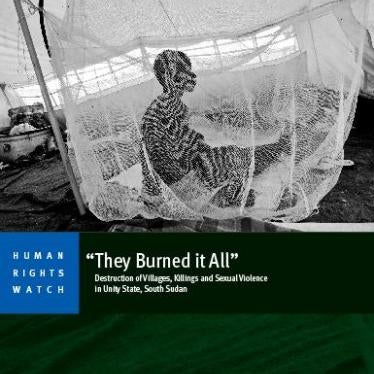
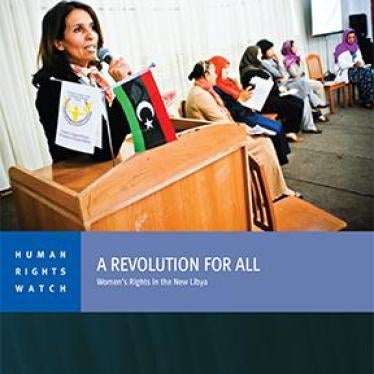
As a senior researcher in the Women's Rights Division, Samer conducted numerous fact-finding missions on issues including sexual violence and exploitation of Somali women and girls by African Union peacekeepers and other men in uniform; mass abductions of women and girls by the Islamic State in northwest Iraq and Boko Haram in northeast Nigeria; sexual and gender-based violence by South Sudan's government forces in Unity State; abuses by Syrian government and armed opposition forces against female activists and humanitarian aid providers; the Sudanese government's indiscriminate aerial bombardment and shelling in Blue Nile; women's political participation during Libya's first national election in 40 years; and Canadian police violence against Indigenous women and girls in northern British Columbia.
Previously, as a researcher in the Middle East and North Africa Division, Samer monitored, investigated, and documented human rights developments with a particular focus on Iraq and the United Arab Emirates. Before joining Human Rights Watch in 2009, he worked in Baghdad as an adviser supporting the Iraqi government.
Samer received a bachelor's degree in environmental studies from Carleton University, a law degree from the University of Toronto, and a graduate degree in international human rights law from the London School of Economics and Political Science.