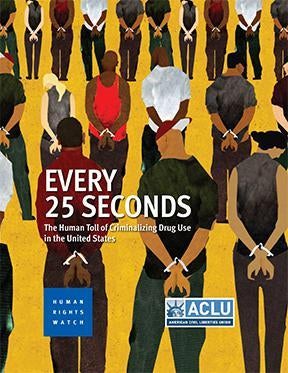
The Human Toll of Criminalizing Drug Use in the United States
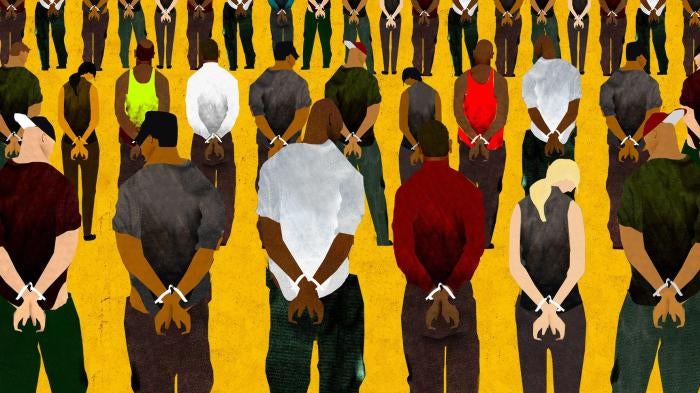
This report finds that enforcement of drug possession laws causes extensive and unjustifiable harm to individuals and communities across the country. The long-term consequences can separate families; exclude people from job opportunities, welfare assistance, public housing, and voting; and expose them to discrimination and stigma for a lifetime. While more people are arrested for simple drug possession in the US than for any other crime, mainstream discussions of criminal justice reform rarely question whether drug use should be criminalized at all.
Evidence-Based Treatment for Drug Dependence at the United States Veterans Administration Department of Veterans Affairs
The 39-page report states that more than one million US veterans take prescription opioids for pain, and nearly half of them use the drugs “chronically,” or beyond 90 days.
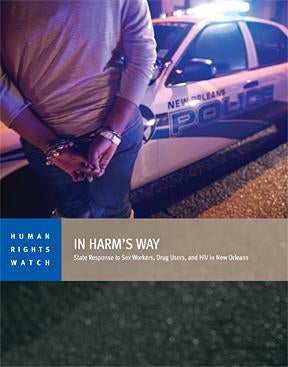
State Response to Sex Workers, Drug Users and HIV in New Orleans
This 57-page report documents government violations of the right to health and other abuses of at-risk populations in New Orleans. It calls for changes in state and local laws and policies that stigmatize, discriminate against, and facilitate police abuse of sex workers and drug users, and interfere with health services for people at high risk for HIV.
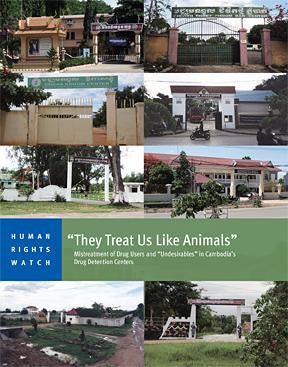
Mistreatment of Drug Users and "Undesirables" in Cambodia’s Drug Detention Centers
The 55-page report documents the experiences of people recently confined in the centers, who described being thrashed with rubber water hoses and hit with sticks or branches. Some described being punished with exercises intended to cause intense physical pain and humiliation, such as crawling along stony ground or standing in septic water pits.
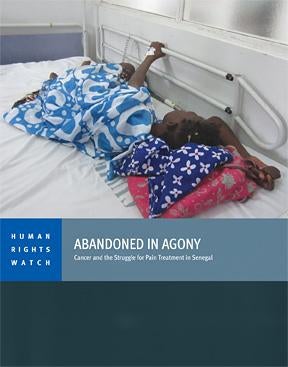
Cancer and the Struggle for Pain Treatment in Senegal
The 85-page report found that 70,000 Senegalese each year need what is known as palliative care to control symptoms related to chronic, life-threatening diseases. Morphine is an essential and inexpensive medication for treatment of severe pain, but Senegal only imports about one kilogram of morphine each year – enough to treat about 200 cancer patients.
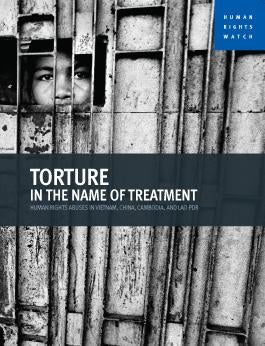
Human Rights Abuses in Vietnam, China, Cambodia, and Lao PDR
More than 350,000 people identified as drug users are held in compulsory drug "treatment" centers in China and Southeast Asia. Detainees are held without due process for periods of months or years and may be subjected to physical and sexual abuse, torture, and forced labor.
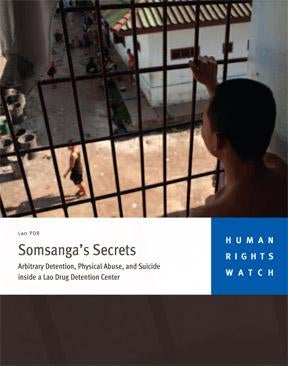
Arbitrary Detention, Physical Abuse, and Suicide inside a Lao Drug Detention Center
This report examines conditions in the Somsanga Treatment and Rehabilitation Center, which has received a decade of international support from the United States, the United Nations, and other donors. Detainees are held without due process, and many are locked in cells inside barbed wire compounds.
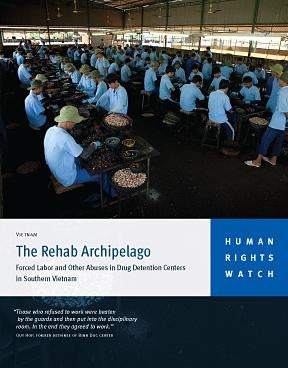
Forced Labor and Other Abuses in Drug Detention Centers in Southern Vietnam
The 121-page report documents the experiences of people confined to 14 detention centers under the authority of the Ho Chi Minh City government. Refusing to work, or violating center rules, results in punishment that in some cases is torture.
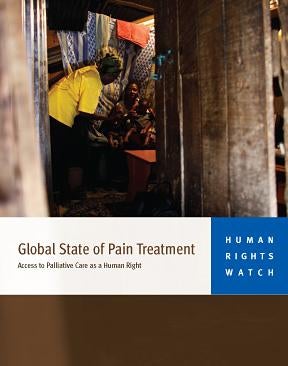
This 128-page report details the failure of many governments to take even basic steps to ensure that people with severe pain due to cancer, HIV, and other serious illnesses have access to palliative care, a health service that seeks to improve quality of life. As a result, millions of patients live and die in great agony that could easily be prevented, Human Rights Watch said.
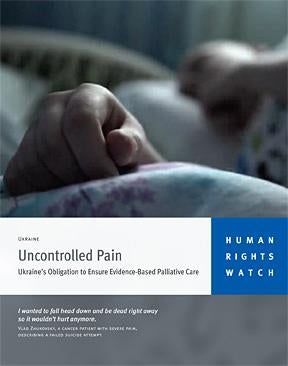
Ukraine’s Obligation to Ensure Evidence-Based Palliative Care
This 93-page report describes Ukrainian government policies that make it impossible for cancer patients living in rural areas to get essential pain medications. While most cancer patients in cities have access to some medications, the treatment they receive is inadequate and provides only limited relief, Human Rights Watch found.
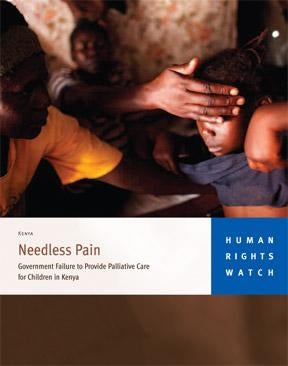
Government Failure to Provide Palliative Care for Children in Kenya
This 78-page report found that most Kenyan children with diseases such as cancer or HIV/AIDS are unable to get palliative care or pain medicines. Kenya’s few palliative care services provide counseling and support to families of chronically ill patients, as well as pain treatment, but lack programs for children.
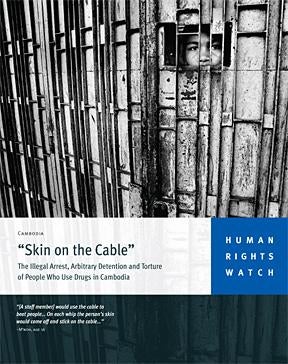
The Illegal Arrest, Arbitrary Detention and Torture of People Who Use Drugs in Cambodia
In this 93-page report Human Rights Watch documents detainees being beaten, raped, forced to donate blood, and subjected to painful physical punishments such as "rolling like a barrel" and being chained while standing in the sun.
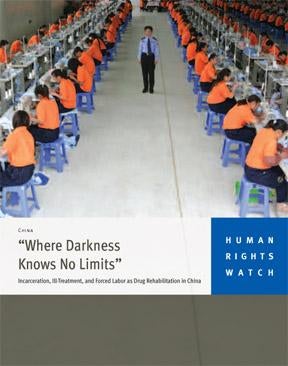
Incarceration, Ill-Treatment and Forced Labor as Drug Rehabilitation in China
This 37-page report based on research in Yunnan and Guangxi provinces, documents how China's June 2008 Anti-Drug Law compounds the health risks of suspected illicit drug users by allowing government officials and security forces to incarcerate them for up to six years. The incarceration is without trial or judicial oversight.
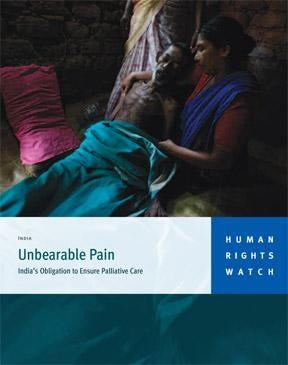
This 102-page report found that many major cancer hospitals in India do not provide patients with morphine, despite the fact that more than 70 percent of their patients are incurable and likely to require pain treatment and palliative care. Health centers offering services to people living with HIV similarly do not have morphine or doctors trained to prescribe it.
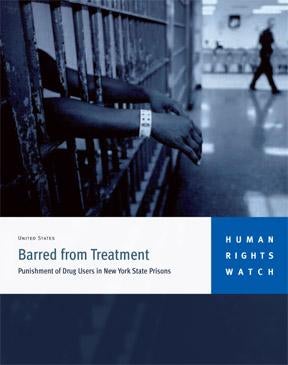
Punishment of Drug Users in New York State Prisons
In this 53-page report, Human Rights Watch found that New York prison officials sentenced inmates to a collective total of 2,516 years in disciplinary segregation from 2005 to 2007 for drug-related charges. At the same time, inmates seeking drug treatment face major delays because treatment programs are filled to capacity.