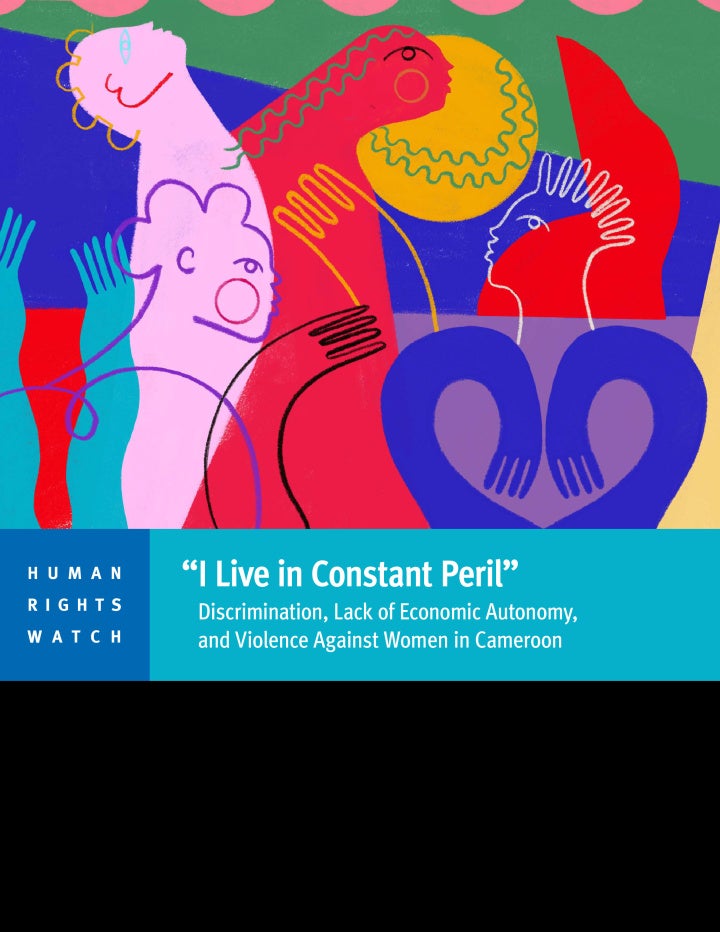
Discrimination, Lack of Economic Autonomy and Violence Against Women in Cameroon
The 75-page report, “‘I Live in Constant Peril:’ Discrimination, Lack of Economic Autonomy and Violence Against Women in Cameroon,” documents widespread violence against women, including physical, psychological, and economic abuse, in most cases by husbands and intimate partners. Researchers found that physical and economic abuse was used to restrict access to financial resources, social security, employment, property, and economic independence. These abuses are not isolated incidents but are rooted in entrenched gender inequality, discriminatory laws, and weak institutions, exacerbated by the government’s chronic underinvestment in prevention and survivor support.
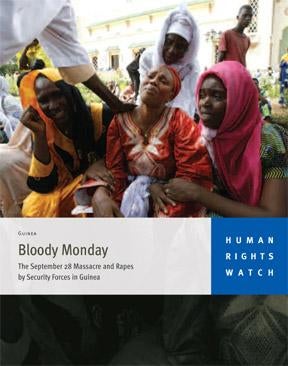
The September 28 Massacre and Rapes by Security Forces in Guinea
This 108-page report describes in detail the killings, sexual assaults, and other abuses at an opposition rally in a stadium in Conakry, the capital, committed largely by members of Guinea's elite Presidential Guard, and the evidence suggesting that the attacks must have been planned in advance.
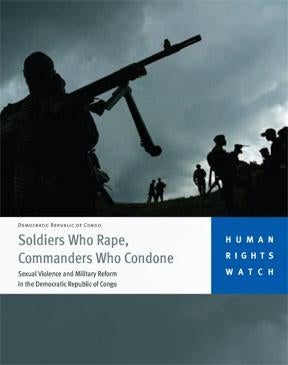
Sexual Violence and Military Reform in the Democratic Republic of Congo
This 56-page report documents persistent sexual violence by the army, and the limited impact of government and donor efforts to address the problem. The report looks closely at the conduct of the army's 14th brigade as an example of the wider problem of sexual violence by soldiers.
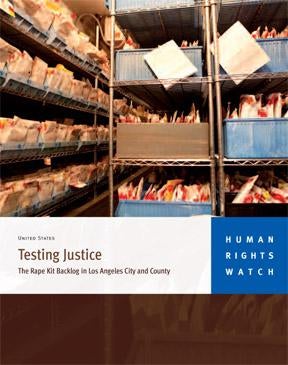
The Rape Kit Backlog in Los Angeles City and County
The 68-page report reveals that the backlog of untested rape kits in Los Angeles County is larger and more widespread than previously reported. Through dozens of interviews with police officers, public officials, criminalists, rape treatment providers, and rape victims, the report documents the devastating effects of the backlog on victims of sexual abuse.
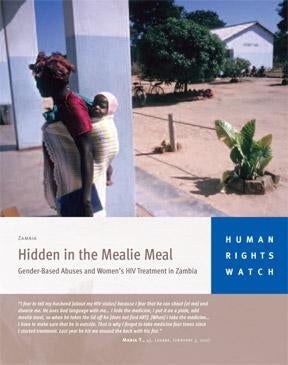
Gender-Based Abuses and Women’s HIV Treatment in Zambia
While acknowledging the significant overall progress made by the Zambian government in scaling up HIV treatment generally, this report documents how the government has fallen short of its international legal obligations to combat violence and discrimination against women.
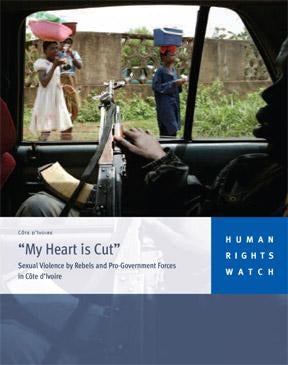
Sexual Violence by Rebels and Pro-Government Forces in Côte d’Ivoire
Pro-government and rebel forces in Côte d’Ivoire have subjected thousands of women and girls to rape and other brutal sexual assaults with impunity. This 135-page report details the widespread nature of sexual violence throughout the five-year military-political crisis. The report, which is based on interviews with more than 180 victims and witnesses, documents how women and girls have been subjected to individual and gang rape, sexual slavery, forced incest and other egregious sexual assaults.
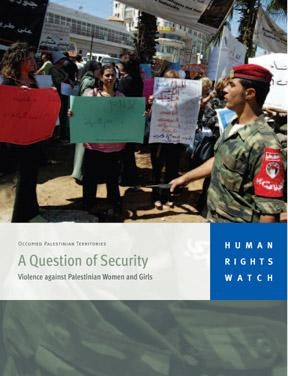
This 101-page report, based on field research conducted in the West Bank and Gaza in November 2005 and early 2006, documents dozens of cases of violence ranging from spousal and child abuse to rape, incest and murders committed under the guise of family “honor.” There is increasing recognition of the problem, and some PA officials have indicated their support for a more vigorous government res
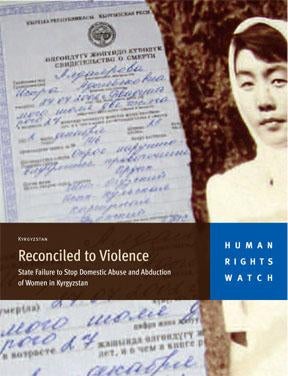
State Failure to Stop Domestic Abuse and Abduction of Women in Kyrgyzstan
This 140-page report concludes that although Kyrgyzstan has progressive laws on violence against women, police and other authorities fail to implement them. As a result, women remain in danger and without access to justice.
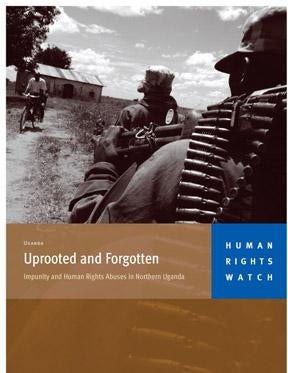
Impunity and Human Rights Abuses in Northern Uganda
This 76-page report documents how the ongoing lack of accountability and civilian protection in the north has fueled atrocities by both sides. In each of the displaced persons camps visited, Human Rights Watch found cases of abuse by Ugandan government forces as well as rebel combatants.
This briefing paper documents how the Sudanese security forces, including police deployed to protect displaced persons, and allied Janjaweed militias continue to commit rape and sexual violence on daily basis.
Governments around the world have done far too little to combat the entrenched, chronic abuses of women’s and girls’ human rights that put them at risk of HIV. Misguided HIV/AIDS programs and policies, such as those emphasizing abstinence until marriage, ignore the brutal realities many women and girls face.
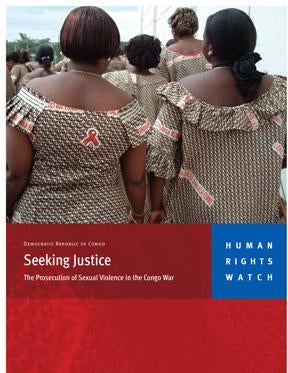
The Prosecution of Sexual Violence in the Congo War
This 52-page report documents how the government of the Democratic Republic of Congo has taken insufficient steps to prosecute those responsible for wartime rape. Human Rights Watch calls on the Congolese government and international donors, including the European Union, to take urgent steps to reform Congo’s justice system.
Since February 2003, Darfur has been the scene of massive crimes against civilians of particular ethnicities in the context of an internal conflict between the Sudanese government and a rebel insurgency. Almost two million people have been forcibly displaced and stripped of all their property and tens of thousands of people have been killed, raped or assaulted.
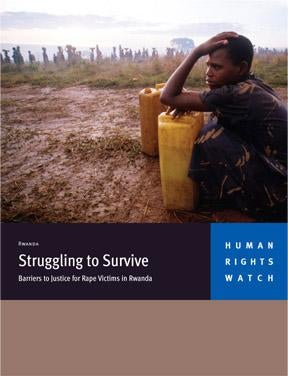
This 58-page report investigates the persistent weaknesses in the Rwandan legal system that hamper the investigation and prosecution of sexual violence. The report also documents the desperate health and economic situation of rape survivors. Many of the women who were raped became infected with HIV.
A Human Rights Watch Briefing Paper, July 20, 2004
Numerous reports from Human Rights Watch and other sources have described the “hand-in-glove” manner in which the Government of Sudan and the nomadic ethnic militias known as the Janjaweed have operated together to combat a rebel insurgency in Darfur. Hundreds of eyewitnesses and victims of attacks have testified to the close coordination between government forces and their militia partners in the conflict. Militia leaders and members have been supplied with arms, communications equipment, salaries and uniforms by government officials and have participated in joint ground attacks on civilians with government troops, often with aerial bombing and reconnaissance support from government aircraft.
Human Rights Watch has issued numerous reports showing that human rights abuses against persons living with and at high risk of HIV/AIDS contribute significantly to new HIV infections worldwide. This is true in Thailand, the host of this year’s AIDS conference, as well as in numerous other countries worldwide.