Recruitment and Use of Children by Colombian Armed Groups
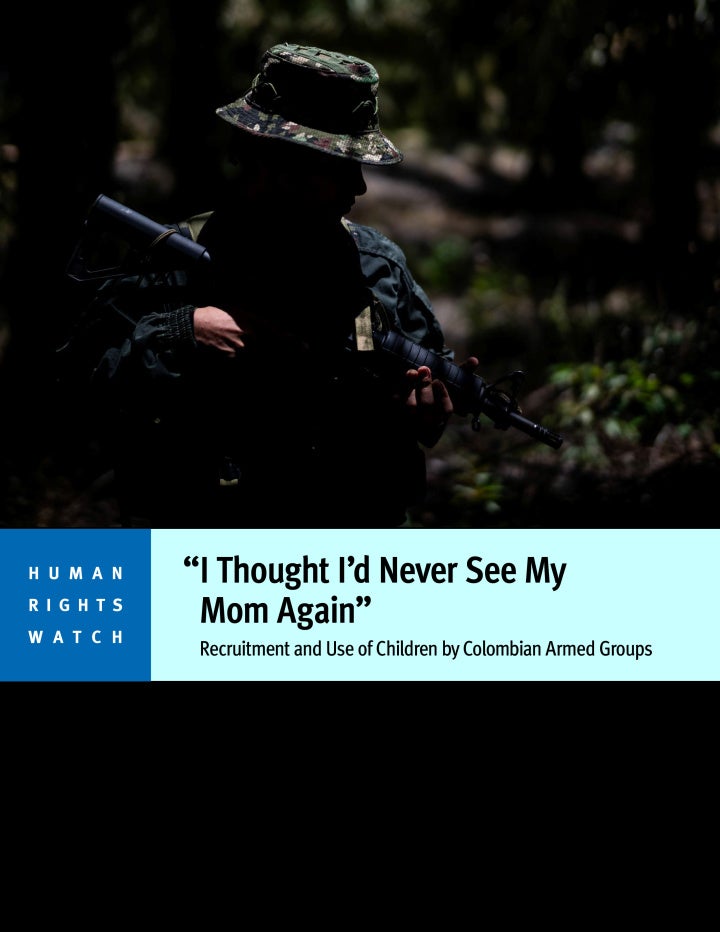
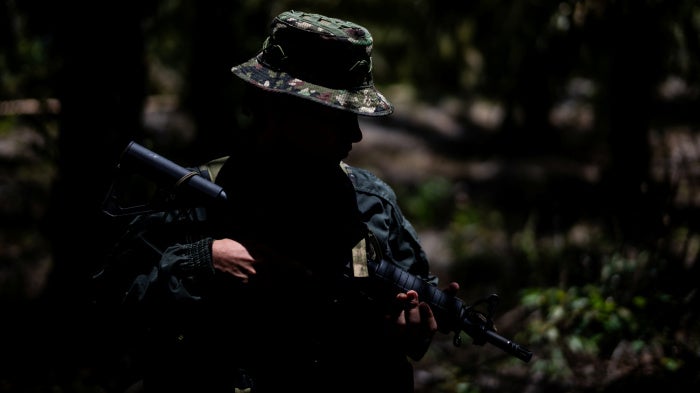
The 102-page report, “‘I Thought I’d Never See My Mom Again’: Recruitment and Use of Children by Colombian Armed Groups,” examines the dynamics of child recruitment, the factors that place children at risk, and the strategies and tools used by armed groups, including through social media platforms, to recruit them. Researchers also analyzed the government’s response and its shortcomings in preventing child recruitment, protecting and rescuing children, assisting the reintegration of those who have been released, and prosecuting the individuals responsible.
Stigma and Discrimination against HIV-Positive Mothers and their Children in Russia
As Russia’s HIV/AIDS epidemic spreads, thousands of HIV-positive mothers and their children face pervasive discrimination and abuse. This 41-page report focuses on the discrimination that these women face, as do their children, many of whom are abandoned to the care of the state.
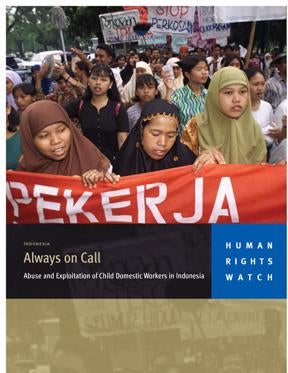
Abuse and Exploitation of Child Domestic Workers in Indonesia
This 74-page report documents how Indonesian children as young as 12 work 14 to 18 hours a day, seven days a week, without a day off. They are also forbidden from leaving their place of employment or contacting their families.
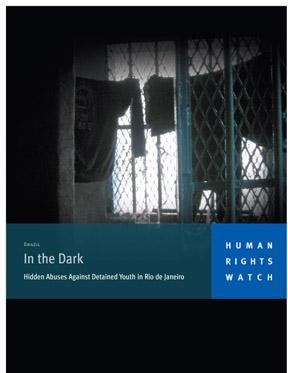
Hidden Abuses Against Detained Youths in Rio de Janeiro
When Human Rights Watch last visited Rio de Janeiro’s five juvenile detention centers, in July and August 2003, we found a system that was decaying, filthy, and dangerously overcrowded. The facilities we saw did not meet basic standards of health or hygiene.
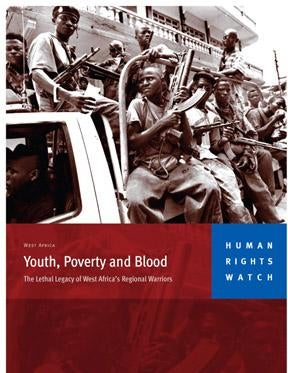
The Lethal Legacy of West Africa’s Regional Warriors
The lives of “regional warriors” are documented in this 66-page report. Based on interviews with some 60 former fighters who have crossed borders to fight in Liberia, Sierra Leone, Côte d’Ivoire and Guinea, the report explores the forces driving the phenomenon of cross-border mercenary activity in West Africa.
This 80-page report documents the recent removal of critical HIV/AIDS information from primary school curricula, including information about condoms, safer sex and the risks of HIV in marriage.
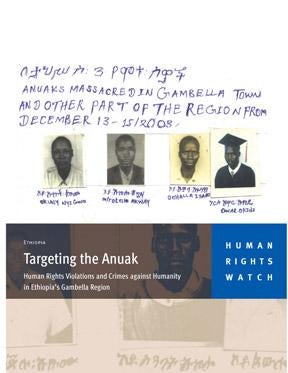
Human Rights Violations and Crimes against Humanity in Ethiopia’s Gambella Region
Since late 2003, the Ethiopian National Defense Force (ENDF) has committed numerous human rights violations against Anuak communities in the Gambella region of southwestern Ethiopia that may amount to crimes against humanity. These abuses have taken place in a region plagued by longstanding ethnic tensions to which the Ethiopian military has become a party.
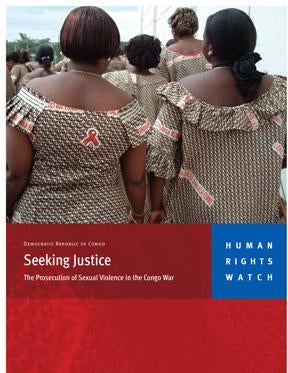
The Prosecution of Sexual Violence in the Congo War
This 52-page report documents how the government of the Democratic Republic of Congo has taken insufficient steps to prosecute those responsible for wartime rape. Human Rights Watch calls on the Congolese government and international donors, including the European Union, to take urgent steps to reform Congo’s justice system.
Prospects in 2005 for Internally Displaced Kurds in Turkey
This 37-page report details how the Turkish government has failed to implement measures for IDPs the United Nations recommended nearly three years ago. Since the European Union confirmed Turkey’s membership candidacy in December, the Turkish government appears to have shelved plans to enact those measures.
US: Life Without Parole Sentences for Children in Colorado
Across Colorado, residents are beginning to question whether children who commit a crime before the age of eighteen should ever be sentenced to life without parole. Historically, this harshest of prison sentences was restricted to adults.
The 70-page report documents that youths in Rio de Janeiro’s detention centers are often beaten and verbally abused by guards. Most complaints of ill-treatment are never investigated by the state’s Department of Socio-Economic Action (Departamento Geral de Ações Sócio-Educativas, or DEGASE), the authority responsible for juvenile detention facilities.
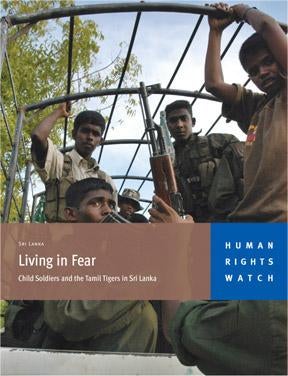
This 80 page report includes firsthand testimonies from dozens of children from northeastern Sri Lanka who have been recruited by the Tamil Tigers since the ceasefire came into effect. Children described rigorous and sometimes brutal military training, including training with heavy weapons, bombs and landmines.
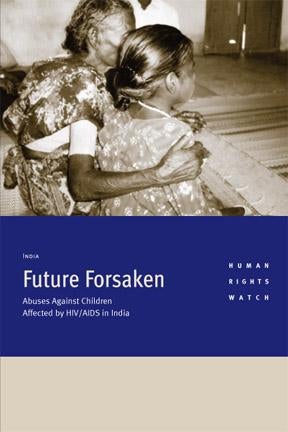
Abuses Against Children Affected by HIV/AIDS in India
This 209-page report documents how many doctors refuse to treat or even touch HIV-positive children. Some schools expel or segregate children because they or their parents are HIV-positive. Many orphanages and other residential institutions reject HIV-positive children or deny that they house them.
Human Rights Watch submitted a number of requests to the U.S. government for documents relating to trafficking in persons in Bosnia pursuant to the Freedom of Information Act. Two years after our initial request, we obtained a limited number of documents.
Child domestic workers are nearly invisible among child laborers. They work alone in individual households, hidden from public scrutiny, their lives controlled by their employers. Child domestics, nearly all girls, work long hours for little or no pay. Many have no opportunity to go to school, or are forced to drop out because of the demands of their job.
Hazardous Child Labor in El Salvador’s Sugarcane Cultivation
Businesses purchasing sugar from El Salvador, including The Coca-Cola Company, are using the product of child labor that is both hazardous and widespread. Harvesting cane requires children to use machetes and other sharp knives to cut sugarcane and strip the leaves off the stalks, work they perform for up to nine hours each day in the hot sun.