Hanoi’s Continuing Assault on Workers’ Right to Organize
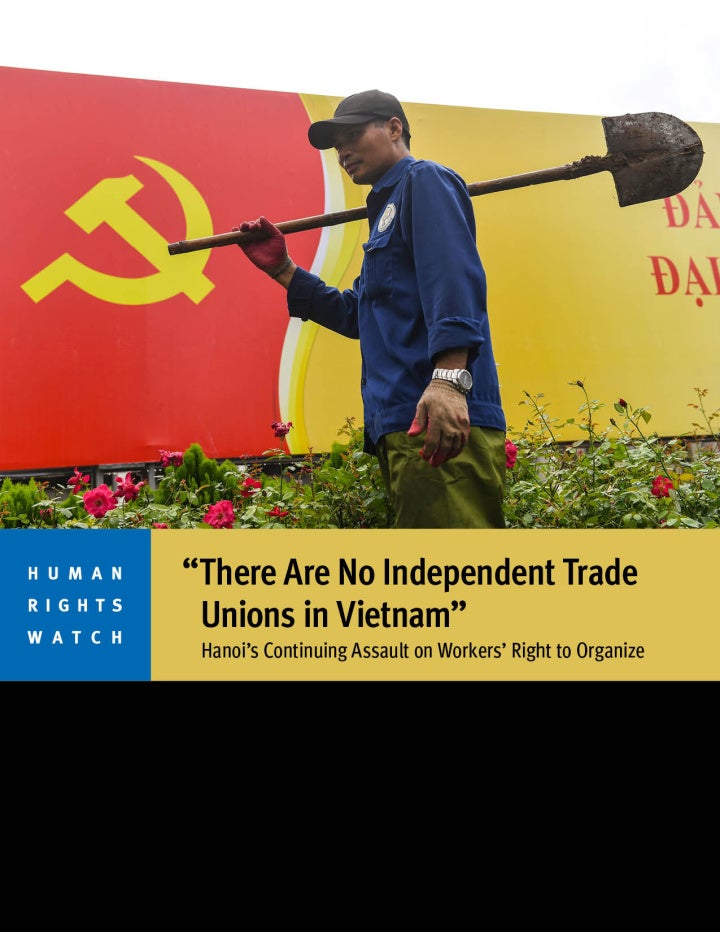
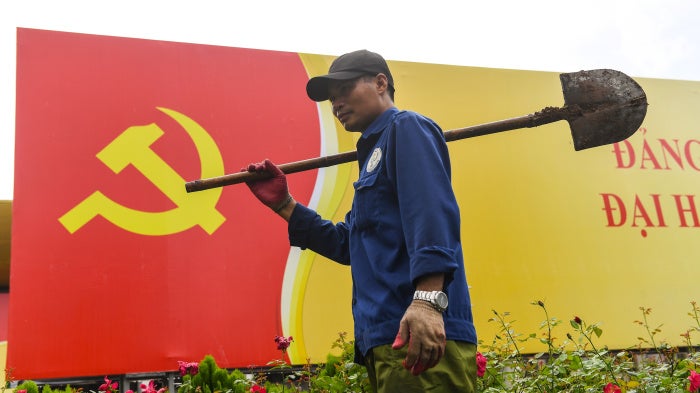
The 49-page report, “There Are No Independent Trade Unions in Vietnam: Hanoi’s Continuing Assault on Workers’ Right to Organize,” documents the Vietnamese governments’ continuing useof vague, overbroad criminal laws to suppress the activities of human rights and labor rights defenders, while maintaining an atmosphere of repression to thwart independent labor organizing. The government has issued decrees and articles in state-run media that reaffirm that all labor organizations in Vietnam are under the government’s authority, and portray independent trade unions as dangerous, anti-state entities.
This 53-page report details government harassment of Kazakhstan's opposition through arbitrary criminal and misdemeanor charges and threats of job dismissal, in many cases aimed at preventing them from running for public office.
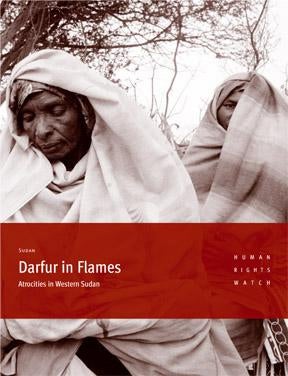
This 49-page report describes a government strategy of forced displacement targeting civilians of the non-Arab ethnic communities from which the two main rebel groups—the Sudan Liberation Movement/Army (SLM/A) and the Justice and Equality Movement (JEM)—are mainly drawn.
In this report, Human Rights Watch documents the failure of the Malaysian government to offer protection and assistance to Acehnese refugees fleeing persecution and armed conflict in Aceh. Malaysia’s treatment of Acehnese in Malaysia falls far short of internationally accepted standards for treatment of refugees and asylum seekers.
This 319-page report details the arrest and torture of detainees in an ongoing campaign that has resulted in the incarceration of an estimated 7,000 Muslim dissidents. The government's targets are independent Muslims who practice their faith outside state-run mosques and madrassas or beyond the strict controls set out by the government's laws on religion.
This 76-page report documents cases of torture committed by military, intelligence, and security agents in the government’s pursuit of armed rebels. However, politicians challenging the de facto single-party state and the 18-year rule of Uganda’s president, Yoweri Museveni, are often detained, severely beaten and threatened with death by the uncontrolled security apparatus.
In the ten years since the Rwandan genocide, leaders of national governments and international institutions have acknowledged the shame of having failed to stop the slaughter of the Tutsi population. Halting any future genocide will require not just exerting greater political will than seen in the past, but also developing a strategy built on the lessons of 1994.
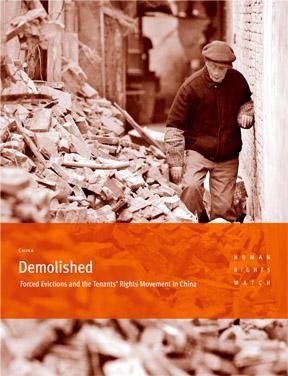
Forced Evictions and the Tenants' Rights Movement in China
Chinese local authorities and developers are forcibly evicting hundreds of thousands of homeowners and tenants who have little legal recourse. China's rapid urban development, fueled in Beijing by preparations for the 2008 Olympics, is leading to the eviction of homeowners and tenants in violation of Chinese law and international standards on the right to housing.
On February 20, 2004, President George W. Bush notified Congress of his intent to sign the U.S.-Central America Free Trade Agreement (CAFTA)-an accord that the United States recently negotiated with Costa Rica, El Salvador, Guatemala, Honduras, and Nicaragua. According to U.S.
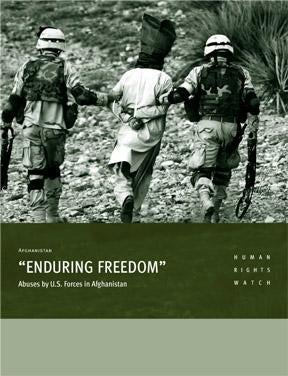
This 59-page report is based on research conducted by Human Rights Watch in Afghanistan and Pakistan in 2003 and early 2004. Human Rights Watch documented cases of U.S. forces using military tactics, including unprovoked deadly force, during operations to apprehend civilians in uncontested residential areas—situations where law enforcement standards and tactics should have been used.
South Africa's Efforts to Prevent HIV in Survivors of Sexual Violence
This 73-page report documents how government inaction and misinformation from high-level officials have undermined the effectiveness of South Africa’s program to provide rape survivors with post-exposure prophylaxis (PEP) — antiretroviral drugs that can reduce the risk of contracting HIV from an HIV-positive attacker.
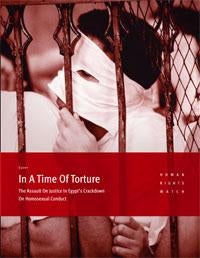
The Assault on Justice in Egypt's Crackdown on Homosexual Conduct
This 144-page report documents the government’s increasing repression of men who have sex with men. The trial of 52 men in 2001 for the “habitual practice of debauchery”—the legal charge used to criminalize homosexual conduct in Egyptian law—was only the most visible point in the ongoing and expanding crackdown.
Rebel forces are advancing on Haiti’s capital Port-au-Prince, sparking fears of widespread bloodshed. Among the leaders of the insurgency are such notorious figures as Louis Jodel Chamblain, a former paramilitary responsible for countless atrocities under the military government that ruled Haiti from 1991 to 1994.
What is new about this policy? The Bush Administration’s policy on landmines, announced February 27, 2004, reverses many of the positive steps the U.S. has made over the past decade to eradicate antipersonnel mines. The use of self-destructing mines is permitted indefinitely without any geographic restrictions.