Joint Submission to GANHRI Regarding Review of the Accreditation Status of the National Human Rights Commission of India
September 30, 2026
We, the undersigned, are regional and international human rights nongovernmental organizations as well as individuals expressing concerns over the developments at the National Human Rights Commission of India (NHRCI).
The submitting organizations have varying degrees of direct work with the NHRCI. Most of us have been involved in advocacy to push for the NHRCI’s compliance with the United Nations Principles relating to the Status of National Institutions (The Paris Principles). We have repeatedly made submissions to the Sub-Committee on Accreditation (SCA) concerning the accreditation of NHRCI in 2023, 2024, 2025, most recently in March 2026 and now in this “Alteration of Accreditation.”
Summary
In March 2025, the GANHRI-SCA recommended downgrading NHRCI’s accreditation and gave it one year before making a final decision. The SCA recommended that the NHRCI improve its processes and functions in line with the Paris Principles. The NHRCI challenged the downgrade before GANHRI but it was rejected in December 2025, and the NHRCI’s “Alteration of Accreditation” review was postponed from March to November 2026.
The SCA formally raised concerns about the NHRCI in 2011 and then reiterated it in its 2016, 2017, 2023, 2024 and 2025 reports to the Indian government and the NHRCI over its mandate to respond to the escalating human rights violations in India, lack of pluralism in selection and appointments of its core members, insufficient cooperation with human rights bodies, and concerns over its ability to function independent of government interference.
In March 2026, several of us wrote to your office sharing our concerns about the NHRCI’s functioning and its limited compliance with the recommendations made by the SCA.
We acknowledge that there has been an increase in the number of suo motu cases taken up by the commission, and media coverage and external communications of NHRCI’s activities appears to have improved. However, these improvements appear to be cosmetic, failing to address the core concerns regarding its mandate. For instance, the NHRCI’s redesigned website displays lots of numbers on the homepage on complaints and cases disposed, but with little context. The numbers present no clarity on deaths in police custody, judicial custody, or allegations of extrajudicial killings registered by the commission. This is important data that the website publicly disclosed earlier in keeping with the crucial oversight role the commission plays in custodial deaths. This is at a time when the United Nations Committee on the Elimination of Racial Discrimination (CERD) found large-scale violations by law enforcement authorities, including extrajudicial killings and increased targeting of vulnerable groups.
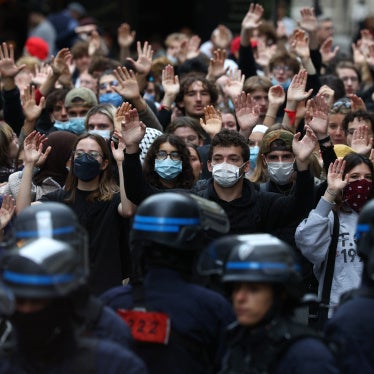
The NHRCI had a year to implement the SCA’s recommendations but failed to address India’s deteriorating human rights situation. Various UN human rights experts and groups have raised concerns about the misuse of counterterrorism and foreign funding laws to crack down on civil society, unlawful detentions and forcible expulsions of ethnic Bengali Muslims and Rohingya refugees to Bangladesh, the arbitrary removal of millions of names from electoral rolls under the Special Intensive Revision, and allegations of extrajudicial killings and police abuses. For instance, the NHRCI did not take timely action when the police and security forces in New Delhi used excessive force against students and others peacefully protesting for educational reforms in July 2026. The authorities used batons, tear gas and pellet guns, injuring over a 100 people, and several women alleged being molested and beaten by police officers.
The NHRCI and the Indian government have repeatedly failed to implement the committee’s recommendations, as detailed below. In this context, we strongly urge GANHRI-SCA to amend the current “A” rating of the NHRCI to accurately reflect its failure to comply with the Paris Principles and address the deteriorating human rights situation in India.
Involvement of Police Officers in NHRCI Investigations
The SCA in its 2017, 2023, 2024 and 2025 reviews noted that the NHRCI’s use of police officers “poses a concern about the perceived or real conflict of interest in having police officers seconded from the government engaged in investigations of human rights violations including those committed by police.” The SCA recommended amendments to Section 11 of the Protection of Human Rights Act (PHRA), 1993 which empowers the Indian government to appoint police officers above a certain rank for the efficient performance of the NHRCI. Till date, the NHRCI and the Indian government have not addressed this concern and have failed to undertake any legislative measures to comply with the SCA’s recommendation. The SCA observed in its 2025 review that instead of directly addressing the main concerns, the NHRCI had so far only proposed internal rules to allow them to appoint those other than police officers to form a part of their investigations. But on its website, the NHRCI clearly highlights that its Investigation Division, while “multidimensional,” comprises solely of police officers while other competent persons capable of carrying out independent investigations such as senior lawyers/retired public prosecutors, forensic experts, and experienced human rights investigators remain absent.
Such conflict of interest highlighted by the SCA is emblematic in NHRCI’s inability to hold police authorities accountable or conduct any independent inquiries into systemic police abuses. In February 2026, UN special rapporteurs urged the Indian government to launch independent inquiries into “alarming allegations of hundreds of extrajudicial killings and torture-related deaths and thousands of injuries by law enforcement officials” which disproportionately affected Muslims, Dalits, and indigenous communities like the Adivasis, especially in states such as Assam and Uttar Pradesh.
Opacity in Appointments and Lack of Pluralism in Selection Criteria
The NHRCI has not incorporated any of the recommendations by the SCA to ensure it functions without any political interference. The SCA has repeatedly emphasized that the “fundamental requirement of the Paris Principles is that an NHRI is, and is perceived to be, able to operate independent of government interference.” The Indian government continues to appoint a Secretary-General who is inevitably a former civil servant whereas the SCA recommended it to amend the PHRA in such a manner that it enables the NHRCI to recruit candidates independently. The NHRCI has failed to amend the law and has instead extended the tenure of the Secretary-General three times, most recently in July 2026.
The NHRCI has not complied with the SCA’s recommendations to ensure pluralistic diversity in its leadership and functioning with two of its commissioner positions vacant since 2021 and 2018 respectively. In 2025, the SCA stated it was “concerned that the composition of the membership of the NHRC with only one woman and the composition of the staff was not sufficient to meet the pluralism requirements of the Paris Principles.” The SCA recommended that NHRCI advocate for amendments that ensure a composition representative of Indian society, including but not limited to religious or ethnic minorities, and the adequate representation of women in the institution’s decision-making body.
The NHRCI has also failed to introduce any transparency measures to the process of selection and appointment of the chairperson, who is currently appointed by the President of India, based on the recommendation by a committee that includes the Prime Minister. The SCA in its 2025 session expressed concerns about the process and recommended the NHRCI to publicly list the vacancies, have broad consultations or participation to ensure a diverse pool of candidates for the position.
Limited Constructive Engagement with Civil Society
The NHRCI has not taken any additional steps to engage with civil society organizations and human rights defenders in India despite the SCA’s recommendation reiterating constructive engagement. In its review session in 2025, the SCA stated that several civil society actors alleged NHRCI of not cooperating with them. Furthermore, NHRCI has excluded interacting with those civil society actors who are critical of their performance.
The NHRCI has failed to speak out against the Indian government’s escalating crackdown against thousands of nongovernmental organizations (NGOs), many of them working with vulnerable communities. As of September 2026, the government had canceled the foreign funding licenses of 22,493 NGOs under the Foreign Contribution Regulation Act. UN human rights experts have repeatedly urged the Indian government to repeal the FCRA and warned that it was being used to silence organizations whose priorities did not align with those of the government.
The NHRCI has failed to protect human rights defenders in the country, particularly those working with vulnerable communities or religious minorities, and on environmental rights. Most recently, it remained silent on the arrests of five Indigenous human rights defenders in Assam even after four UN experts expressed concern and urged their release in July.
Failure to Address Human Rights Violations
The NHRCI has remained conspicuously silent even as India has witnessed a worrying escalation in human rights violations over the past decade. In its 2025 report, the SCA stated it was “concerned the NHRC has not provided adequate information about how they are addressing the shrinking civic space and increased instances of targeting human rights defenders, journalists and perceived critics.”
In its August 2026 report, the CERD raised concerns over the “large-scale violations perpetrated by law enforcement officials against ethnic and ethno-religious groups, Indigenous and Tribal peoples, including Scheduled Tribes and Scheduled Castes, particularly Dalits and non-citizens.” The report should have prompted the NHRCI to strengthen its mechanisms in responding to such violations. Instead, the Indian government sought to refute the report, calling it “highly malicious.”
The NHRCI and the Indian government did not publicly acknowledge the findings of the three UN human rights experts either who raised concerns about the Election Commission’s ongoing voter lists revision across the country. Over 60 million names have been removed from the country’s electoral rolls and the UN experts highlighted a lack of transparency, potential for bias and the potential large-scale disenfranchisement of voters, particularly those from religious minority groups, despite India’s obligations under the International Covenant on Civil and Political Rights. The NHRCI did not take any action after receiving a letter from a civil society group in July, asking it to hold a public hearing on the large-scale removal of names from the voter rolls.
The NHRCI has remained silent on the Indian government’s discriminatory policies against religious minorities especially Muslims and Christians, increasing violence against religious minorities as well as Dalits and Adivasis, and when the authorities carry out arbitrary demolitions of Muslim homes and properties as a form of collective punishment against the community. In 2024, the Supreme Court ruled that such demolitions were illegal and in 2025, four UN experts called on Indian authorities to put an end to them.
The NHRCI has failed to act on numerous human rights violations and gender-based violence in Manipur where ethnic violence since May 2023 has killed over 300 people and displaced over 60,000.
Since 2025, Indian authorities have forcibly expelled hundreds of ethnic Bengali Muslims to Bangladesh without any due process. In 2025, the Indian government unlawfully expelled 100 Rohingya refugees to Bangladesh and then forced another 40 Rohingya refugees into the sea near Myanmar, giving them life jackets. A UN expert called the Indian authorities’ actions an “affront to human decency” in May 2025. The CERD report in August highlighted an increase in law enforcement operations like police checks involving racial profiling, arbitrary arrests and detention without due process of vulnerable communities such as Rohingya, Bengali-speaking Muslims, migrants and asylum-seekers. In 2024, the CERD called on India to end discrimination against the Rohingya community and stop arbitrarily detaining them. The committee said it was “alarmed by reports of widespread racist hate speech and harmful stereotypes against Rohingya, including by politicians and public figures.”
Over the past decade, the NHRCI has not intervened when Indian authorities have targeted students, activists, lawyers, journalists, and critics of the government under the abusive, counterterrorism law, the Unlawful Activities Prevention Act (UAPA). This includes 16 prominent activists who promoted the rights of persons from India’s most marginalized communities, accusing them of inciting violence that occurred during a Dalit meeting in January 2018 in Bhima Koregaon in Maharashtra state. The trial is yet to begin but 15 activists arrested in the case spent years in jail before they were granted bail, while 84-year-old Stan Swamy, a prominent tribal rights activist, died in custody, which a UN expert termed as “a stain on India’s human rights record.” According to reports by the US-based forensic firm Arsenal Consulting, malware was used to surveil and plant evidence on the computers of at least three accused in this case.
The NHRCI did not take any action against Delhi Police officials after they were accused of conducting biased investigations involving the arrests of activists in cases related to the February 2020 violence in Delhi following peaceful protests against the discriminatory Citizenship (Amendment) Act. The police arrested 18 student leaders and activists, most of them Muslim, under the counterterrorism law, of whom at least 11 have been granted bail. The trial has not yet begun and UN experts have called for the release of the activists, including Umar Khalid and Sharjeel Imam who have been repeatedly denied bail.
Indian authorities continue to restrict the rights to free expression and peaceful assembly in Jammu and Kashmir, seven years after revoking the region’s special autonomous status. There are growing restrictions on media, a number of journalists and human rights defenders have been arrested on spurious terrorism charges, and authorities regularly harass critics including through counterterrorism raids.
Signed:
Amnesty International
CIVICUS: World Alliance for Citizen Participation
CSW (Christian Solidarity Worldwide)
Front Line Defenders
Human Rights Watch
Rosslyn Noonan CNZM, Former Chairperson of GANHRI and Former Chief Commissioner of the New Zealand Human Rights Commission
South Asians for Human Rights (SAHR)
The Asian Forum for Human Rights and Development (FORUM-ASIA)
The Asian NGO Network on National Human Rights Institutions (ANNI)
The Human Rights Measurement Initiative (HRMI)
The International Coalition Against Enforced Disappearances (ICAED)
The International Federation for Human Rights (FIDH)
The International Service for Human Rights (ISHR)
The World Organisation Against Torture (OMCT)