Who is Khaled Mohamed Ali El Hishri and what are the charges against him?
Why is the case significant?
What will happen during the confirmation of charges hearing?
Can victims of the alleged crimes participate in the hearing?
How will people in Libya follow the proceedings at the ICC?
Why is the ICC investigating serious crimes in Libya?
What is the current status of the ICC investigation?
Is Libya obligated to cooperate with the ICC?
Is Libya also investigating and prosecuting serious crimes committed on its territory since 2011?
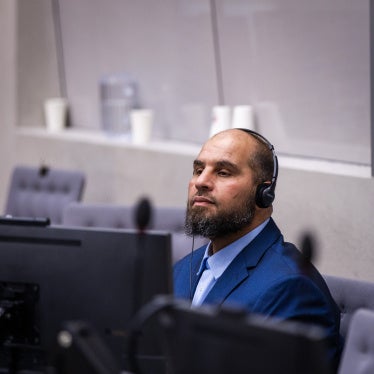
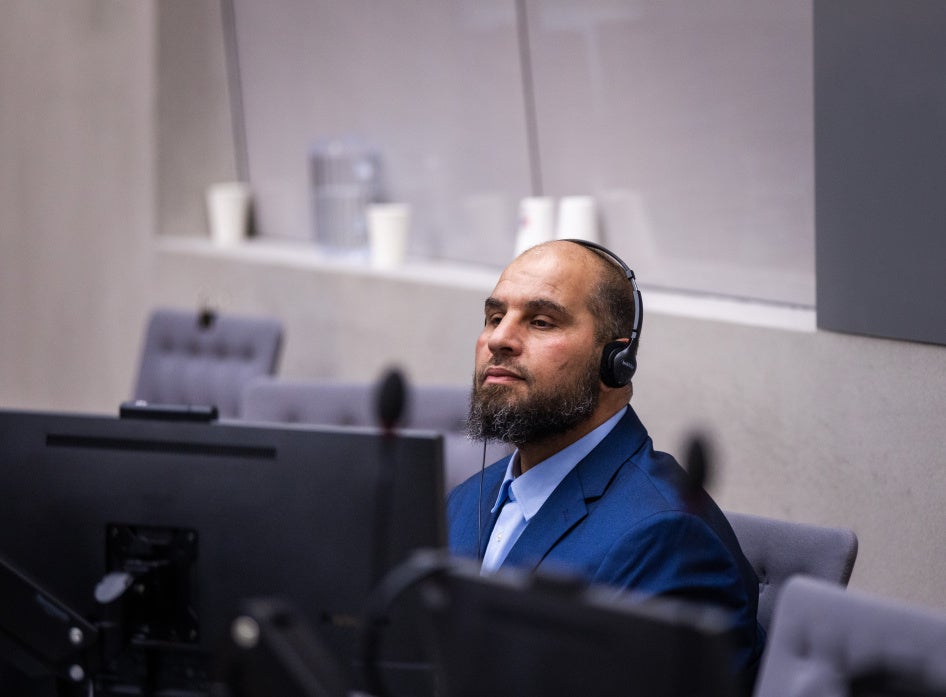
International Criminal Court (ICC) judges will hear evidence on May 19-21 against a Libyan suspect, Khaled Mohamed Ali El Hishri, in a “confirmation of charges” hearing to determine whether the case against him should proceed to trial.
ICC judges issued an arrest warrant against El Hishri on July 10, 2025, for alleged crimes against humanity and war crimes committed in Libya. He was arrested in Germany on July 16, 2025, and following the completion of national proceedings, German authorities surrendered him to the ICC in The Hague on December 1.
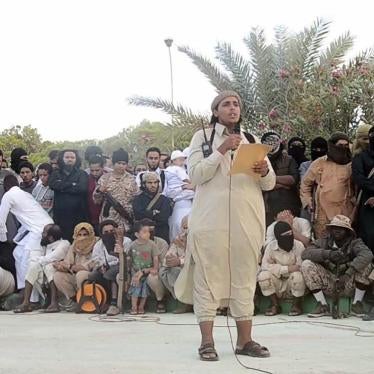
Libya is a country with two competing governments, a largely ineffective justice system, and numerous detention facilities that are nominally under the control of authorities. Effectively, detention facilities in Libya are controlled by unaccountable armed groups and are marked by violence and inhumane conditions for migrants, asylum seekers, and Libyans.
This question-and-answer document provides background information about the case, the ICC’s investigation in Libya, the upcoming confirmation of charges hearing, and the cooperation the ICC needs to adequately deliver on its mandate in Libya.
Khaled Mohamed Ali El Hishri is a Libyan national and former senior member of the Deterrence Apparatus for Countering Terrorism and Organized Crime, a Tripoli-based militia commonly known as al-Radaa, affiliated with the Tripoli-based Presidential Council that is loosely allied with the Government of National Unity (GNU).
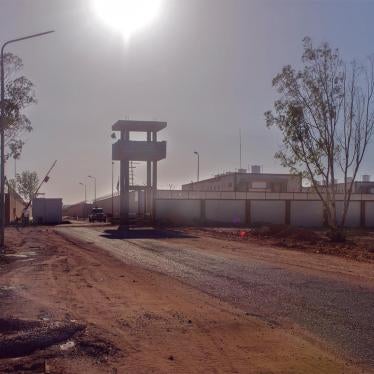
The ICC Office of the Prosecutor is seeking confirmation of 17 counts of war crimes and crimes against humanity allegedly committed between May 1, 2014, and June 30, 2020, at Tripoli’s Mitiga prison, where he is alleged to have been a senior official. These are laid out in the Document Containing the Charges and include: torture, rape, sexual violence, murder, and attempted murder as both war crimes and crimes against humanity; the war crimes of outrages upon personal dignity and cruel treatment; and the crimes against humanity of imprisonment or other severe deprivation of physical liberty, other inhumane acts, enslavement, and persecution on political, religious, national, ethnic, and gender grounds.
Some of these crimes are alleged to have been committed against over 900 victims in Mitiga Prison.
The prosecution alleges that El Hishri is criminally responsible for these crimes: for having directly committed them; for having indirectly committed them with others through the authority and influence he exercised throughout Mitiga Prison and his direct control over the women’s section of the prison; for having ordered, instigated, aided, abetted, and contributed to their commission.
El Hishri is the first individual to face justice before the ICC in the 15 years since the Office of the Prosecutor began its investigation in Libya in 2011, following a referral by the United Nations Security Council.
The case against El Hishri is also the first globally to address serious international crimes against migrants in Libyan detention centers. While some countries in Europe have investigated and prosecuted individuals for human smuggling and trafficking of migrants in Libya, these cases have not included charges of war crimes or crimes against humanity.
This is particularly important because abuses in Libya’s detention centers, including against migrants, continue with complete impunity. Human Rights Watch, myriad other human rights and humanitarian organizations, and the United Nations have documented inhumane conditions in detention centers and prisons across Libya, many run by abusive and unaccountable armed groups nominally affiliated with the authorities.
Detainees face severe overcrowding, torture, and other ill-treatment; prolonged arbitrary detention and enforced disappearance; as well as unlawful killings, beatings, forced labor, sexual violence, and deprivation of adequate food and water. While the charges against El Hishri concern alleged crimes committed between 2014 and 2020, the prosecution noted that they continued until at least 2025 at Mitiga Prison.
German authorities’ successful arrest and surrender of El Hishri is also an important example of how ICC member countries can contribute to the court’s delivery of justice when they fulfill their obligation to cooperate with the ICC. This stands in sharp contrast with Italy’s failure to surrender to the ICC another Libyan suspect—one of El Hishri’s alleged co-perpetrators at Mitiga Prison—Osama Elmasry Njeem, after arresting him in February 2025.
Instead of sending Njeem to The Hague, Italian authorities released him and transferred him back to Libya. In October 2025, ICC judges found that Italy had breached its cooperation obligations and, in January 2026, referred the situation to the ICC Assembly of States Parties for further action. Libyan authorities reportedly arrested Njeem in Tripoli on November 5, 2025, to face charges domestically.
On April 28, 2026, Njeem’s defense counsel filed a challenge to the ICC’s jurisdiction over Njeem’s case as well as the admissibility of the case before the court. He claims that there are ongoing criminal proceedings against Njeem in Libya that substantially cover the same conduct for which he is wanted by the ICC. The challenge is pending before ICC judges.
The hearing to confirm the charges against El Hishri is not a trial. It is held before an ICC pretrial chamber composed of three judges. The judges will assess whether the prosecution has enough evidence for the case to go to trial on one or more of the charges sought. The prosecution need not present all its evidence at this stage but enough to satisfy the judges that there are “substantial grounds to believe” that El Hishri committed the alleged crimes.
El Hishri, through his defense counsel, can object to the charges, challenge the prosecution’s evidence, and put forward his own evidence. The hearing is not aimed at determining his guilt or innocence. He is presumed innocent until proven guilty and entitled to a fair and expeditious hearing conducted impartially.
Ahead of the hearing, the Office of the Prosecutor provided El Hishri with the document containing the charges sought against him, as well as a list of the evidence the prosecution intends to rely on. The disclosure of this evidence to the defense has been ongoing for several months. In accordance with the Rome Statute, the founding document of the ICC, El Hishri is entitled to have the proceedings held in a language he fully understands and speaks. El Hishri’s defense counsel was authorized to speak Arabic during the proceedings and the court will provide Arabic interpretation.
After the hearing, the pretrial chamber will have 60 days to issue a written decision. If the charges are confirmed, the case will proceed to trial. If the judges decide that there is not enough evidence to confirm some or all of the charges, the prosecution can submit additional evidence and request a new confirmation of charges hearing.
The judges could also adjourn the hearing and ask the prosecution to consider providing more evidence or to conduct further investigations in relation to a particular charge. In addition, they could ask the prosecution to consider amending a charge if it appears that the evidence presented establishes a different crime.
El Hishri’s defense counsel filed a challenge to the court’s jurisdiction over the case. He claims that the declaration the Libyan government lodged in May 2025 accepting the court’s jurisdiction from 2011 to 2027 was invalid, and that the UN Security Council resolution referring the situation of Libya to the ICC prosecutor does not cover El Hishri’s case. The challenge does not affect the current scheduling of the confirmation of charges hearing.
The Rome Statute provides for victim participation in proceedings before the ICC, a role that is distinct from testifying as a witness. Victims can make their views and concerns known to the court through legal representatives.
The court’s section in charge of collecting victims’ applications to participate in proceedings noted that the security environment in Libya creates serious challenges, and that victims fear repercussions for being in contact with the ICC. The court has tried to address these concerns including by working closely with civil society organizations in contact with victims of the crimes alleged against El Hishri. ICC Judges authorized 64 victims to participate in El Hishri’s confirmation of charges hearing. The Office of Public Counsel for Victims has been appointed to represent potential victims’ interests during the confirmation of charges hearing.
While the proceedings against El Hishri bear great significance for victims of serious crimes in Libya, the ICC is geographically far from them. Indeed, it is an ongoing challenge for the ICC to ensure that its proceedings meaningfully reach the people most affected by the alleged crimes, and that victims are informed of their rights, particularly in a situation of high insecurity like Libya. The court has taken some steps to try to address this problem as well as the risk of misinformation ahead of the confirmation of charges hearing. These include outreach sessions—mostly online—with Libyan civil society representatives, legal professionals, and members of the media, alongside opening various communication channels with them to ensure the timely exchange of accurate, relevant information.
The hearing itself will be public and streamed on several platforms in English, French, and Arabic, with a 30-minute delay.
In February 2011, Libyan government forces violently repressed largely peaceful anti-government protests, reportedly leading to hundreds of deaths. The international community quickly mobilized to respond to then-Libyan leader Muammar Gaddafi’s forces that were unlawfully killing, arbitrarily detaining, and repressing peaceful protests.
Gaddafi's 42-year rule ended on October 20, 2011, when revolutionary fighters captured and killed him in Sirte, during hostilities that followed the government’s crackdown on the mass demonstrations.
Libya was not a member of the ICC and had not accepted the jurisdiction of the court at the time. Thus, the only way for the ICC to intervene was for the UN Security Council to step in. On February 26, 2011, mere days after the start of the revolution that ousted Gaddafi, the Security Council unanimously adopted resolution 1970 referring the situation in Libya to the ICC prosecutor. On March 3, the prosecutor opened an investigation into alleged crimes against humanity and war crimes committed in Libya since February 15, 2011.
Following Gaddafi’s ousting, Libya descended into prolonged armed conflict and political fragmentation. A decade and half later, and following the turnover of multiple competing interim authorities, the country remains divided: the UN-brokered Tripoli-based Government of National Unity, together with affiliated armed groups and security agencies, control most of western Libya while the Libyan Arab Armed Forces, their affiliated security apparatuses, and an administrative entity control the eastern and southern regions which form the largest part of Libyan territory.
The ICC’s investigation in Libya focuses on four key lines of inquiry, some of which are ongoing, covering violence during the 2011 revolution, crimes in detention facilities, crimes related to 2014-2020 hostilities, and crimes against migrants.
The ICC has issued public warrants of arrest against 14 individuals in relation to the Libya investigation. Four of them have since died, one—El Hishri—is in detention in The Hague, and eight remain at large, including Njeem. ICC judges declared the case against Abdullah al-Senussi, the former intelligence chief under Gaddafi, inadmissible before the court.
In November 2023, the ICC prosecutor, Karim Khan, announced that his office intended “to complete investigative activities in the Libya situation by the end of 2025.” Civil society organizations, including Human Rights Watch, raised concerns about this timeline citing the ongoing lack of effective cooperation with the ICC by the Libyan authorities, and the lack of credible domestic prosecutions of serious crimes that continue to be committed across Libya.
The Libyan government submitted a declaration on May 12, 2025, accepting the ICC’s jurisdiction over alleged crimes committed in Libya from 2011 to the end of 2027. In November 2025, the Office of the Prosecutor noted that “[g]iven Libya’s acceptance of the Court’s jurisdiction to continue investigations to the end of 2027 and its pledge to cooperate fully with the Court, the Office will continue to complete priority lines of inquiry beyond May 2026.”
UN Security Council resolution 1970 and the Libyan government’s declaration accepting the court’s jurisdiction require Libyan authorities to cooperate fully with the ICC. However, Libya’s cooperation has been largely inadequate. While the Office of the Prosecutor noted increased engagement with national authorities following the May 2025 declaration, it also underlined continued cooperation challenges including in access to investigative files and information on suspects sought by the ICC. Libya’s cooperation obligation includes the arrest and surrender of all individuals wanted by the ICC who are in Libya. Without its own police force, the ICC relies on states to enforce arrest warrants.
Consecutive interim authorities and governments in the east and west of the country have failed to arrest and surrender to the court ICC suspects on Libyan territory. Some Libyan authorities have openly opposed the trial of Libyans outside of Libya and questioned the need for the ICC’s involvement.
The ICC is a court of last resort that steps in only when national authorities are unwilling or unable to investigate and prosecute serious crimes under the court’s jurisdiction. Libyan authorities cannot simply assert that they prefer to handle cases domestically to avoid cooperating with the ICC. Domestic authorities and individuals wanted by the court may challenge the admissibility of specific cases at the ICC; in order to do so, they must prove the existence of genuine national proceedings covering both the same person and the same conduct pursued by the ICC. As noted in the answer to the second question, Njeem is currently challenging the admissibility of his case before the ICC claiming that there are ongoing criminal proceedings against him in Libya. It is ultimately for ICC judges, not Libyan authorities, to make that determination.
Human Rights Watch has documented the fractured nature of Libya’s judiciary, pervasive fair trial concerns, and unaddressed security challenges for judicial professionals, and found that the judiciary is unwilling and unable to conduct meaningful investigations into serious human rights violations and international crimes. Libya lacks specialized expertise and support, including witness protection and an adequate legal framework for the investigation and prosecution of serious crimes.
Credible justice at the domestic level requires substantial reforms to Libya’s justice sector. Libya’s penal code and other related legislation are outdated, do not address international crimes, and require comprehensive reform by the country’s embattled, eastern-based parliament to bring them in line with the country’s international human rights obligations.