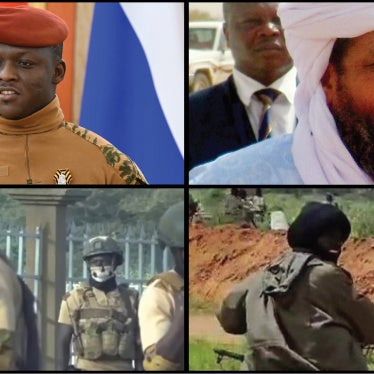
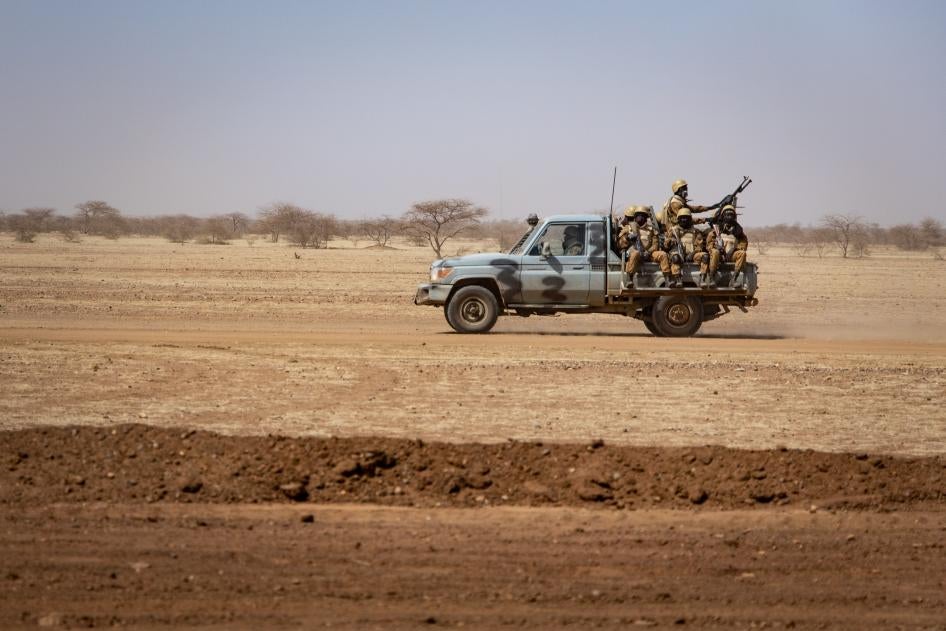
Burkina Faso’s Council of Ministers adopted a draft law on April 24 to create a 100,000-strong military reserve by the end of 2026. Defense Minister Célestin Simporé framed the move as a way to rapidly mobilize citizens to respond to security threats and “embed Patriotic Defense within a logic of citizen participation.”
On face value, adding tens of thousands of soldiers would appear to bolster national security, but in Burkina Faso it also risks accelerating an already serious human rights crisis.
Burkina Faso’s military already relies on tens of thousands of civilian auxiliaries known as the Volunteers for the Defense of the Homeland (Volontaires pour la défense de la patrie, VDPs). In several reports, Human Rights Watch has documented how VDPs have committed numerous grave abuses, including summary executions, looting, and forced displacement of minority communities.
Expanding this model risks replicating and multiplying these harms.
The proposed reserve would include both experienced military personnel and newly trained civilians. Yet the massive scale and short timeline raise concerns about the nature and duration of the training to realistically deliver a rights-respecting military reserve.
There are also questions about oversight. The current environment in Burkina Faso, marked by widespread and systematic rights violations by armed forces personnel and VDPs as well as the government’s recent suspension of organizations that provided training on human rights, casts serious doubt on the junta’s ability to curb abuses by the new force.
Unless carefully managed, recruiting and arming civilians to be reservists can blur the line between combatants and noncombatants, heightening risks for the wider population. Human Rights Watch has documented that communities hosting VDPs become more vulnerable to attacks by Islamist armed groups, which often treat these communities as if they were genuine military targets.
The junta should learn the lessons of the disastrous VDP program. Islamist armed groups have thrived not only on battlefield gains but on governance vacuums, local grievances, and the erosion of state trust. Expanding poorly trained forces does little to address these problems and may aggravate them by increasing abuses.
Burkina Faso faces grave security threats. But a strategy that threatens rather than improves the protection of civilians risks undermining both human rights and national security.