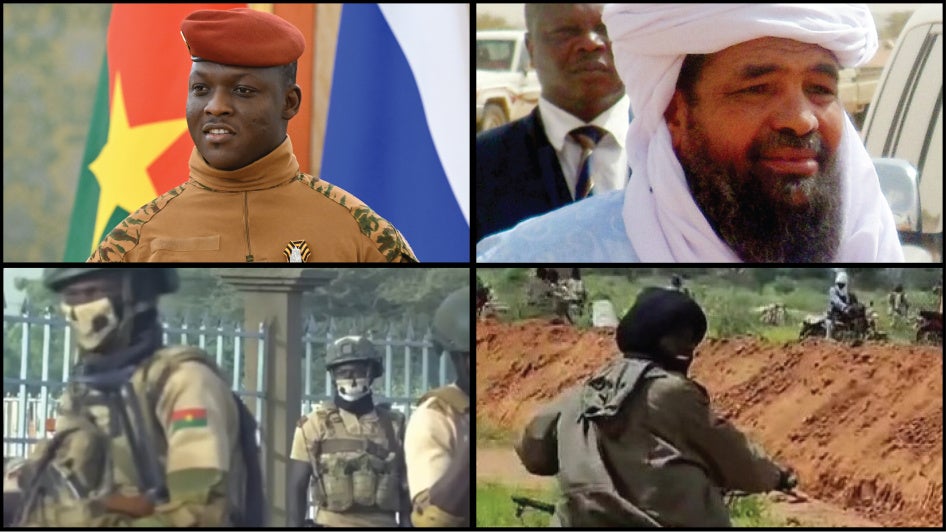
- The Burkina Faso military with its allied militias and an Al Qaeda-linked armed group have killed more than 1,800 civilians and forcibly displaced tens of thousands since 2023.
- The junta is committing horrific abuses itself, failing to hold those responsible on all sides to account, and curtailing reporting to obscure the suffering of civilians caught in the violence.
- Regional bodies and partner governments should work with, and press, Burkina Faso’s authorities to tackle grave abuses by all sides and provide genuine accountability.
(Nairobi, April 2, 2026) – The Burkina Faso military with its allied militias and an Al Qaeda-linked armed group have killed more than 1,800 civilians and forcibly displaced tens of thousands since 2023, Human Rights Watch said in a report released today. These atrocities, including the government’s ethnic cleansing of Fulani civilians, amount to war crimes and crimes against humanity for which senior leaders on all sides may be liable.
The 316-page report, “‘None Can Run Away’: War Crimes and Crimes Against Humanity in Burkina Faso by All Sides,” documents the devastating impact on civilians of an armed conflict that has received scant global attention. Researchers documented 57 incidents involving Burkinabè military forces and allied militias known as the Volunteers for the Defense of the Homeland (VDPs), and the Islamist armed group Jama’at Nusrat al‑Islam wal‑Muslimin (JNIM) since the current military junta seized power in September 2022. Human Rights Watch issued a question and answer document to explain the legal issues involved.

Read a text description of this video
Narrator: There’s a brutal conflict going on in West Africa that many people have never heard of. In Burkina Faso, government forces have been fighting Islamist armed groups for more than a decade. All sides have made attacks on civilians a key part of their strategies, killing thousands. More than 2 million people have been displaced by the fighting.
Soundbite: “That day, 25 people died on the spot. Some were cut up by the impact of the airstrike; others had their heads cut off. Some died from choking on the dust they inhaled after the strike. After the strike, everyone started to flee.”
Narrator: So why haven’t many people heard about this crisis? Burkina Faso’s military government has banned or silenced local and international media and created a climate of fear to deter people from speaking out.
Soundbite: “The VDPs [government-backed militia] surrounded us, they told us to watch what they were going to do. There were people who had been stabbed with iron bars. When they finished stabbing, they slit their throats.”
Narrator: Human Rights Watch spent a year and a half documenting 57 attacks across Burkina Faso. We spoke with nearly 400 witnesses over the phone or in neighboring countries where they had fled and documented the killing of at least 1,800 civilians between 2023 and 2025. But this may be the tip of the iceberg.
Narrator: Since President Ibrahim Traoré took power in a military coup in 2022, he has made the fight against Islamist armed groups his main objective.
Narrator: The military has armed tens of thousands of people in a militia called the Volunteers for the Defense of the Homeland, commonly known as VDPs. If a community has VDPs, JNIM, one of the main Islamist armed groups, often targets the entire population.
And government forces have massacred civilians simply for living in areas that JNIM controls.
Narrator: The military and VDPs have especially targeted ethnic Fulani people whom they accuse of supporting JNIM.
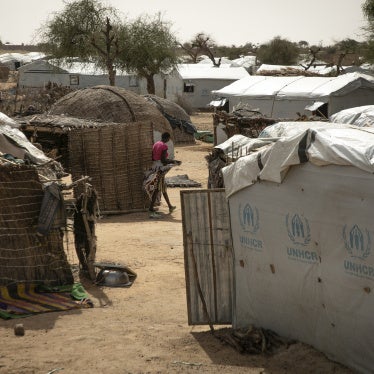
Entire Fulani communities have been attacked and forcibly displaced, and their property looted, acts that amount to ethnic cleansing.
Soundbite: They [VDPs] told us: “It’s [President] Ibrahim Traoré who sent us to kill you.” And they began slitting the throats of people in front of us. They called us “terrorists,” which we are not.
Narrator: Military abuses have fueled recruitment by JNIM and the cycle of retaliatory attacks has led to widespread violence against civilians. All sides have committed abuses that amount to war crimes and crimes against humanity. To seek justice for these crimes, we needed to identify who was responsible.
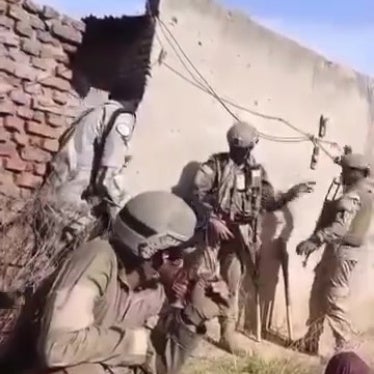
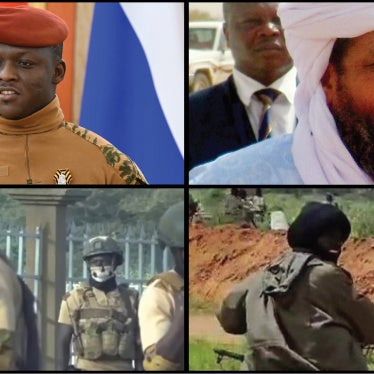
Narrator: So, we used AI to go through thousands of hours of footage from Burkina Faso’s state-owned news channel and a social media platform used by JNIM. The software we developed identified key information about JNIM, military units, and the names of people involved in specific attacks. This information, along with witness accounts, allowed us to identify members of the Burkinabé armed forces and JNIM who were in a position of command during each attack.
Narrator: These include: Capt. Ibrahim Traoré, the president of Burkina Faso, and top military commanders. It also includes the leaders of JNIM, such as Iyad Ag Ghaly, Amadou Kouffa, and Jafar Dicko.
Narrator: None have been held accountable. States should investigate these serious international crimes, and the International Criminal Court should bring perpetrators to justice. Accountability and civilian protection cannot wait.
“The scale of atrocities taking place in Burkina Faso is mind-boggling, as is the lack of global attention to this crisis,” said Philippe Bolopion, executive director of Human Rights Watch. “The junta is committing horrific abuses itself, failing to hold those responsible on all sides to account, and curtailing reporting to obscure the suffering of civilians caught in the violence.”
Human Rights Watch interviewed more than 450 people in Burkina Faso, Benin, Côte d’Ivoire, Ghana, and Mali, and by phone about grave abuses between January 2023 and August 2025. Researchers also carried out extensive open-source analysis, examining satellite imagery, thousands of hours of audiovisual footage, and official documents to verify incidents and identify commanders on all sides.
Under President Ibrahim Traoré, the junta has carried out a broad crackdown on the political opposition, peaceful dissent, and independent media, fostering an atmosphere of terror and severely restricting the flow of information about the conflict and its toll.
Since 2016, JNIM and other Islamist armed groups have waged an insurgency against successive governments in Burkina Faso as part of a broader offensive across Africa’s Sahel region. JNIM has killed civilians and looted property leading the junta to conduct brutal counterinsurgency campaigns.Murder and other grave abuses against civilians, often from communities accused of supporting the opposing side, have become a key tactic of the junta as well as of JNIM.
In one of the deadliest incidents, the Burkinabè military and allied militias killed more than 400 civilians in December 2023 in about 16 villages near the northern town of Djibo during an operation known as “Operation Tchéfari 2 (Warriors’ Honey in Fulfulde).” “[The militia] opened fire,” said a 35-year-old woman. “My two daughters died on the spot.” Bullets seriously injured her and her 9-month-old son. She heard a militia member say: “Make sure no one is breathing before heading out.”
The military and militia have targeted Fulani communities because of their alleged support for Islamist armed groups, resulting in the ethnic cleansing of entire communities.
In November 2023, government-allied militias killed 13 Fulani civilians, including 6 women and 4 children, in the western village of Bassé. “All the bodies, except for that of my son, were grouped together in the courtyard, blindfolded with their torn clothes and their hands tied behind their backs… riddled with bullets,” said a 41-year-old man. “My son …was lying on his stomach. He had been shot in the back of the neck.”
JNIM has used widespread threats and violence to dominate and punish communities as part of efforts to expand territorial control in rural areas. On August 24, 2024, JNIM killed at least 133 civilians, including dozens of children, in the central town of Barsalogho, accusing the whole community of supporting the VDPs.
“[JNIM fighters] shot continuously, as if they had plenty of ammunition,” said a 39-year-old man. “People were falling like flies. They came to exterminate us. They did not spare anyone.” Five of his family members were killed in the attack.
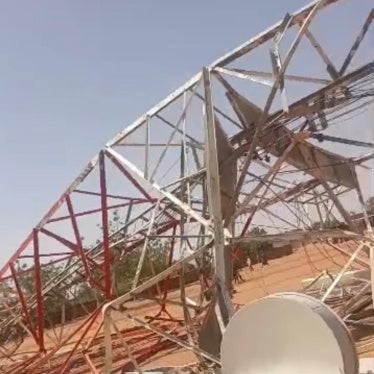
JNIM has besieged dozens of towns and villages across Burkina Faso, blocking the movement of goods and people, resulting in hunger and illness. The armed group has planted improvised explosive devices on roads, and destroyed bridges, water sources, and communications infrastructure.
All sides are responsible for the war crimes of willful killing, attacks on civilians and civilian objects, pillage and looting, and forced displacement, Human Rights Watch found. They have also committed murder and forced displacement as part of attacks on a civilian population, amounting to crimes against humanity, Human Rights Watch said.
Human Rights Watch found that President Traoré, supreme commander of the armed forces, and six senior Burkinabè military commanders may be liable as a matter of command responsibility for grave abuses and should be investigated. Iyad Ag Ghaly, the JNIM supreme leader who is wanted by the International Criminal Court (ICC) for alleged crimes in Mali in 2012-2013, and four JNIM commanders may be liable as a matter of command responsibility for abuses by JNIM in Burkina Faso and should also be investigated.
Members of all warring parties in the country have near-total impunity. Victims and their families said they do not trust national justice institutions or cannot access them. Government officials have either denied or downplayed allegations of abuse, especially by military forces and militias, and failed to conduct credible investigations.
Governments have taken little action in the face of these atrocity crimes, Human Rights Watch said. Burkina Faso’s international partners—including the United Nations, African Union, European Union and its member states, and the United States—should address Burkina Faso’s longstanding cycles of abuse and impunity. They should promote accountability, including by imposing targeted sanctions against abusive commanders that Human Rights Watch identified. The Office of the Prosecutor of the ICC should open a preliminary examination into alleged war crimes and crimes against humanity committed by all parties in Burkina Faso since September 2022.
“The world needs to recognize the magnitude of the atrocities unfolding in Burkina Faso to bring them to an end,” Bolopion said. “Regional bodies and partner governments should work with, and press, Burkina Faso’s authorities to tackle grave abuses by all sides and provide genuine accountability.”