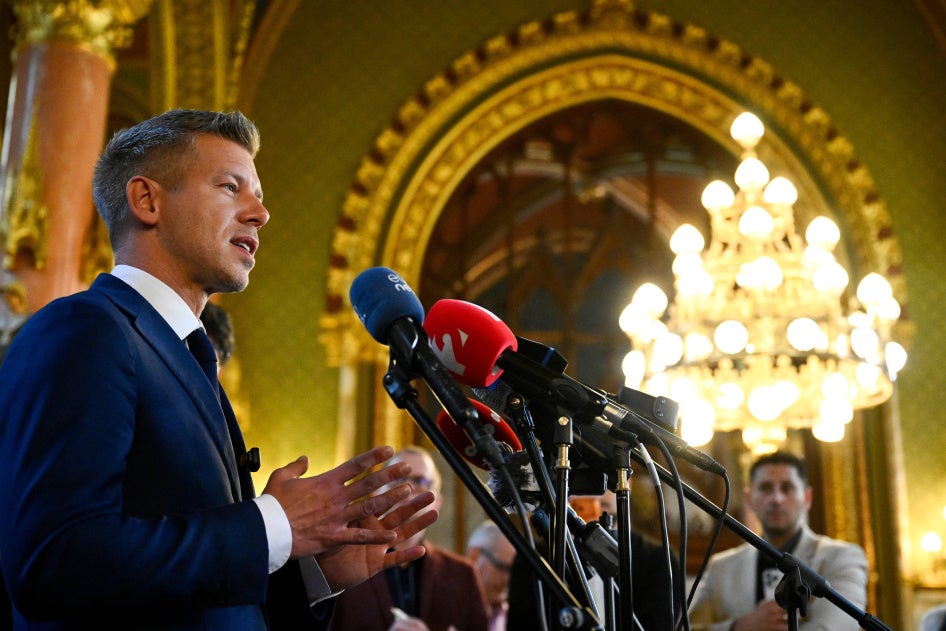
At his first international press conference, Hungary’s prime minister-elect Péter Magyar pledged to reverse his country’s move to leave the International Criminal Court (ICC).
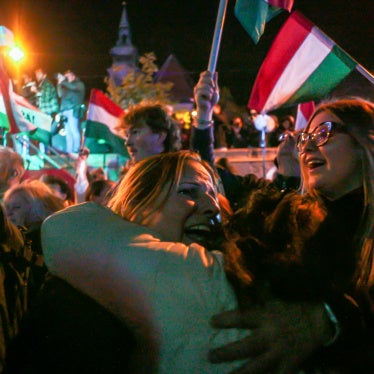
Magyar won a landslide victory in Hungary’s April 12 election, where he campaigned, among other things, on restoring rule of law and ties with the EU, opposing former Prime Minister Viktor Orbán.
Today, ICC membership is required of EU candidate countries in order to accede to the EU which has made legally binding commitments to promote and protect the court. Magyar acknowledged that it is in Hungary’s interest to remain an ICC member, echoing earlier calls by Hungarian lawyers that the withdrawal would tarnish Hungary’s global standing.
Orbán had announced Hungary’s intention to withdraw from the ICC in April 2025, while hosting Israeli Prime Minister Benjamin Netanyahu, who is wanted by the ICC for war crimes and crimes against humanity in Gaza. The withdrawal is set to take effect on 2 June 2026. If not halted, Hungary will become the only EU member state outside the ICC.
The Magyar government has a short window to reverse course, and time is of the essence. With a supermajority in the parliament and clear precedents from other countries halting their own withdrawals from the court, nothing stands in the way of swift, decisive action.
Notably, Magyar also publicly acknowledged Hungary’s obligations as an ICC member and committed to executing the court’s arrest warrant against Netanyahu should he visit Hungary for the 1956 Revolution Anniversary in October 2026. This is an important shift from the previous government, which flouted its legal obligation to arrest Netanyahu.
It’s a powerful reminder to all individuals wanted by the court that their world has gotten smaller. Other EU leaders who have, at times, waivered in their own commitment to cooperate with the court should publicly project the same clarity.
Once in office, Hungary’s new government should turn the page and restore respect for fundamental rights and democratic safeguards in the country. Reversing the Orbán government’s withdrawal from the ICC is one immediate step the new government should take to break with his predecessor’s anti-rights record and Hungary’s isolation within the EU.
Magyar’s statements are a good start. He should now follow through and bring Hungary back into the community of states committed to ensuring justice for serious international crimes.