- What international law governs the armed conflict?
- What are the basic principles of the laws of war?
- What are lawful targets of military attack?
- What kinds of military attacks are prohibited?
- Does international human rights law apply during armed conflict?
- Are statements by government officials seemingly endorsing war crimes themselves war crimes?
- What are the obligations of parties to the conflict regarding fighting in populated areas?
- What limits exist on the use of explosive weapons in populated areas?
- Are parties to the conflict permitted to target “dual use” infrastructure?
- Are attacks on critical civilian infrastructure, such as electric power plants, oil depots, and desalinization plants lawful?
- Does environmental harm need to be considered in attacks on infrastructure?
- Can warring parties lawfully use antipersonnel landmines and cluster munitions?
- Is the use of white phosphorous lawful?
- Do radio and television stations have special protection from attack?
- Do journalists have special protection from attack?
- Do the laws of war regulate cyberattacks?
- Are internet and phone shutdowns in conflict areas lawful?
- Are general evacuation orders to civilian populations lawful?
- Who is entitled to prisoner-of-war status and how must POWs be treated?
- When can civilians be detained by a belligerent party and how must they be treated?
- How can warring parties better protect education from attack?
- Must parties to a conflict provide humanitarian organizations access to POWs and other detainees?
- What obligations do parties to the conflict have to populations in need?
- Who can be held responsible for violations of international humanitarian law?
- Who is primarily responsible for ensuring accountability for serious violations of international law?
- Can war crimes or crimes against humanity committed in the region be tried before the International Criminal Court?
- Can other countries prosecute international crimes committed in the conflict?
On February 28, 2026, the United States and Israel carried out coordinated strikes on Iran. Amid dozens of strikes that day, US forces attacked a primary school in Minab in southern Iran, killing more than 160 people, including many schoolchildren.
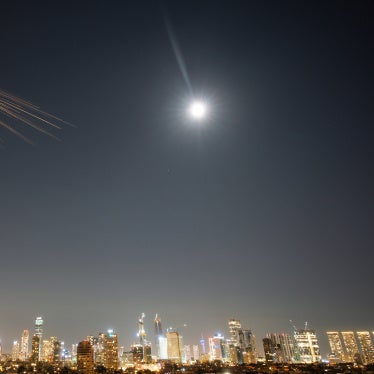
Iran responded within hours of the attacks with ballistic missiles and drones targeting Israel and US military installations across the Gulf States. Attacks struck Israeli cities and several countries hosting US military personnel, including Bahrain, Kuwait, Oman, Qatar, Saudi Arabia, Jordan, Iraq, and the United Arab Emirates, causing some civilian casualties and infrastructure damage.
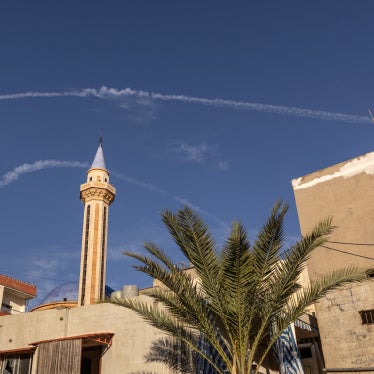
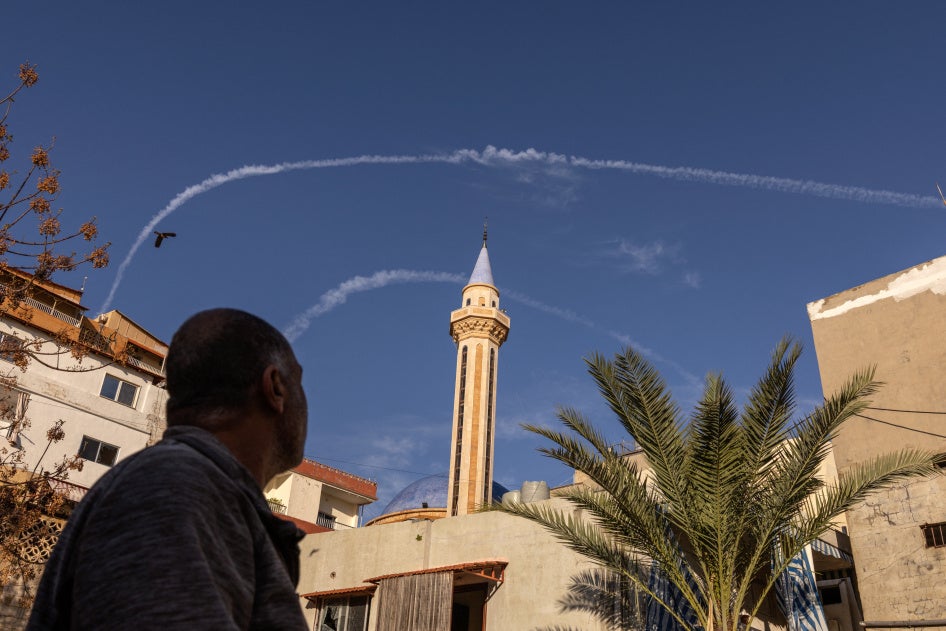
Early on March 2, Hezbollah fired rockets and drones into northern Israel, after which the Israeli military carried out over 70 strikes across Lebanon that day. On March 5, the Israeli military issued a displacement order for the entire population of Lebanon south of the Litani River, and on March 12 issued another displacement order for the population south of the Zahrani River, about 40 kilometers north of the Israel-Lebanon border.
On March 28, the Houthi armed group in Yemen began launching ballistic missiles at Israel.
Since the start of the conflict, the US, Israel, Iran, and Hezbollah have carried out thousands of strikes within the region, killing thousands of people. In Lebanon, over 1.2 million people have been displaced. Many strikes, including against military objectives, have hit urban areas and infrastructure, producing high casualties, displacement, and environmental hazards.
Iranian forces have also attacked or threatened to attack commercial ships in the Strait of Hormuz. The curtailment of shipping, along with Israeli and Iranian attacks on major energy infrastructure, has contributed to significant global cost increases in oil, liquified natural gas, and other energy commodities, impacting not only the region, but globally. Top of FormBottom of Form
Hostilities between the US and Israel and Iran constitute an international armed conflict governed by international humanitarian treaty law, also known as the laws of war (primarily the four Geneva Conventions of 1949). Although none of the countries are parties to the First Additional Protocol of 1977 (Protocol I) on the methods and means of war, the protocol’s provisions are generally considered to be reflective of customary international humanitarian law.
A number of Gulf countries—including the United Arab Emirates, Saudi Arabia, Qatar, Kuwait, Bahrain, and Jordan — have been intercepting Iranian missiles and drones, making them effective parties to the conflict.
The fighting between Hezbollah and Israel, as well as between the Houthis in Yemen and Israel, are considered non-international armed conflicts governed by Common Article 3 to the 1949 Geneva Conventions and customary laws of war.
International humanitarian law provides protections to civilians and other noncombatants from the hazards of armed conflict. It addresses the conduct of hostilities by all parties to a conflict. Foremost is the rule that parties to a conflict must distinguish at all times between combatants and civilians. Civilians may never be the deliberate target of attacks. Moreover, parties to the conflict are required to take all feasible precautions to minimize harm to civilians and civilian objects and not to conduct attacks that fail to discriminate between combatants and civilians, or would cause disproportionate harm to the civilian population.
The laws of war limit attacks to “military objectives.” Military objectives are personnel and objects that are making an effective contribution to military action and whose destruction, capture, or neutralization offers a definite military advantage. This would include enemy fighters, weapons and ammunition, and objects being used for military purposes, such as buildings and vehicles. While humanitarian law recognizes that civilian casualties are inevitable during armed conflict, it imposes a duty on parties to the conflict at all times to distinguish between combatants and civilians, and to target only combatants and other military objectives. Civilians lose their immunity from attack during the time they are “directly participating in the hostilities” – such as by assisting combatants during a battle.
The laws of war also protect “civilian objects,” which are defined as anything not considered a military objective. Direct attacks against civilian objects—such as homes, apartments and businesses, places of worship, hospitals, schools, and cultural monuments—are prohibited unless they are being used for military purposes and thus become military objectives. This would be the case if military forces are deployed in what are normally civilian objects. Where there is doubt about the nature of an object, the warring party must presume it to be civilian.
Direct attacks on civilians and civilian objects are prohibited. The laws of war also prohibit indiscriminate attacks. Indiscriminate attacks are those that strike military objectives and civilians or civilian objects without distinction. Examples of indiscriminate attacks are those that are not directed at a specific military objective or that use weapons that cannot be directed at a specific military objective.
Prohibited indiscriminate attacks include area bombardment, which are attacks by artillery or other means that treat as a single military objective a number of clearly separated and distinct military objectives located in an area containing a concentration of civilians and civilian objects. Military commanders must choose a means of attack that can be directed at military targets and will minimize incidental harm to civilians. If the weapons used are so inaccurate that they cannot be directed at military targets without imposing a substantial risk of civilian harm, then they should not be deployed.
Attacks that violate the principle of proportionality are also prohibited. An attack is disproportionate if it may be expected to cause incidental loss of civilian life or damage to civilian objects that would be excessive in relation to the concrete and direct military advantage anticipated from the attack.
International human rights law applies at all times, including during armed conflict. Humanitarian law norms, particular on the use of force against combatants, may supersede human rights norms as the lex specialis, or the more specific legal norm under the circumstances.
The US and Israel are party to a number of international human rights treaties, including the International Covenant on Civil and Political Rights (ICCPR) and the Convention against Torture and Other Cruel, Inhuman or Degrading Treatment or Punishment (CAT). Iran is a party to the ICCPR but not the CAT. These treaties outline guarantees for fundamental rights, many of which correspond to the rights to which combatants and civilians are entitled under international humanitarian law (e.g. the prohibition on torture, the requirements for nondiscrimination, the right for trials to be fair).
On April 7, US President Donald Trump in a social media post threatened Iranian authorities and people in Iran, stating, “A whole civilization will die tonight, never to be brought back again.” On March 21, Trump warned in a social media post that if Iran didn’t reopen the Strait of Hormuz, the United States would “hit and obliterate their various power plants.” He also threatened to “bring them back to the Stone Age.” Iranian officials have wrongfully claimed that all of an opponent country’s companies, banks, and commercial ships are military objectives. Among other concerning comments, the Israeli military’s Arabic spokesperson issued a statement calling for representatives of the Iranian government to leave Lebanon before they were targeted.
Most statements by senior government officials, no matter how disturbing, are not in themselves war crimes. However, if that party commits the specified war crimes, the statement could be indicative of criminal intent if the individual is later prosecuted. Under the ICC’s Rome Statute, officials can also be prosecuted for ordering, soliciting or inducing commission of a crime that has occurred or was attempted, provided there is a sufficient link between the statement and the offense.
In limited cases, statements themselves may constitute crimes. US Defense Secretary Hegseth stated on March 13 that “no quarter” would be given in Iran. Declaring no quarter––the refusal to spare enemy combatants’ lives by accepting their surrender––is a war crime. Incitement to genocide is also a crime under the Genocide Convention.
The laws of war do not prohibit fighting in urban areas, although the presence of many civilians places greater obligations on parties to the conflict to take steps to minimize harm to civilians. The laws of war require parties to a conflict to take constant care during military operations to spare the civilian population and to “take all feasible precautions” to avoid or minimize the incidental loss of civilian life and damage to civilian objects. These precautions include doing everything feasible to verify that the objects of attack are military objectives and not civilians or civilian objects, and giving “effective advance warning” of attacks when circumstances permit.
Forces deployed in populated areas must avoid locating military objectives near densely populated areas and endeavor to remove civilians from the vicinity of military activities. Belligerents are prohibited from using civilians to shield military objectives or operations from attack. “Shielding” refers to purposefully using the presence of civilians to protect military forces or areas, making them immune from attack.
The attacking party is not relieved of its obligation to take into account the risk to civilians simply because it considers the defending party responsible for locating legitimate military targets within or near populated areas.
The use of explosive weapons in populated areas is one of the gravest threats to civilians in contemporary armed conflict. Explosive weapons encompass a range of conventional air-dropped and surface-fired weapons, including aircraft bombs, artillery projectiles, mortar shells, rockets, and missiles. Their use in cities, towns, and villages heightens risks to civilians and civilian objects.
The humanitarian consequences of explosive weapons are foreseeable and exacerbated when those weapons spread their effects over a wide area. Explosive weapons can have such effects if they have a broad blast or fragmentation radius, are inaccurate, or deliver multiple munitions at once, or have a combination of these characteristics.
Bombing and shelling populated areas has long-term indirect, or “reverberating,” effects on civilians years after conflicts end. Explosive weapons damage or destroy critical civilian infrastructure, such as power plants, healthcare facilities, and water and sanitation systems, interfering with basic services. The interruptions to services like health care and education in turn infringe on human rights. The use of explosive weapons in populated areas also damages the environment and cultural heritage and causes displacement.
The Political Declaration on the Protection of Civilians from the Use of Explosive Weapons in Populated Areas is a non-binding political commitment. The Declaration calls on countries to adopt “policies and practices to help avoid civilian harm, including by restricting or refraining as appropriate from the use of explosive weapons in populated areas,” and enumerates specific commitments that countries should fulfill to reduce that impact, including through national policies and practices, data collection, victim assistance, and humanitarian access.
Since June 2022, 90 countries have endorsed the declaration; the US was among the states that endorsed it at the launch conference in 2022. Israel and Iran have not endorsed.
Civil airports, roads, bridges, oil depots and desalinization plants are civilian objects that become military objectives subject to attack if they are being used for military purposes or military objectives are located on or within them. Even then, the rule of proportionality applies, requiring the parties to the conflict to weigh the short- and long-term harm on civilians against the expected military advantage of attacking them. They must consider all ways of minimizing the impact on civilians; and they should not undertake attacks if the expected civilian harm outweighs the anticipated military advantage.
- Are attacks on critical civilian infrastructure, such as electric power plants, oil depots, and desalinization plants lawful?
Attacks on civilian infrastructure are presumptively prohibited, meaning that such an object cannot be attacked unless it is serving a concrete and direct military purpose. For example, a power plant or oil refinery is protected from attack unless it is providing electricity or gasoline to a warring party’s military units.
However, an attack on infrastructure that is a military objective is still unlawful if the expected harm to civilians or civilian objects is disproportionate compared to the anticipated military benefit of the attack.
Proportionality assessments need to consider reasonably foreseeable harm to the population. Warring parties have a legal obligation to avoid damage and destruction to critical civilian infrastructure and consequent disruption of services essential to the survival of the civilian population, such as vital water and electricity supplies.
Under customary international humanitarian law, the methods and means of warfare must consider the protection and preservation of the natural environment. All feasible precautions must be taken to minimize incidental damage to the environment. For instance, attacks on fuel depots or oil refineries that are military objectives are prohibited if the expected incidental damage to the environment would be disproportionate to the direct military advantage anticipated.
Attacks that are intended or may be expected to cause “widespread, long-term and severe damage” to the nature environment are prohibited. The absence of scientific certainty as to the effects of certain military operations on the environment does not absolve a warring party from taking necessary precautions. Destruction of the natural environment may not be used as a weapon.
The US, Israel, and Iran are not parties to the 1997 Mine Ban Treaty or the 2008 Convention on Cluster Munitions.
The Mine Ban Treaty bans use, stockpiling, production, and transfer of antipersonnel mines and requires destruction of stocks, clearance of mined areas, and assistance to victims.
Antipersonnel mines cannot distinguish between soldiers and civilians, making their use unlawfully indiscriminate under international humanitarian law, including for countries that are not party to the Mine Ban Treaty. Uncleared landmines pose a long-term danger until cleared and destroyed, causing suffering for generations. Mined land can drive displacement of the civilian population, hinder the delivery of humanitarian aid, and prevent agricultural activities. Civilians made up 90 percent of all recorded landmine casualties in 2024, and children accounted for 46 percent of casualties when the age was recorded.
Cluster munitions can be fired from the ground by artillery, rockets, missiles, or mortars, or dropped by aircraft. They typically open in the air, dispersing multiple explosive submunitions or bomblets over a wide area. Due to their wide area effect, they cannot distinguish between civilians and combatants, especially when used in populated areas. In addition, many submunitions fail to explode on initial impact, leaving unexploded duds that can indiscriminately injure and kill like landmines for years, until they are found and destroyed.
States parties to the Convention on Cluster Munitions, which has not been ratified by the US, Israel, or Iran, are obligated never to use, produce, stockpile, or transfer these weapons under any circumstances and required to destroy stockpiles, clear cluster munition remnants, and assist victims. The indiscriminate nature of cluster munitions, similar to that of antipersonnel landmines, makes them unlawful under international humanitarian law regardless of whether a state is party to the convention. States should reinforce the global ban on cluster munitions and call upon those still using or producing these indiscriminate weapons to promptly join the treaty banning them.
White phosphorus is a chemical substance dispersed in artillery shells, bombs, and rockets that ignites when exposed to oxygen. It can be used for multiple purposes, including to obscure, mark, signal, or directly attack military personnel and materiel. It can set homes, agricultural areas, and other civilian objects on fire. When it comes into contact with the skin, white phosphorus causes extremely painful burn injuries that are difficult to treat and lead to long-term physical and psychological harm. Under the laws of war, the use of airburst white phosphorus is unlawfully indiscriminate in populated areas and does not meet the legal requirement to take all feasible precautions to avoid civilian harm.
Human Rights Watch has previously documented the Israeli military’s widespread use of white phosphorus between October 2023 and May 2024 across border villages in southern Lebanon, which put civilians at grave risk and contributed to civilian displacement. On March 3, 2026, the Israeli military unlawfully used artillery-fired white phosphorus munitions over homes in the southern Lebanese town of Yohmor.
Attacks on broadcast facilities used for military communications are legitimate under the laws of war. Civilian television and radio stations are legitimate targets only if they meet the criteria for a legitimate military objective: that is, if they are used in a way that makes an “effective contribution to military action” and their destruction in the circumstances ruling at the time offers “a definite military advantage.”
Broadcast facilities could become military targets if they are used to send military orders or otherwise concretely to advance military operations. However, civilian broadcasting facilities do not become legitimate military targets simply because they broadcast pro-government or pro-opposition propaganda. It is unlawful to attack facilities that solely shape civilian opinion—these facilities do not directly contribute to military operations.
Should broadcast facilities become legitimate military objectives because of their use to transmit military communications, the principle of proportionality in attack must still be respected. This means that attacking forces should verify at all times that the risks to the civilian population in undertaking any such attack do not outweigh the anticipated military benefit. They should take special precautions with buildings in urban areas, including giving advance warning of an attack whenever possible.
Opposition forces are not prohibited under international law from occupying broadcast facilities (or other civilian structures except hospitals) and making use of them. However, the presence of opposition fighters or the use of the broadcast facilities for military purposes may make the facilities military objectives subject to attack.
Journalists, unless they are taking direct part in hostilities, are civilians and may not be targets of an attack. Any risks to journalists as part of the civilian population must also be verified in an attack in which such risk may be expected, and the risk must not outweigh the anticipated military benefit.
While journalists may be subject to any legitimate limitations on rights, such as freedom of expression or freedom of movement, imposed in accordance with law and to the extent strictly required by the exigencies of the situation, they also may not be targeted for arrest, detention, or other forms of punishment or retaliation simply for doing their work as journalists.
Computer network attacks, or “cyberwarfare,” are not specifically addressed in the Geneva Conventions, but the basic principles and rules on the methods and means of warfare remain applicable. Cyberattacks must target military objectives and be neither indiscriminate nor disproportionate. For example, an attack on an electrical grid, data center, or computer network that facilitates the delivery of essential services risks civilians being deprived of drinking water, medical care, and electricity is likely to be unlawfully disproportionate whether carried out by airstrikes or cyberwarfare. Prohibitions on perfidy, collective punishment, and reprisals against civilians remain applicable.
Fundamental rights are at stake when governments engage in cyberattacks or cyberwarfare. In 2015, the UN General Assembly endorsed a report by an appointed Group of Governmental Experts that sets out a consensus view on the applicability of international humanitarian and human rights law to cyberspace and includes commitments to norms for state behavior. These norms include not conducting or knowingly supporting Information and Communication Technology (ICT) activity that intentionally damages critical infrastructure or otherwise impairs its use and operation to provide services to the public, as well as not knowingly allowing their territory to be used for internationally wrongful acts using ICTs. A parallel UN Group of Governmental Experts report has flagged examples of critical infrastructure providing essential services to the public to include not only hospitals but also energy, water and sanitation, education and financial services.
Shutting down the internet during a conflict, including mobile data, which is regularly used for both civilian and military purposes, would need to take into account the basic principles of the laws of war, including of necessity and proportionality. The principle of necessity permits measures that accomplish a legitimate military objective that are not otherwise prohibited by international humanitarian law. Shutting down the internet may serve a legitimate military purpose, such as denying belligerent forces a means of communicating with one another and carrying out attacks. However, the principle of proportionality prohibits actions in which the expected civilian harm is excessive in relation to the anticipated military advantage.
Internet and phone shutdowns can cause considerable harm to the civilian population, including leading to possible injury and death by preventing civilians from communicating with each other about safety considerations, access to medical facilities, and sources of food and shelter. They also hinder the work of journalists and human rights monitors, who can provide information on the situation on the ground, including the reporting of possible laws-of-war violations. Phone and internet shutdowns hamper the ability of humanitarian agencies to assess and provide assistance to populations at risk. The lack of information regarding the conditions and circumstances facing the affected population may also increase the likelihood of injury and death.
Similarly, under international human rights law, governments have an obligation to ensure that internet-based restrictions are provided by law and are a necessary and proportionate response to a specific security concern. General shutdowns violate multiple rights, including the rights to freedom of expression and information, and hinder others, including the right to free assembly. In their 2015 Joint Declaration on Freedom of Expression and Responses to Conflict Situations, UN experts and special rapporteurs declared that, even in times of conflict, “using communications ‘kill switches’ (i.e. shutting down entire parts of communications systems) can never be justified under human rights law.”
Forced displacement of civilians is prohibited under the laws of war, except in cases in which civilian security is involved or for imperative military reasons.
The laws of war require parties to a conflict to take constant care during military operations to spare the civilian population and to “take all feasible precautions” to avoid or minimize the incidental loss of civilian life and damage to civilian objects. These precautions include doing everything feasible to verify that the objects of attack are military objectives and not civilians or civilian objects, giving “effective advance warning” of attacks when circumstances permit and refraining from an attack if the requirement for proportionality will be violated.
Warnings that do not give civilians adequate time to leave for a safer area would not be considered “effective” under the law. Broad warnings unrelated to any imminent attack cannot be considered “effective” and may instead improperly instill fear in the affected population.
Customary international law prohibits “acts or threats of violence the primary purpose of which is to spread terror among the civilian population.” Statements that call for evacuating areas that are primarily intended to cause panic among residents or compel them to leave their homes for reasons other than their safety would fall under this prohibition.
Civilians who do not evacuate following warnings remain fully protected by international humanitarian law. Moreover, some civilians are unable to heed a warning to evacuate, for reasons of health, disability, fear, or lack of any place else to go.
The Third Geneva Convention of 1949 states that prisoners of war (POWs) are combatants in an international armed conflict who have fallen into the hands of the enemy. Persons entitled to POW status include: members of the armed forces, members of militia or similar forces who meet certain conditions spelled out in the Third Geneva Convention, and persons accompanying the armed forces without belonging to them. Captured journalists connected to the adversaries’ armed forces are also entitled to POW protections. POWs cannot be prosecuted for the mere fact of having participated in the armed conflict. They may, however, be prosecuted for war crimes. Absent prosecution, POWs must be released and repatriated at the end of "active hostilities."
Ultimate responsibility for the well-being of POWs lies with the “Detaining Power”–that is, the central authorities–and not simply the military units that have captured them. The Third Geneva Convention regulates in considerable detail the rights and duties of POWs.
The Third Geneva Convention rules on POWs does not apply to non-international armed conflicts, such as the fighting between Hezbollah and Israel. Applicable instead is Common Article 3 and customary laws of war.
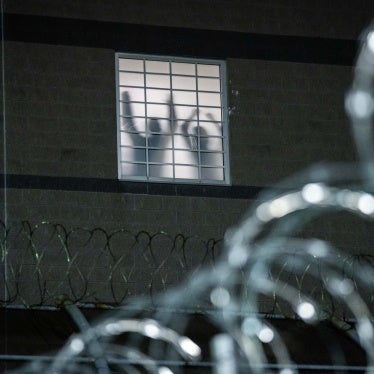
POWs and captured fighters must be humanely treated at all times. It is a war crime to willfully kill, mistreat or torture anyone in custody; cause great suffering or serious injury to body or health; or deprive them of the rights to a fair trial for war crimes.
The Fourth Geneva Convention, which addresses the responsibilities of an occupying power permits the internment or assigned residence of protected persons only for “imperative reasons of security.” This must be carried out in accordance with a regular procedure permissible under international humanitarian law and allow for the right of appeal and for review by a competent body at least every six months. The Fourth Geneva Convention provides detailed regulations for the humane treatment of internees.
Anyone deprived of liberty must be provided with adequate food, water, clothing, shelter, and medical attention. Detained women must be held in quarters separate from those for men. Children deprived of their liberty, unless with their families, must have quarters separate from adults.
The ban against torture and other ill-treatment is one of the most fundamental prohibitions in international human rights and humanitarian law. No exceptional circumstances can justify torture. When committed as part of a widespread and systematic attack against the civilian population, torture constitutes a crime against humanity under customary international law and the Rome Statute that established the International Criminal Court.
The Safe Schools Declaration is a non-binding international political commitment aimed at protecting students, teachers, schools, and universities during armed conflict. It was created in 2015 at a conference in Oslo, Norway.
Countries that endorse the Declaration commit to common-sense measures to better protect students, teachers, and schools during times of armed conflict. Among these is to refrain from using schools for military purposes, such as converting schools into military barracks or bases, by using a set of Guidelines that helps armed forces ensure the protection of schools under both the existing humanitarian and human rights legal frameworks.
As of 2026, about 123 countries have endorsed the Safe Schools Declaration, including Lebanon. The US, Israel and Iran have not.
The UN High Commissioner for Human Rights has noted that “in the context of armed conflict, schools … should not be used by military forces for any purpose in support of their military effort,” and has recommended that all states join the Safe Schools Declaration.
The Third and Fourth Geneva Conventions require parties to a conflict to permit access by the International Committee of the Red Cross (ICRC) and other relief agencies to POWs and interned civilians. The ICRC must be granted regular access to anyone deprived of their liberty to monitor the conditions of their detention and to restore contact with their families. The ICRC has full liberty to select the places it wishes to visit and to interview people confidentially. Visits may only be refused for reasons of “imperative military necessity,” and as an exceptional and temporary measure. Other humanitarian agencies may request access to POWs and detained civilians. The detaining authority shall facilitate such visits, though it may limit the number of humanitarian agencies visiting a person who is being held.
Under international humanitarian law, parties to a conflict must allow and facilitate the rapid and unimpeded passage of impartially distributed humanitarian aid to the population in need. The parties must consent to allow relief operations but may not refuse such consent on arbitrary grounds. They may take steps to control the content and delivery of humanitarian aid, such as to ensure that consignments do not include weapons. However, deliberately impeding relief supplies is prohibited.
In addition, international humanitarian law requires belligerent parties to ensure the freedom of movement of humanitarian relief personnel essential to the exercise of their functions. This movement can be restricted only temporarily for reasons of imperative military necessity.
Serious violations of international humanitarian law committed with criminal intent—that is, deliberately or recklessly—are war crimes. War crimes, listed in the “grave breaches” provisions of the Geneva Conventions and as customary law in the International Criminal Court statute and other sources, include a wide array of offenses—deliberate, indiscriminate, and disproportionate attacks harming civilians; hostage taking; using human shields; and imposing collective punishment, among others. Individuals also may be held criminally liable for attempting to commit a war crime, as well as assisting in, facilitating, aiding, or abetting a war crime.
Responsibility also may fall on people planning or instigating a war crime. Commanders and civilian leaders may be prosecuted for war crimes as a matter of command responsibility when they knew or should have known about the commission of war crimes and took insufficient measures to prevent them or punish those responsible.
- Who is primarily responsible for ensuring accountability for serious violations of international law?
Ensuring justice for serious violations is, in the first instance, the responsibility of the country whose nationals are implicated in the violations. Governments have an obligation to investigate serious violations that implicate their officials or other people under their jurisdiction. The government must ensure that military or domestic courts or other institutions impartially investigate whether serious violations occurred, identifying and prosecuting the individuals responsible for those violations in accordance with international fair-trial standards, and imposing punishments on individuals found guilty that are commensurate with their deeds. While non-state armed groups do not have the same legal obligation to prosecute violators of the laws of war within their ranks, they are nonetheless responsible for ensuring compliance with the laws of war and have a responsibility when they do conduct trials to do so in accordance with international fair trial standards.
- Can war crimes or crimes against humanity committed in the region be tried before the International Criminal Court?
The International Criminal Court (ICC) is a permanent international court with a mandate to investigate, charge, and put on trial people suspected of genocide, crimes against humanity, and war crimes committed after July 1, 2002.
However, it can only exercise jurisdiction over these crimes if:
- The crimes occurred in the territory of a country that is a party to the ICC treaty;
- The person accused of the crimes is a citizen of a country that is a party to the ICC treaty;
- A country that is not a party to the ICC treaty accepts the court’s authority for the crimes in question by submiltting a formal declaration to the court; or
- The UN Security Council refers the situation to the ICC prosecutor.
The US, Israel, Iran and Lebanon are not parties to the ICC’s Rome Statute.
Certain categories of grave crimes in violation of international law, such as war crimes and torture, are subject to “universal jurisdiction,” which refers to the ability of a country’s domestic judicial system to investigate and prosecute certain crimes, even if they were not committed on its territory, by one of its nationals, or against one of its nationals. Certain treaties, such as the 1949 Geneva Conventions and the Convention against Torture, obligate states to extradite or prosecute suspected offenders who are within that country’s territory or otherwise under its jurisdiction. Under customary international law, it is also generally agreed that countries are allowed to try those responsible for other crimes, such as genocide or crimes against humanity, wherever these crimes took place.