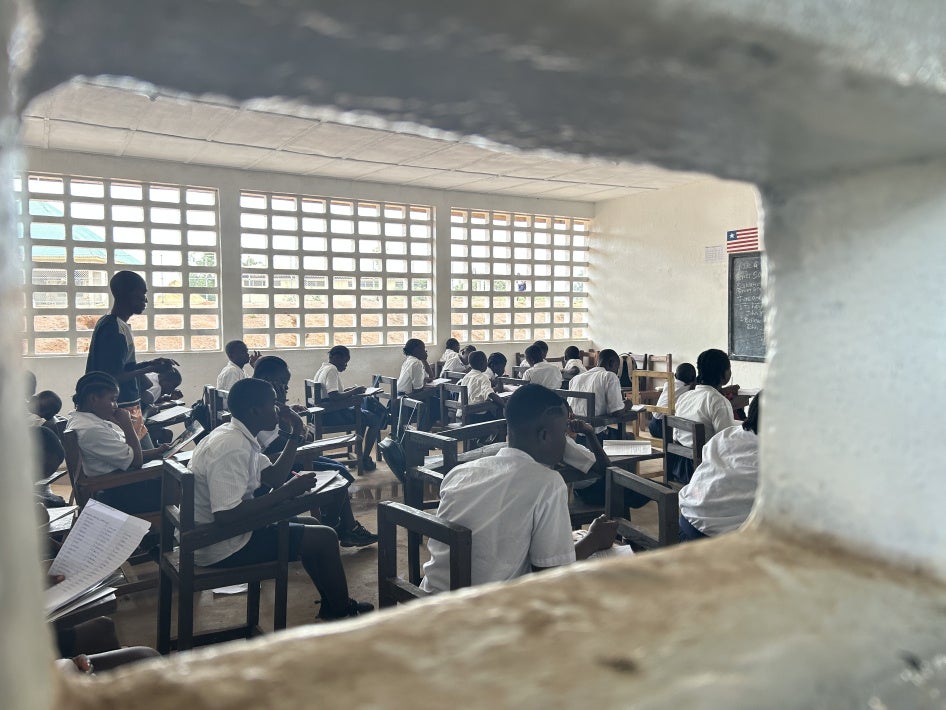
I was in Liberia in January and met a mother who supports her four children making concrete blocks. But her earnings are not enough to pay the registration fees charged by public schools. One daughter has already dropped out, and her 7-year-old son has never set foot in a classroom. “When I have the money, I will send him,” she told me. “Education is the best gift you can give your children.”
For millions of families around the world, that gift still comes with a price.
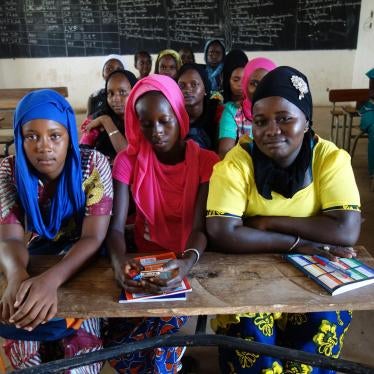
In Canada, every child enjoys free education from at least one year of kindergarten through the end of secondary school. But an estimated seventy percent of the world’s children—1.6 billion—live in countries that do not legally guarantee free education from pre-primary through secondary school. Hundreds of millions are out of school, often simply because their families cannot afford the fees.
At the United Nations, governments are considering a new treaty guaranteeing all children the right to free education from at least one year of kindergarten through secondary school. So far, 60 countries from every region have publicly pledged support for the proposed treaty. Canada has not.
That is surprising. Canada has long been a leader in global education, investing in schooling for girls, refugees, and other marginalized children. Supporting this treaty aligns with Canada’s commitments under the UN’s Sustainable Development Goals and would require no new spending.
Canada’s diplomats have asked whether the proposed treaty is necessary, given existing international law and commitments on education. But the gaps are clear. Existing treaties, such as the Convention on the Rights of the Child—written decades ago—only guarantee free education at the primary level. The Convention says nothing about early childhood education and does not oblige states to guarantee every child free secondary education. That’s simply not enough in today’s world. Canada should back the proposed treaty.
The treaty initiative is led by Sierra Leone and the Dominican Republic. Sierra Leone’s leadership is particularly powerful. After its civil war, the country introduced a Free Quality School Education policy aimed at eliminating tuition and core school fees at primary and junior secondary levels. Primary enrolment quickly doubled, and junior secondary enrolment quadrupled within a decade. In 2018, it extended free schooling to senior secondary school, boosting enrolment across all levels from 2 million to 3 million students in three years. In 2023, the government wrote the policy into law, guaranteeing 13 years of free education—from pre-primary through secondary school.
Just across the border in Liberia, the picture looks very different. Although Liberia’s Education Reform Act establishes free and compulsory primary education, in practice families frequently face registration fees and other school-related costs, with particularly significant costs at pre-primary and secondary levels. Many families delay sending their children to school for years because they cannot afford the fees. Completion rates remain low, and fewer than one in five children make it to senior secondary school.
I met a kindergarten teacher in Liberia who told me she had repeatedly pulled her own children out of school until she could pay their registration fees.
“There are so many times I have had to borrow money,” she said. She is now at least $300 in debt. “I don’t know if I can ever pay it back.”
Education is one of the most powerful tools we have to improve children’s lives. Free education helps break cycles of poverty, reduce inequality, and empower girls. Free education helps protect children from child labor, abuse, and early marriage. Starting education early—when children’s brains are developing fastest—also brings enormous benefits for their cognitive development, social skills, and emotional growth.
Education is also essential for economic growth. One study found that since 1980, public spending on education has accounted for half of global economic growth, 40 percent of the reduction in extreme poverty, and more than half of the increase in women’s share of labor income.
A new treaty will not get every child into school overnight. But treaties can be powerful catalysts for change. Treaties that Canada championed on child soldiers and landmines prompted dozens of countries to change their laws and practices on child recruitment and reduced landmine casualties by 75 percent. A treaty clearly guaranteeing free education would push governments to ensure that every child can attend school—regardless of their parents’ ability to pay.
Foreign Minister Anita Anand should announce Canada’s support for the proposed free education treaty without delay. Canada has the chance to help ensure that every child—not just those who can afford it—can go to school.