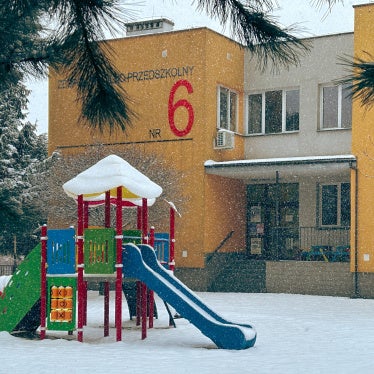
As the mother of a 4-year-old, I am amazed at how quickly young children learn and grow. My son, now in his second year of preschool in France, runs out of school each afternoon eager to show me the letters he has learned, point out new friends, display his art projects, or describe the sports he tried. Watching him develop is a daily reminder of how critical these early years are.
In France, pre-primary education is mandatory and free from age 3. But not all children around the world have this opportunity. Ireland provides 13 years of free education from pre-primary through secondary. And it should be a leader in expanding educational opportunities worldwide.
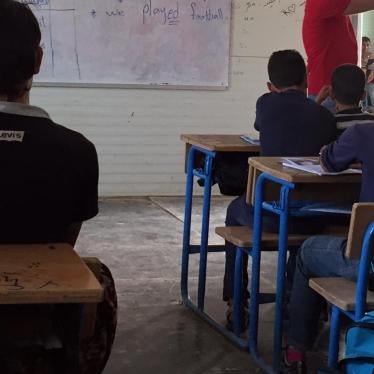
Countries have obligations under international law – which they are meeting to various degrees – to ensure free primary education. But nearly 370 million children of preschool or secondary-school age are currently out of school, according to UNICEF and UNESCO. One of the biggest barriers is cost, whether through direct tuition fees or hidden costs.
Listening to the Youngest Voices
This year, the United Nations opened a global consultation on the topic of free education. More than 8,000 children from 40 countries shared their views on preschool and secondary education.
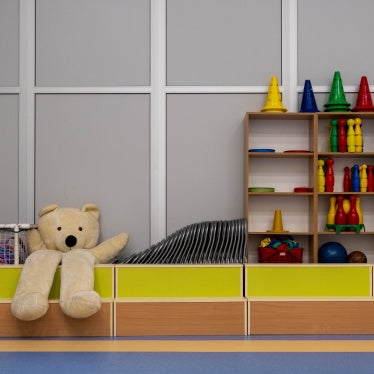
As part of this process, I organized consultations in my son’s school with children ages 3 to 8. Their answers were clear: preschool is where they make friends, connect with teachers, and learn reading, math, and languages. They love play, toys, art, and crafts.
Above all, they all understood that access to school should never depend on whether parents can pay. They could not even imagine a world where children could not go to preschool.
Taking the Debate to the UN
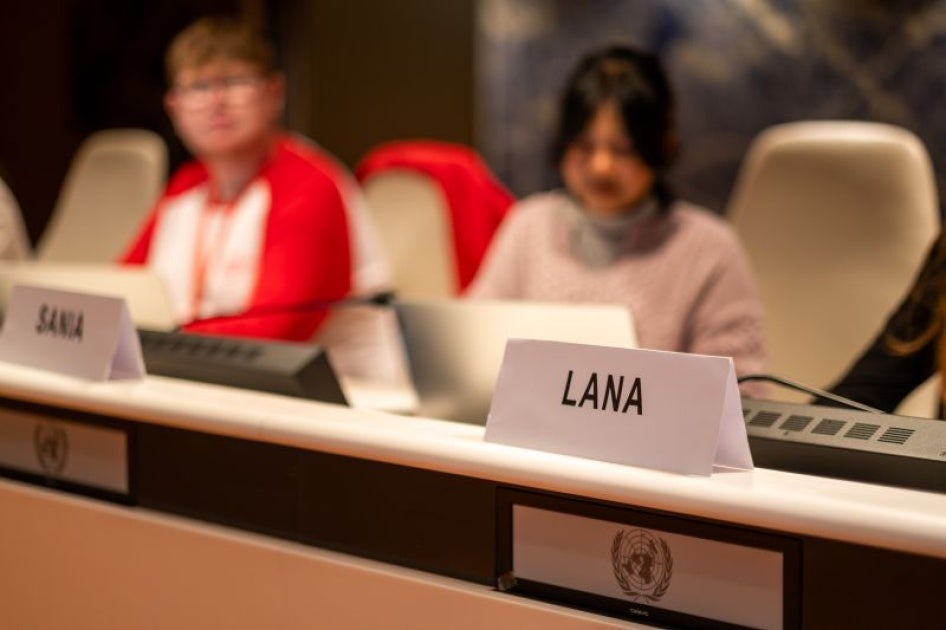
Children were also at the heart of discussions held at the United Nations in Geneva from September 1 to 3. States, education experts, civil society organizations, and children met to discuss the need for a new optional protocol to the Convention on the Rights of the Child.
The Convention, adopted in 1989, guarantees free primary education, but doesn’t explicitly require governments to make pre-primary and secondary education free, and doesn’t even mention early childhood education.
This new treaty would close those gaps by recognizing every child’s right to early childhood care and education, and by making free public education—from preschool through the end of secondary school—a global standard.
History was made in Geneva: for the first time, children directly shaped a new UN treaty. Five children—from Croatia, Indonesia, Liberia, Mexico, and the United Kingdom—spoke powerfully about why free preschool and secondary education are essential. They shared not only their own experiences but also the voices of peers in their countries. Their message: education must be free, inclusive, and available to all.
The Momentum
The level of engagement was significant: 92 states participated. The initiative is championed by Sierra Leone, Luxembourg, and the Dominican Republic, supported by a cross-regional group of countries. During the meeting, six additional countries—Azerbaijan, Bolivia, Cuba, Jordan, Northern Macedonia, and Zambia—voiced their support for the process, bringing the total to 58.
Yet some countries remain absent. Ireland has yet to join the supporters. This is a missed opportunity. Having prioritized expanding access to early childhood care and education nationally, Ireland could lead by example internationally.
A further group of countries—Algeria, Egypt, India, Indonesia, Iraq, Jamaica, Malaysia, and Nigeria—expressed qualified support. They asked to account for national circumstances in broadening the requirement for free education, particularly for low-income countries, and called for safeguards around financing, international cooperation, and parental rights.
Three countries—the United Kingdom, Belgium, and Eritrea—opposed moving forward. The United Kingdom acknowledged there may be some gaps but contended that creating a new treaty just for free preschool education wasn’t justified. Belgium suggested focusing on implementing the existing Convention. These countries provide free education for their children and should press for the same opportunities for children in other countries.
But here is the problem: because the Convention doesn’t explicitly recognize free preschool and secondary education as rights for all, even wealthy countries continue to deprioritize them. Simply implementing what already exists means keeping millions of children excluded.
Civil Society Support and Experts’ Views
Civil society organizations offered almost unanimous support for a new treaty, with 16 nongovernmental groups calling for swift action in drafting the protocol. The academic Klaus Beiter, and Mercedes Mayol Lassalle, director of the World Organization for Early Childhood Education stressed the need for binding standards covering early childhood and secondary education.
Plan International underlined that free education is one of the most powerful tools for advancing gender equality. ActionAid highlighted that austerity and debt undermine education budgets, but also showed that sustainable financing is possible—through tax reform, debt relief, and international cooperation.
Even the UN special rapporteur on the right to education, Farida Shaheed, though cautious about the complexities of developing a new treaty, acknowledged some legal gaps. Her predecessor recommended including early childhood education in a binding instrument. And just recently, the UN special rapporteur on the rights of persons with disabilities also called for recognizing inclusive early childhood care and free preschool education through a new protocol.
UNICEF, however, suggested current obligations suffice, though its own joint report with UNESCO last year, recommended “a new, legally binding international framework establishing the right early childhood care and education’’. But what’s on paper isn’t enough to ensure that every child can go to preschool and secondary school.
What Comes Next
Closing the meeting, the chair from Sierra Leone – a low-income country that already guarantees 13 years of free education – announced an intensive round of consultations before the next Working Group meets in August 2026. That’s normal for treaty-making—governments need time to discuss, and build consensus.
But while governments debate, millions of children wait.
As Karen, a 16-year-old from Mexico, said: “We consider it essential to establish the binding recognition of the right to free preschool and secondary education. The Protocol should explicitly state that all girls, boys, and adolescents have the right to access these levels of education free of charge, publicly, and inclusively, without exceptions.”
And Roberto, 17, from Liberia, reminded leaders: “Giving us quality and free education is not a favor you are doing us; it’s the biggest investment a country can give its future.”
I keep going back to the moment when I was listening to 3- and 4-year-olds explain why preschool matters to them. If diplomats in Geneva had been sitting there with us, listening to these children, I doubt anyone could have argued against the need for this treaty. When children explain what preschool means to them, there is no debate left to have.
The right to free preschool and secondary education is within reach. The momentum is building. And children—the very ones who will benefit most—are already leading the way. Now it is up to governments to follow.
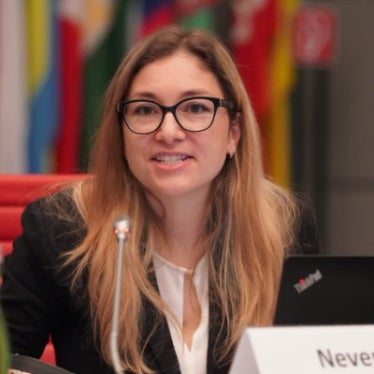
Nevena Valentinova Saykova is convener of the Working Group on Children and the Right to Education at Child Rights Connect.