World Children’s Day—celebrated every year on November 20—marks the anniversary of the United Nations’ adoption of the Convention on the Rights of the Child, an international human rights treaty guaranteeing that every child’s dignity and potential should be made a reality. This year, that global promise feels a little closer to home in Malawi.
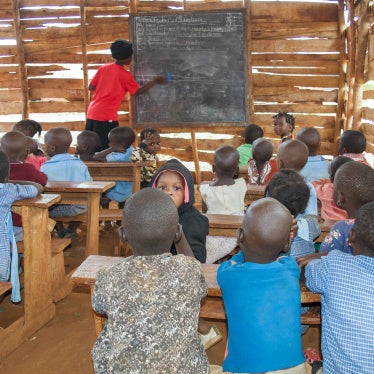
In October, President Peter Mutharika announced that starting in January, school fees for public secondary schools will be abolished. The reform will also scrap examination fees, identity card charges, and school development fund payments—longstanding barriers that have pushed many aspiring students from impoverished backgrounds out of the education system. This new policy—if effectively implemented—will be life-changing for children who would otherwise have left school earlier than they would have wanted because of cost.
It also redefines what will be possible in Malawi’s future. At present, 98 percent of Malawian children are enrolled in primary school—one of the highest rates in the region. But just 15 percent of children completed secondary school in 2020; the cost of education being a common gatekeeper to the transition from primary to secondary. Around the world, we see that when governments remove fees, enrollment surges, particularly among children from low-income families. So big, exciting changes lay ahead.
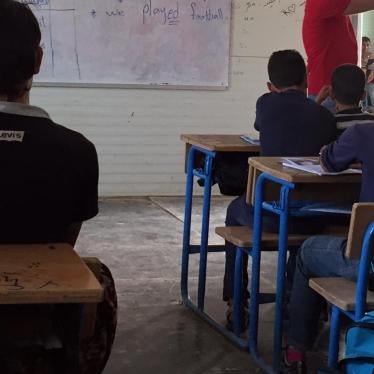
The next steps will not be easy, however. Headline-making pledges do not on their own build schools, recruit and train teachers, print textbooks, and stock science labs. Free secondary education should not mean overcrowded classrooms where students learn little and teachers burn out.
Scaling-up the education system to ensure children can access quality secondary education in safe schools with trained teachers, sufficient proper materials, and good sanitation will be a demanding transition. But Malawi is not making this change because it is easy—it is doing it because it is right.
Malawi’s leadership on free education is not just at home. It is also advocating expanding children’s opportunities globally.
The Convention on the Rights of the Child guarantees all children free primary education, but it stops short of making free secondary education a global obligation and says nothing about early childhood education—all the learning we do from birth until primary school, both at home and in the community. At the United Nations, governments have begun work toward an update to the children’s rights treaty that would address this gap by requiring countries to provide free public secondary education and at least one year of free public pre-primary education—known in Malawi as pre-school or “P class.”
The initiative is being chaired by Sierra Leone, and in 2024, Malawi was among the co-sponsors of the resolution creating this process at the United Nations’ preeminent human rights body in Geneva, the Human Rights Council.
These diplomatic efforts are now made more powerful and principled by the reforms at home. As negotiations advance in 2026 toward a new treaty enshrining these pledges for children, Malawi can help ensure it sets a bright, unambiguous standard: free really means free, from the earliest years through the end of secondary school.
The value of expanding free education into the years before primary school should be Malawi’s next educational horizon. At present, only about 47 percent of children ages 3 to 5 attend Community Based Child Care Centers, leaving the majority missing out on the structured play, language development, and social interaction that make later learning stick.
A 2021 study by Malawi’s National Planning Commission found that expanding government programs in the pre-primary years would be inexpensive and catalytic. It would free up parents’ time for work and other income generation, improve children’s progression through the school system, and lift wages by nearly 14 percent on average for children who attend such programs when they enter adulthood.
Combined, this means big financial returns for the individual, their families, and the community in both the short term and long term. For every MWK 1 invested in such a program, Malawi would reap MWK 4.5 in benefits, according to the study. Few public policies return so much, so widely, so quickly.
Tomorrow, it will be back to work, with the knowledge that negotiations in Geneva for a new treaty on free education will not be easy, and that implementing new policies at home will be replete with challenges that at times may test resolve. But today, this year, World Children’s Day in Malawi really should be a celebration for choosing a future in which a child’s path and future opportunities are not determined by family income.