Thank you.
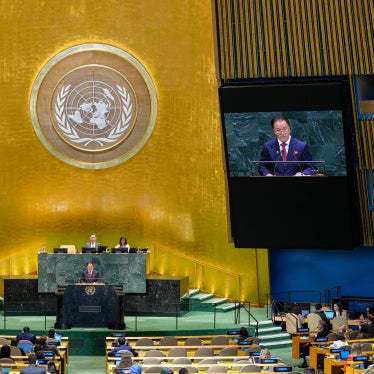
I am pleased to deliver this joint statement on behalf of nearly 100 civil society campaigns and organizations.
Humanitarian disarmament has made a critical difference over the past three decades in saving countless lives around the world and in setting norms that endure over time. The people centered approach aims to prevent and remediate arms-inflicted human suffering and environmental harm, and it has shown its ability to weather geopolitical tempests.
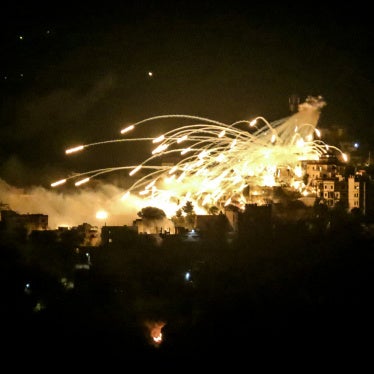
Since last year’s First Committee meeting, humanitarian disarmament has faced attacks on multiple fronts that have challenged the progress it has made. The use of antipersonnel landmines and cluster munitions as well as threats of the use of nuclear weapons highlight the ongoing dangers posed by internationally banned weapons. Some states have decided to withdraw from the Mine Ban Treaty and Convention on Cluster Munitions, further endangering civilians due to the prospect of additional new use. The failure of states to comply with the Arms Trade Treaty and implement the commitments of the Political Declaration on the Use of Explosive Weapons in Populated Areas has meant civilians have not been protected in current armed conflicts. Progress on a treaty on autonomous weapons systems is not keeping pace with technological developments.
Nevertheless, while not a panacea, humanitarian disarmament has helped reduce the human cost of weapons for decades and will continue to do so. It has made a concrete difference in the protection of civilians by stigmatizing and decreasing use of certain weapons, reducing stockpiles, and advancing clearance and victim assistance measures. In the process, it has overcome hurdles, such as the post-9/11 world, changing governments, economic turmoil, and the evolving nature of war.
The central principles of humanitarian disarmament can both sustain this movement and ensure that it responds to today’s global challenges, including the growing disregard for the rule of law and financial shortfalls for the humanitarian sector. Those principles include:
- A humanitarian focus: The goal of protecting civilians is a purpose that can transcend political and national differences.
- A cooperative approach: States should meaningfully involve and work in partnership with each other, civil society, international organizations, and survivors in decision-making processes to benefit from their expertise and preserve the humanitarian focus.
- A commitment to international law: International law, including humanitarian disarmament, creates obligations for states parties and standards that influence states and other actors outside of a treaty. States should not only create new law, but also implement, defend, and strengthen the law that already exists.
- Ability to adapt: Humanitarian disarmament is adaptable, as shown by its move from conventional weapons to weapons of mass destruction and its application to new topics, such as the environment and armed conflict, the destruction of cultural heritage during conflict, and torture-free trade.
To maximize the influence of humanitarian disarmament and help it address current challenges, we urge states to:
- Ensure that the core characteristics of humanitarianism, cooperation, rule of law, and adaptability guide all efforts addressing disarmament issues;
- Highlight the humanitarian concerns raised by problematic weapons in the course of discussions at First Committee;
- Call, depending on the specific issue, for upholding the existing norms, improving implementation, and creating new or stronger law; and
- Join and fully implement and comply with humanitarian disarmament instruments.
States should act now to push back against the threats to international law and help humanitarian disarmament achieve its full potential. Doing so is in the interest of us all.
Thank you.
Supporting Campaigns
Control Arms
International Campaign to Abolish Nuclear Weapons
International Campaign to Ban Landmines-Cluster Munition Coalition
International Network on Explosive Weapons
Stop Killer Robots
Supporting Organizations
- Action for Women and Children Concern (AWCC) SomaliaAction on Armed Violence
- Action Pour le Developpement des Jeunes au Congo
- African Council of Religious Leaders- Religions for Peace
- Alianza por el Desarme Nuclear
- Állítsuk meg a Gyilkos robotokat Kampány
- Amnesty International
- Amputee Self-help Network Uganda (ASNU)
- Article 36
- Aotearoa New Zealand Campaign on Military Spending
- Aotearoa New Zealand Joint Working Group on Landmines and Cluster Munitions
- Aotearoa New Zealand National WPS NGO Network
- Arab Human Security Network
- Associazione Nazionale Vittime Civili di Guerra
- Azerbaijan Campaign to Ban Landmines
- Belgian Coalition against Nuclear Weapons
- Cadre de Concertation des Associations des Veuves au Burundi - CCAVB
- Cameroon Youths and Students Forum for Peace (CAMYOSFOP)
- Campaña Colombiana Contra Minas
- Campagna Italiana contro le Mine
- Center for Civilians in Conflict (CIVIC)
- Centro de Estudios Ecuménicos - Promotora de Paz
- Cercle des Jeunes pour une Société de Paix (CJSP)
- Comisión General Justicia y Paz
- Concerned Citizens for Nuclear Safety
- Conflict and Environment Observatory
- Danish Refugee Council
- Deutsche Friedensgesellschaft – Vereinigte KriegsdienstgegnerInnen (DFG-VK)
- Dhesarme - Brazilian Action for Humanitarian Disarmament
- Disability Rights and Disarmament Initiative
- Facing Finance
- Femmes Unies pour la Paix dans la région des Grands Lacs (FUP-GL)
- Friends Committee on National Legislation
- HANAHR.net
- Harvard Law School’s International Human Rights Clinic
- Human Rights Watch
- Hunter Peace Group
- ICAN Aotearoa New Zealand
- ICAN Australia
- ICAN France
- ICAN NorgeIndian Institute for Peace Disarmament & Environmental Protection
- info.nodes
- International Peace Research Association
- International Physicians for the Prevention of Nuclear War (IPPNW)
- IPPNW Canada
- Irish Campaign for Nuclear Disarmament
- Japan Campaign to Ban Landmines
- Jesuit Refugee Service
- LABRATS
- Legacies of War
- Medical Association for Prevention of War (Australia)
- Mines Action Canada
- National Network on the Use of Explosive Weapons (Aotearoa New Zealand)
- Naturefriends Greece
- Nei til Atomvåpen
- New York Campaign to Abolish Nuclear Weapons (NYCAN)
- Nonviolence International
- Nonviolence International Canada
- Norwegian People’s Aid
- Norwegian Physicians Against Nuclear Weapons
- Nuclear Age Peace Foundation and its youth initiative, Reverse The Trend: Save Our People,
- Pacific Network on Globalisation
- Pathways To Peace
- PAX
- Pax Christi International
- Pax Christi IRELAND
- Pax Christi USA
- Peace Boat
- Peace Movement Aotearoa
- PEACEMOMO
- Peoples Federation for National Peace and Development (PEFENAP)
- Perú por el Desarme
- Project Ploughshares
- Quit Nukes
- Rete Italiana Pace Disarmo
- RootsAction
- SafeGround
- Save Our Planet
- SEHLAC
- Soka Gakkai InternationalSomali Human Rights Association (SOHRA)
- Stop Killer Robots Aotearoa New Zealand
- The Civil Affairs Institute
- United Nations Association - Sweden
- United Nations Association - UK
- Vision GRAM-International
- West Virginia Campaign to Ban Landmines and Cluster Bombs
- Women's International League for Peace and Freedom
- World BEYOND War
- World BEYOND War - Gambia Chapter
- XR Peace, Hastings and St Leonards
- Yemen Mine Awareness Association (YMAA)
- Youth Arts New York
- Youths Awaken Foundation (YAF)