Ideological control, surveillance, and travel restrictions.
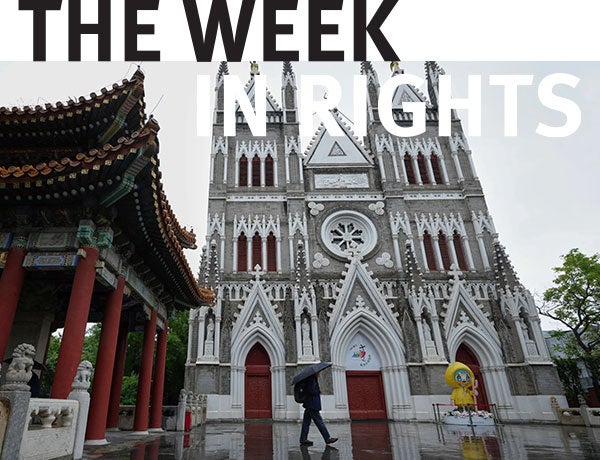
A decade into Chinese President Xi Jinping’s “Sinicization” of religion campaign, Beijing has increased pressure on the country’s estimated 12 million Catholics and furthered the government’s longstanding clampdown on religious freedom.
Under the campaign, places of worship and religious teachings are expected to reflect Han-centric Chinese culture and Chinese Communist Party ideology.
A 2018 agreement between the Holy See and Chinese government has also escalated repression. Under the agreement, Beijing proposes candidates for bishop that the pope can then veto. But no pope has exercised his veto, even after the Chinese government violated its terms by unilaterally appointing bishops. Pope Leo XIV, in office since May 2025, has also approved Beijing’s five appointments.
>> Read the new report on China’s Catholic Crackdown
Since the 2018 agreement, Chinese authorities have put particular pressure on underground Catholic communities, which refuse to pledge allegiance to the Chinese Communist Party, reportedly disappearing, torturing, and subjecting underground Catholic bishops and priests to house arrest.
People interviewed by Human Rights Watch said that the 2018 agreement provided an overarching structure for the authorities to pressure underground Catholics. It left them with “no other choice but to join the official church,” said a person whose church was demolished, its cross removed, and its members threatened and arrested.
The Chinese government has also intensified ideological control, surveillance, restrictions on religious activities, and foreign ties in official churches.
Unless the Vatican exerts pressure on Beijing to end its repression of Catholic communities, as one priest living abroad told us, “Those communities may survive with their priests for a while but in the long run, underground Catholics will be gone.”