Reports

Abusive Practices at Three Florida Immigration Detention Centers Since January 2025

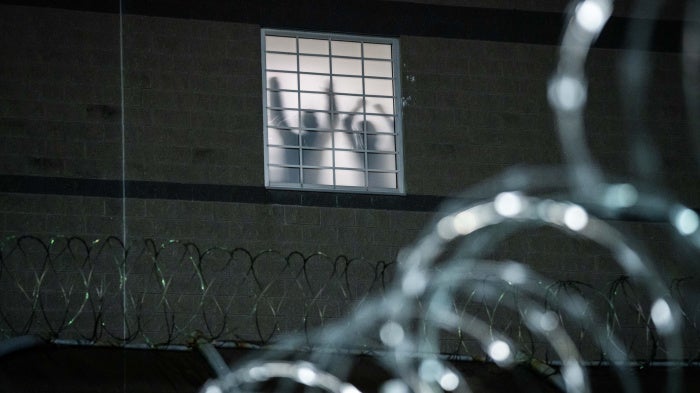
The 92-page report, “‘You Feel Like Your Life is Over’: Abusive Practices at Three Florida Immigration Detention Centers Since January 2025,” documents that people detained at Krome North Service Processing Center (Krome), Broward Transitional Center (BTC), and the Federal Detention Center (FDC) in Miami have been held in overcrowded and unsanitary conditions and subjected to degrading treatment, and have not been given access to prompt and adequate medical care. The groups also reported the experiences of 17 immigrants in at the three detention facilities since January 20.

illustration of detainees in a crowded processing room
A woman looks out of the window of a damaged building

Search

  • April 6, 2022

    Crimes Against Humanity and Ethnic Cleansing in Ethiopia’s Western Tigray Zone

    The 221-page report, “We Will Erase You From This Land’: Crimes Against Humanity and Ethnic Cleansing in Ethiopia’s Western Tigray Zone,” documents how newly-appointed officials in Western Tigray and security forces from the neighbouring Amhara region, with the acquiescence and possible participation of Ethiopian federal forces, systematically expelled several hundred thousand Tigrayan civilians from their homes using threats, unlawful killings, sexual violence, mass arbitrary detention, pillage, forcible transfer, and the denial of humanitarian assistance. These widespread and systematic attacks against the Tigrayan civilian population amount to crimes against humanity as well as war crimes.

    map content
    video content
    202204africa_ethiopia_sudan_tigray_refugees_cover
  • February 23, 2022

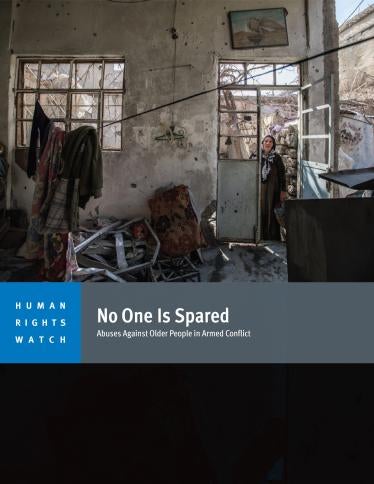
    Abuses Against Older People in Armed Conflict

    The 49-page report, “No One Is Spared: Abuses against Older People in Armed Conflict,” describes patterns of abuses documented by Human Rights Watch between 2013 and 2021 against older people affected by armed conflicts in Burkina Faso, Central African Republic, Ethiopia, Israel and the Occupied Palestinian Territory, Mali, Mozambique, Nagorno-Karabakh, Niger, South Sudan, Syria, and Ukraine. The report also draws on the serious protracted violence in two English-speaking regions of Cameroon, Myanmar security force atrocities against older ethnic Rohingya in Rakhine State, and the experiences of older refugees in Lebanon displaced by conflict in Syria.

    video content
    202202drd_olderpeople_armedconflict_cover
  • November 30, 2021

    Executions and Enforced Disappearances in Afghanistan under the Taliban

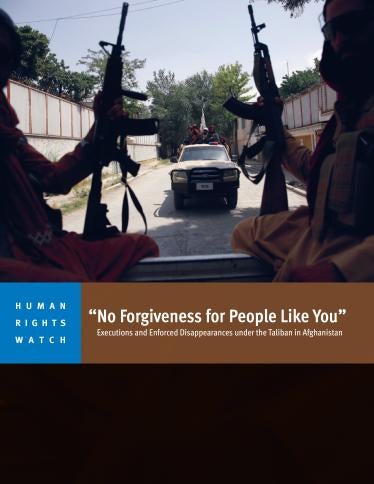
    The 25-page report, “‘No Forgiveness for People Like You,’ Executions and Enforced Disappearances in Afghanistan under the Taliban,” documents the killing or disappearance of 47 former members of the Afghan National Security Forces (ANSF) – military personnel, police, intelligence service members, and militia – who had surrendered to or were apprehended by Taliban forces between August 15 and October 31. Human Rights Watch gathered credible information on more than 100 killings from Ghazni, Helmand, Kandahar, and Kunduz provinces alone.

    map content
    video content
    202111asia_afghanistan_taliban_cover
  • June 22, 2021

    Harassment and Detention of Opponents, Rights Defenders and Journalists Ahead of Elections in Nicaragua

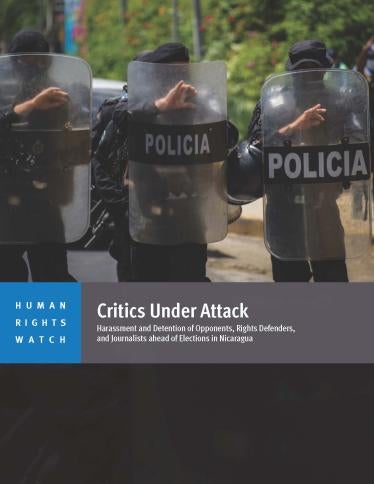
    The 37-page report, “Critics Under Attack: Harassment and Detention of Opponents, Rights Defenders, and Journalists Ahead of the Elections,” found that in the run-up to presidential elections set for November 7, 2021, high-profile arrests and other serious human rights violations against critics appear to be part of a broader strategy to eliminate political competition, stifle dissent, and pave the way for President Daniel Ortega’s re-election to a fourth consecutive term. Between June 2 and 20, Nicaraguan authorities detained and opened seemingly politically motivated criminal investigations against five leading opposition presidential candidates and at least nine prominent government critics.

    202106americas_nicaragua_police_cover
  • June 7, 2021

    Bangladesh’s Relocation of Rohingya Refugees to Bhasan Char

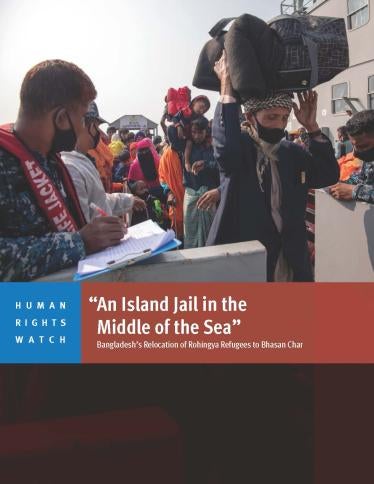
    The 58-page report, “‘An Island Jail in the Middle of the Sea’: Bangladesh’s Relocation of Rohingya Refugees to Bhasan Char,” finds that Bangladesh authorities transferred many refugees to the island without full, informed consent and have prevented them from returning to the mainland. While the government says it wants to move at least 100,000 people to the silt island in the Bay of Bengal to ease overcrowding in Cox’s Bazar refugee camps, humanitarian experts have raised concerns that insufficient measures are in place to protect against severe cyclones and tidal surges. Refugees on the island reported inadequate health care and education, onerous movement restrictions, food shortages, a lack of livelihood opportunities, and abuses by security forces

    map content
    video content
    202106asia_bangladesh_bhasanchar_cover
  • November 20, 2020

    The Culture of Impunity in Post-Conflict Nepal

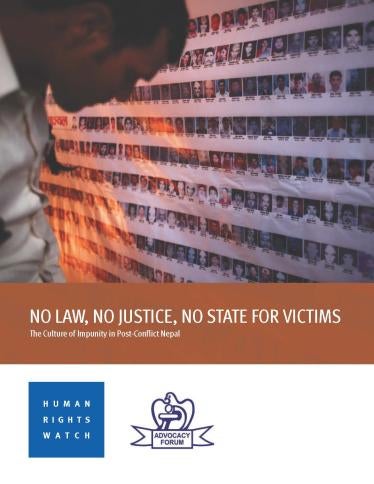
    The 53-page report, “No Law, No Justice, No State for Victims: The Culture of Impunity in Post-Conflict Nepal,” tracks 62 cases of extrajudicial killings that Human Rights Watch and Advocacy Forum first documented in 2008. The groups found that over a decade later, there has been little progress toward prosecutions, despite court orders requiring investigations to proceed, with the police and prosecutors saying that the government has told them these cases will be handled by transitional justice mechanisms. This inaction is helping to sustain an ongoing pattern of serious violations, including extrajudicial killings and torture by security forces.

    202011asia_nepal_justice_cover
  • October 15, 2020

    Syrian and Russian Strikes on Civilian Infrastructure

    The 167-page report, “‘Targeting Life in Idlib’: Syrian and Russian Strikes on Civilian Infrastructure,” details abuses by Syrian and Russian armed forces during the 11-month military campaign to retake Idlib governorate and surrounding areas, among the last held by anti-government armed groups. The report examines the abusive military strategy in which the Syrian-Russian alliance repeatedly violated the laws of war against the 3 million civilians there, many displaced by fighting elsewhere in the country. It names 10 senior Syrian and Russian civilian and military officials who may be implicated in war crimes as a matter of command responsibility: they knew or should have known about the abuses and took no effective steps to stop them or punish those responsible.

    map content
    video content
    202010mena_syria_idlib_cover
  • September 14, 2020

    Obstruction of Aid in Yemen During Covid-19

    The 65-page report, “Deadly Consequences: Obstruction of Aid in Yemen During Covid-19,” details systematic interference in relief operations by Houthi authorities, Yemen’s internationally recognized government and affiliated forces, and the United Arab Emirates (UAE)-backed Southern Transitional Council. Despite increased needs, donors slashed funding in June 2020, partly because of the obstruction, forcing aid agencies to cut food, health care, and water and sanitation support to millions of people in need. The parties to Yemen’s five-year-long armed conflict should immediately end the obstruction. Donors should increase funding to aid agencies while pressuring the local authorities to respect the humanitarian principles of independence and impartiality. The United Nations should establish an independent inquiry into the extent of obstruction and shortcomings in the humanitarian community’s response.

    map content
    video content
    202009mena_yemen_cover
  • September 10, 2020

    Social Media Platforms Remove Evidence of War Crimes

    The 42-page report, “‘Video Unavailable’: Social Media Platforms Remove Evidence of War Crimes,” urges all stakeholders, including social media platforms, to come together to develop an independent mechanism to preserve potential evidence of serious crimes. They should ensure that the content is available to support national and international investigations, as well as research by nongovernmental organizations, journalists, and academics. Rights groups have been urging social media companies since 2017 to improve transparency and accountability around content takedowns

  • July 29, 2020

    Sexual Violence Against Men, Boys, and Transgender Women in the Syrian Conflict

    The 77-page report, “‘They Treated Us in Monstrous Ways’: Sexual Violence Against Men, Boys, and Transgender Women in the Syrian Conflict,” found that men and boys have been vulnerable to sexual violence in the Syrian conflict since it began. People Human Rights Watch interviewed said that gay and bisexual men, transgender women, and nonbinary people were subject to increased violence based on their actual or perceived sexual orientation or gender identity. Transgender women are often perceived as gay men in Syria and are targeted for the same reasons.

    202007mena_syria_lgbt_cover
  • June 29, 2020

    Plight of Canadians Held in Northeast Syria for Alleged ISIS Links

    The 92-page report, “‘Bring Me Back To Canada’: Plight of Canadians Held in Northeast Syria for Alleged ISIS Links,” says that Canada has not brought home any of the estimated 47 Canadians – 8 men, 13 women, and 26 children – detained for more than a year in overcrowded, filthy, and life-threatening conditions. Most of the children are under age 6, including a 5-year-old orphan. Since March 2020, Canada has repatriated 40,000 other citizens from 100 countries in response to the Covid-19 pandemic, including 29 from Syria.

    map content
    202006mena_canada_isis_cover
  • June 26, 2020

    Barriers to Secondary Education for Syrian Refugee Children in Jordan

    The 61-page report, “‘I Want to Continue to Study’: Barriers to Secondary Education for Syrian Refugee Children in Jordan,” documents increasingly difficult obstacles to education the further Syrian refugee children progress in school, with enrollment rates collapsing from nearly 90 percent in primary classes to just 25 to 30 percent in secondary school, according to governmental and United Nations data. With UN support, Jordan has created humanitarian education plans for Syrian refugees that aim to increase enrollment overall, but without specific secondary-school enrollment goals. Few foreign donors support secondary education. Informal education programs hosted by nongovernmental groups only reach a tiny fraction of children, Human Rights Watch found.

    202006mena_jordan_syria_kids_cover
  • June 19, 2019

    Torture, Ill-Treatment, and Prosecutions of Protesters and Opponents

    This report documents what happened to many of the hundreds of people arrested by police or abducted by armed pro-government groups after the crackdown on protesters that began in April 2018. Many were subjected to abuse that in some cases amounted to torture. Some who were injured were reportedly denied medical care in public health centers, and doctors who provided care said they suffered retaliation. Detainees have been prosecuted in cases marred by serious due process violations. 

    video content
    201906americas_nicaragua_cover