The Inhumane Effects of White Phosphorus Munitions and the Need for Stronger Law
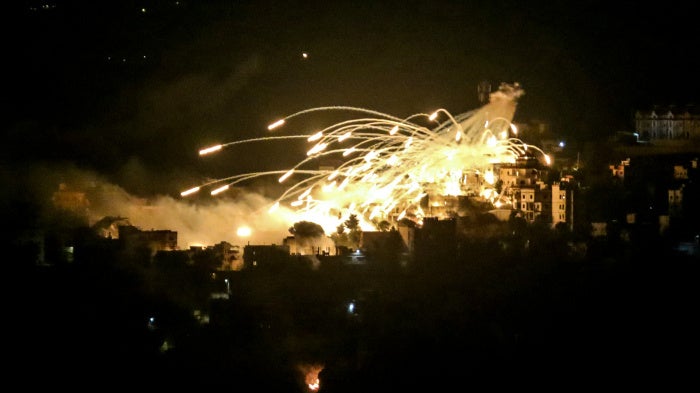
The 45-page report, “Uncontrolled Burn: The Inhumane Effects of White Phosphorus Munitions and the Need for Stronger Law,” documents 23 verified incidents of Israeli use in southern Lebanon between March and May 2026. The report also details the horrific harm the munitions have caused in armed conflicts in recent years. White phosphorus munitions, which produce fire when their payload is exposed to oxygen, are not currently regulated by a specific treaty.
This report documents attacks since 2016 by the Taliban and groups affiliated with the Islamic State of Khorasan Province (ISKP), an affiliate of the Islamic State. While the Taliban claim they do not target civilians, the report documents indiscriminate attacks by the Taliban that have killed and injured thousands. ISKP-linked groups have targeted civilian facilities in urban areas of Afghanistan, including many Shia mosques. The report, based on interviews with 45 civilian victims of insurgent attacks and their relatives, highlights the lasting consequences of the attacks on affected families and communities.
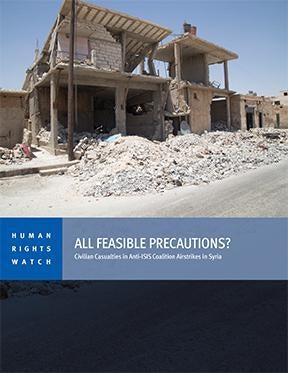
Civilian Casualties in Anti-ISIS Coalition Airstrikes in Syria
This report documents coalition attacks in March on a school housing displaced families in Mansourah and a market and a bakery in Tabqa, towns west of the city of Raqqa. Human Rights Watch found that ISIS fighters were at these sites, but so were dozens, perhaps hundreds, of civilians. The coalition should conduct thorough, prompt, and impartial investigations of the attacks, do everything feasible to prevent similar attacks, and provide compensation or condolence payments to people who suffered losses due to the coalition’s operations, Human Rights Watch said.
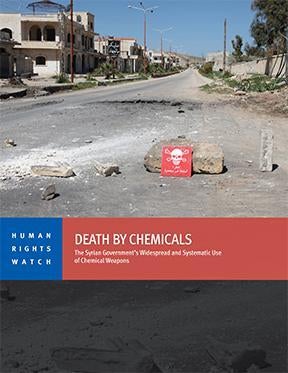
The Syrian Government’s Widespread and Systematic Use of Chemical Weapons
This report identifies three different systems being used to deliver chemical weapons: government warplanes appear to have dropped bombs with nerve agents on at least four occasions since December 12; government helicopter-dropped chlorine-filled munitions have become more systematic; and government or pro-government ground forces have started using improvised ground-launched munitions filled with chlorine.
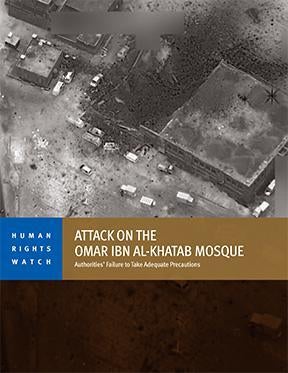
US Authorities’ Failure to Take Adequate Precautions
This report found that statements by US military authorities after the attack indicate that they failed to understand that the targeted building was a mosque, that prayer was about to begin, and that a religious lecture was taking place at the time of the attack. A proper analysis of the target and its use would probably have established at least some of these elements. Human Rights Watch has not found evidence to support the allegation that members of al-Qaeda or any other armed group were meeting in the mosque.
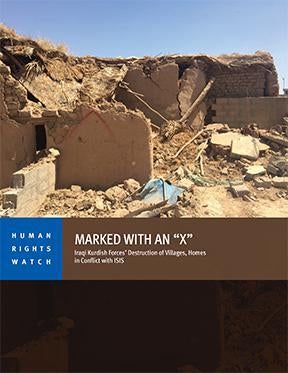
Iraqi Kurdish Forces' Destruction of Villages, Homes in Conflict with ISIS
This report looked at destruction of homes between September 2014 and May 2016 in disputed areas of Kirkuk and Nineveh governorates, areas nominally under Iraqi government jurisdiction but under Kurdistan Regional Government (KRG) control. The destruction, which took place after KRG Peshmerga forces routed Islamic State (also known as ISIS) fighters, targeted Arab homes while leaving Kurdish homes intact. KRG leaders have maintained that these are historically Kurdish areas that they intend to incorporate into the Kurdistan region.
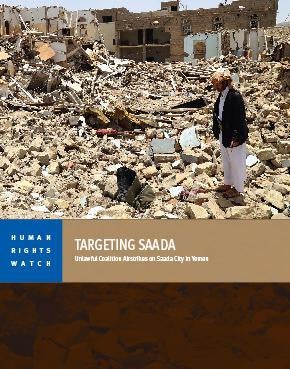
Unlawful Coalition Airstrikes on Saada City in Yemen
This 47-page report documents a dozen airstrikes on the Houthi stronghold that destroyed or damaged civilian homes, five markets, a school, and a petrol station, though there was no evidence these sites were being used for military purposes. These strikes killed 59 people, reported to have been civilians between April 6 and May 11. At least 35 children were among those killed.
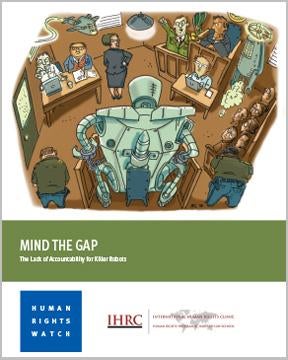
This 38-page report details significant hurdles to assigning personal accountability for the actions of fully autonomous weapons under both criminal and civil law. It also elaborates on the consequences of failing to assign legal responsibility. The report is jointly published by Human Rights Watch and Harvard Law School’s International Human Rights Clinic.
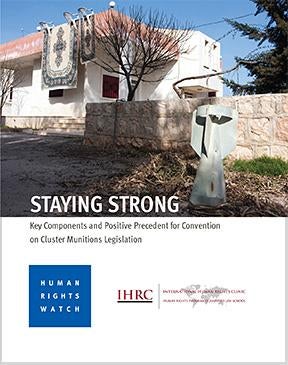
Key Components and Positive Precedent for Convention on Cluster Munitions Legislation
This 73-page report urges countries to pass robust national legislation as soon as possible to carry out the provisions of the treaty. The report describes the elements of a comprehensive law and highlights exemplary provisions in existing laws. The report was jointly published with Harvard Law School’s International Human Rights Clinic.
The 26-page report is the first report to assess in detail the risks posed by these weapons during law enforcement operations, expanding the debate beyond the battlefield. Human Rights Watch found that fully autonomous weapons would threaten rights and principles under international law as fundamental as the right to life, the right to a remedy, and the principle of dignity.
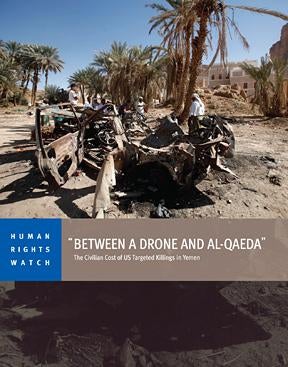
The Civilian Cost of US Targeted Killings in Yemen
The 97-page report examines six US targeted killings in Yemen, one from 2009 and the rest from 2012-2013. Two of the attacks killed civilians indiscriminately in clear violation of the laws of war; the others may have targeted people who were not legitimate military objectives or caused disproportionate civilian deaths.
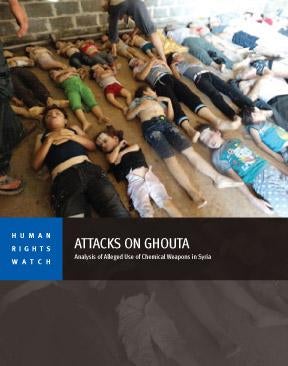
Analysis of Alleged Use of Chemical Weapons in Syria
This 22-page report documents two alleged chemical weapons attacks on the opposition-controlled suburbs of Eastern and Western Ghouta, located 16 kilometers apart, in the early hours of August 21, 2013.
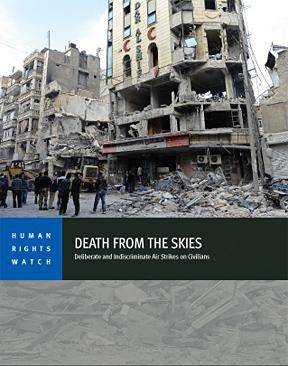
Deliberate and Indiscriminate Air Strikes on Civilians
This 80-page report is based on visits to 50 sites of government air strikes in opposition-controlled areas in Aleppo, Idlib, and Latakia governorates, and more than 140 interviews with witnesses and victims. The air strikes Human Rights Watch documented killed at least 152 civilians.
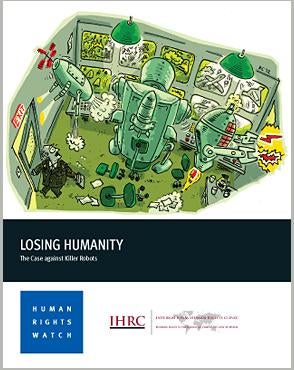
This 50-page report outlines concerns about these fully autonomous weapons, which would inherently lack human qualities that provide legal and non-legal checks on the killing of civilians. In addition, the obstacles to holding anyone accountable for harm caused by the weapons would weaken the law’s power to deter future violations.
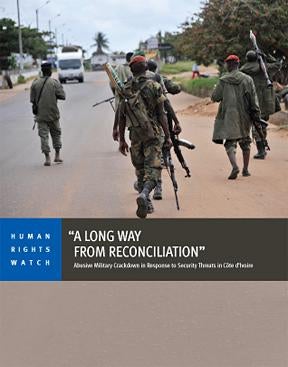
Abusive Military Crackdown in Response to Security Threats in Côte d’Ivoire
This 73-page report details the brutal crackdown that followed a series of violent attacks on military installations around the country in August. The attacks were allegedly committed by militants loyal to former President Laurent Gbagbo.