Killings, Sexual Violence, and Abductions by the M23 and Rwandan Forces in Uvira, Democratic Republic of Congo
The 23-page report,“‘We Are Civilians!’: Killings, Sexual Violence, and Abductions by the M23 and Rwandan Forces in Uvira, Democratic Republic of Congo,” documents the M23 and Rwandan forces’ occupation of Uvira, the second largest city in South Kivu province from December 10, 2025, days after the signing of the United States-brokered Washington Accords, until their withdrawal on January 17, 2026. During this time, these forces shot fleeing civilians, summarily executed more than 50 people during door-to-door searches, raped at least 8 women, and forcibly disappeared at least 12 people.
This 84-page report looks at how France uses a vaguely defined ‘terrorism association offense’ to arrest large numbers of people based on minimal evidence. Human Rights Watch documented credible allegations that terrorism suspects are subjected to oppressive questioning in police custody, linked to a policy that delays a suspect’s access to a lawyer. Many suspects go on to spend long periods in pre-trial detention. Human Rights Watch talked to two dozen people caught up in terrorism investigations and trials, and conducted interviews with counterterrorism officials and judicial authorities.
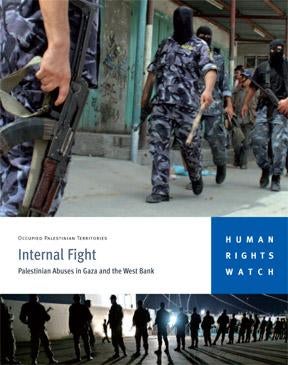
Counterinsurgency, Rights Violations, and Rampant Impunity in Ingushetia
This 120-page report documents human rights abuses committed by law enforcement and security forces involved in counterinsurgency, including dozens of summary and arbitrary detentions, acts of torture and cruel, inhuman or degrading treatment, enforced disappearances, and extrajudicial executions. The report covers action taken during 2007 and early 2008, and describes the legal and political contexts in which they have occurred.
This 119-page report examines South Africa’s decision to treat Zimbabweans merely as voluntary economic migrants and its failure to respond effectively to stop the human rights abuses and economic deprivation in Zimbabwe that cause their flight and to address their needs in South Africa. Human Rights Watch spoke to almost 100 Zimbabweans in South Africa about their plight.
Mass Arrests, Torture, and Disappearances since the May 10 Attack
This 28-page report documents Sudanese government repression in Khartoum following the May 10 attack by the Darfur-based rebel group, the Justice and Equality Movement (JEM). Eyewitnesses suggest that more than 60 civilians were killed during the fighting. The government has detained hundreds of people but has provided no information on their identities, whereabouts, or any charges against them. Most of the people arrested were, or appeared to be, from Sudan’s Darfur region, indicative of a discriminatory intent.
War Crimes and Crimes against Humanity in the Ogaden area of Ethiopia’s Somali Region
This 130-page report documents a dramatic rise in unchecked violence against civilians since June 2007, when the Ethiopian army launched a counterinsurgency campaign against rebels who attacked a Chinese-run oil installation.
Detention Conditions and Mental Health at Guantanamo
This 54-page report documents the conditions in the various “camps” at the detention center, in which approximately 185 of the 270 detainees are housed in facilities akin to “supermax” prisons even though they have not yet been convicted of a crime.
State-Sponsored Violence since Zimbabwe’s March 29 Elections
On March 29, 2008, Zimbabweans cast their ballots in presidential, parliamentary, senatorial and local council elections, the first synchronized elections since changes to the constitution in 2007.
State-Sponsored Violence since Zimbabwe's March 29 Elections
The campaign of violence and repression in Zimbabwe, aimed at destroying opposition and ensuring that Robert Mugabe is returned as president in runoff elections on June 27, 2008 is claiming thousands of victims as the government at national and local levels actively, systematically and methodically targets Movement for Democratic Change (MDC) activists and perceived MDC supporters.
Gender, Sexuality, and Human Rights in a Changing Turkey
This 123-page report documents a long and continuing history of violence and abuse based on sexual orientation and gender identity. Human Rights Watch conducted more than 70 interviews over a three-year period, documenting how gay men and transgender people face beatings, robberies, police harassment, and the threat of murder.
Student Violence, Impunity, and the Crisis in Côte d’Ivoire
This 98-page report documents how, in the last several years, members of FESCI have been implicated in attacks on opposition ministers, magistrates, journalists, and human rights organizations, among others.
The Coalition to Stop the Use of Child Soldiers was formed in May 1998 by leading nongovernmental organizations to end the recruitment and use of child soldiers, both boys and girls, to secure their demobilization, and to promote their reintegration into their communities.
Memorandum to Delegates of the Dublin Diplomatic Conference on Cluster Munitions
A provision obliging states parties not to assist with prohibited acts is an accepted and essential part of a modern weapons treaty. The draft cluster munitions convention includes such a provision in Article 1(c). Article 1(c) is based on extensive precedent from past weapons treaties and is indispensable to the humanitarian goal of the convention.
Government Attacks on Civilians in West Darfur in February 2008
This 35-page report documents how attacks on several towns in West Darfur’s “northern corridor” were a vicious reprise of Khartoum’s “scorched earth” counterinsurgency tactics. The report, based on interviews with more than 60 witnesses and victims of the attacks in West Darfur, shows how Sudanese armed forces and government-backed “Janjaweed” militia killed and injured hundreds of civilians and destroyed and looted property.
The 44-page briefing paper offers an analysis of the Dutch overseas integration test in light of the Netherlands’ international human rights obligations. Human Rights Watch found that people of Moroccan and Turkish origin are especially affected, while citizens from “western” countries such as Canada, Australia, and Japan are exempt.